

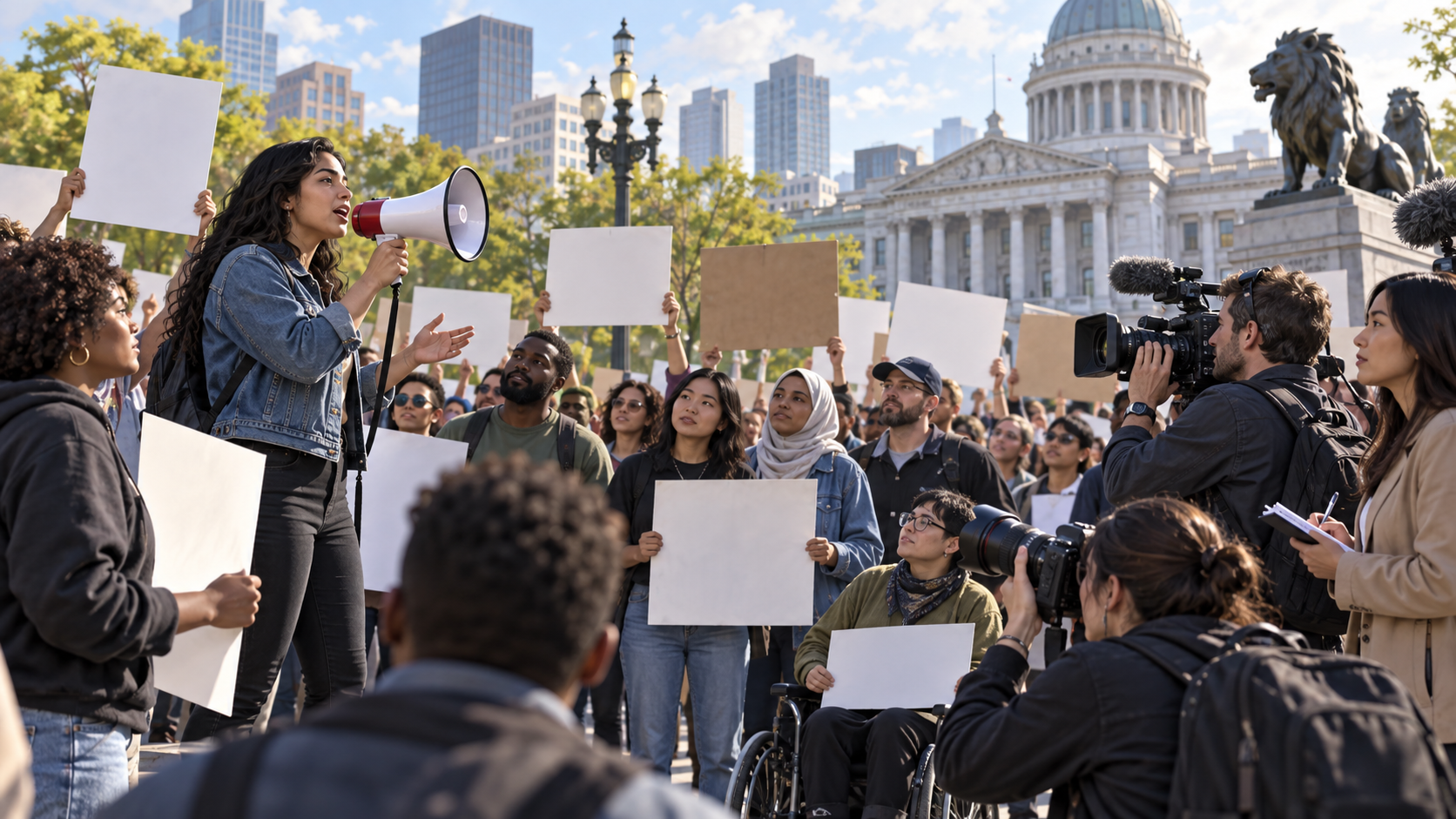
Activism Explainer
Activism is the practice of taking organized action to bring about political, social, economic, or environmental change. It rests on a simple idea: when individuals act together, they can influence decisions that feel far beyond their personal control. Activism can be highly visible, like mass demonstrations and boycotts, or quieter, like letter-writing campaigns, strategic lawsuits, or behind-the-scenes lobbying. What these efforts share is an intention to challenge the status quo, raise awareness, and pressure those with power—governments, corporations, or other institutions—to respond. Even when a campaign does not immediately win its demands, it can shift what topics are discussed and who is heard.
Modern images of activism often center on protest movements, but activism has many forms and tactics. Grassroots organizers might knock on doors, host community meetings, or build local mutual aid networks that address urgent needs while highlighting systemic problems. Digital activists use social media, online petitions, and crowdfunding to mobilize support quickly and across borders, amplifying stories that might otherwise stay invisible. Professional advocates work within nonprofits and advocacy groups to conduct research, craft policy proposals, and coordinate campaigns over months or years. Even cultural activism—art, music, film, and literature—can shift how people see an issue long before any law is changed, by making abstract harms feel personal and concrete.
Activism also involves choices about strategy, messaging, and risk. Some campaigns emphasize nonviolent direct action, deliberately disrupting daily routines to draw attention to an issue while minimizing harm. Others focus on incremental change through elections, negotiations, or regulatory processes. Activists weigh who they need to persuade, what narratives will resonate, and how to keep participants safe—especially when authorities respond with surveillance, legal penalties, or force. Disagreements within movements about tactics and goals are common and sometimes public, but they can also drive experimentation, helping campaigns test new approaches and refine their aims.
Over time, activism has contributed to major changes, including expanded civil rights, labor protections, environmental regulations, and recognition of marginalized groups. At the same time, activism can generate backlash or unintended consequences, reinforcing polarization or prompting new restrictions on protest and speech. Critics may argue that certain tactics are disruptive or unrealistic; supporters counter that pressure is often needed to break political deadlock. Understanding activism means seeing it as an ongoing negotiation over power and public priorities, not just an occasional march or trending hashtag. For people considering getting involved, activism can range from small, local efforts—like attending a school board meeting—to global campaigns, but it always starts with the decision that existing conditions are not acceptable and collective action is worth the effort.
Activism is organized action aimed at changing policies, institutions, or social attitudes. It can be local or global, formal or informal, but it always involves people deciding that existing conditions are unacceptable and that collective effort is needed to push for change.
Modern images of activism often come from 20th- and 21st-century movements—civil rights, women’s suffrage, labor organizing, environmental campaigns, and more recent digital hashtag movements. But its roots stretch back much further, wherever individuals and communities have mobilized to challenge power, resist injustice, or advocate for new rights.
In practice, activism uses a wide range of tactics: marches, boycotts, petitions, strikes, community meetings, cultural events, and strategic legal or policy work. Grassroots groups may focus on neighborhood issues, while national and international organizations coordinate long-term campaigns with research, lobbying, and media outreach.
Digital tools have expanded activism’s reach. Social media, online fundraising, and messaging apps allow organizers to share stories quickly, mobilize supporters, and coordinate actions across borders. Behind the most visible protests, there is often detailed planning around goals, messaging, alliances, and participant safety.
Activism does not always achieve its goals quickly, and it can generate backlash or fatigue. Critics may argue that certain tactics are too disruptive, too symbolic, or too polarizing. Online campaigns can raise awareness but risk being dismissed as “slacktivism” if they do not translate into sustained action or policy change.
Supporters counter that activism has been essential for major shifts in law, culture, and public priorities—from civil rights protections to environmental safeguards. Ongoing debates focus on which strategies work best, how to balance urgency with broad public support, and how movements can remain inclusive, accountable, and effective over time.
Explore more "Explainers"
Discover additional explainers across politics, science, business, technology, and other fields. Each explainer breaks down a complex idea into clear, everyday language—helping you better understand how major concepts, systems, and debates shape the world around us.