

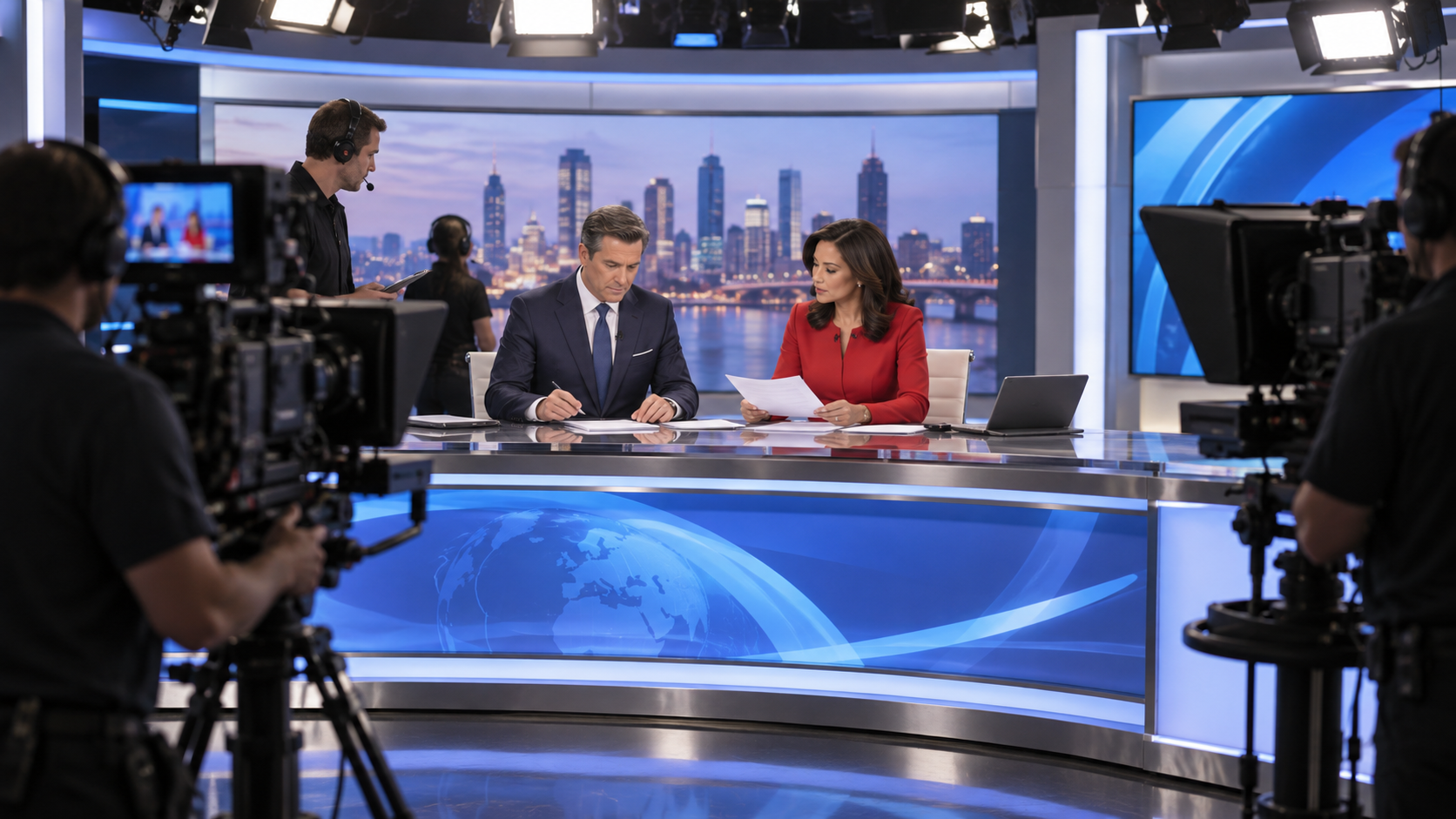
Anchors Explainer
In modern newsrooms, anchors are the on-air journalists who guide audiences through each broadcast, introducing stories, interviewing guests, and helping viewers make sense of complex events. They are often the most visible representatives of a news outlet, appearing at the same time every day or night and developing a sense of familiarity with their audience. While some people use “anchor” and “newsreader” interchangeably, many anchors play a larger editorial role—working with producers, reporters, and editors to shape the flow of the program and decide how stories are framed and sequenced.
The anchor’s work usually begins long before the cameras turn on. They review scripts, background material, and live updates, often marking up copy, suggesting edits, and rehearsing transitions between segments. During the broadcast, they rely on teleprompters, earpieces, and real-time messages from the control room to adjust on the fly. When breaking news happens, anchors may set aside prepared scripts, summarize early information with caution, and repeatedly clarify what is confirmed, what is uncertain, and what is still unfolding. Their tone, pacing, and choice of words can strongly influence how urgent or serious a story feels.
Anchors also serve as a bridge between field reporters and the audience. They introduce correspondents from different locations, ask follow-up questions that viewers may have, and connect individual reports into a larger narrative about politics, disasters, elections, or global events. Many anchor-led programs include interviews with experts, officials, and eyewitnesses; in those moments, the anchor’s questioning style can either challenge assumptions and clarify details or, if done poorly, reinforce confusion and bias. In some news organizations, especially smaller ones, anchors may also write or co-write much of the script and contribute to digital versions of stories.
Over time, anchors can become closely associated with trust—or mistrust—in the news. Viewers often feel as if they “know” long-serving anchors, which can build loyalty but also raise questions about personality-driven news and the line between journalism and celebrity. Different outlets use anchors in different ways: some emphasize neutrality and minimal commentary, while others encourage more conversational or opinionated styles. Regardless of format, the core responsibility remains the same: to present verified information clearly, maintain transparency about what is known, and help audiences navigate the constant flow of news without losing sight of context and accuracy.
News anchors are the on-air journalists who guide audiences through television, radio, and livestreamed newscasts. They introduce stories, interview guests, and help viewers make sense of complex events in real time. As the most recognizable faces of a news organization, anchors often become closely associated with a program or network’s identity.
The role developed alongside the rise of broadcast news in the mid-20th century, when television networks began appointing central figures to “anchor” coverage and connect reports from different locations. Over time, anchors evolved from simple newsreaders into journalists who collaborate with producers and reporters, help shape the rundown of a show, and provide context and continuity across segments.
In daily practice, anchors arrive well before a broadcast to review scripts, background material, and breaking updates. They may suggest edits, flag unclear language, and rehearse transitions between stories. During the show, they rely on teleprompters, notes, and constant messages from the control room to adjust timing, tone, and story order.
When major news breaks, anchors often shift away from scripted segments and work improvisationally. They summarize what is confirmed, correct earlier information if needed, and repeatedly explain what is still unknown. They also coordinate with correspondents in the field, ask follow-up questions that viewers might have, and link individual reports into a broader picture of what is happening.
Because anchors are so visible, they can strongly influence how audiences perceive events and trust particular news outlets. Their tone, word choice, and follow-up questions can emphasize certain angles over others, shaping what feels urgent, controversial, or routine. Long-serving anchors sometimes become symbols of credibility—or polarization—for different segments of the public.
Critics worry that personality-driven shows, partisan commentary, or celebrity-style branding can blur the line between journalism and entertainment. Supporters argue that relatable anchors help audiences stay informed and engaged in a crowded media environment. Ongoing debates focus on how anchors can maintain fairness, transparency, and accountability while operating under ratings pressures, fast-moving news cycles, and the added scrutiny of social media.
Explore more "Explainers"
Discover additional explainers across politics, science, business, technology, and other fields. Each explainer breaks down a complex idea into clear, everyday language—helping you better understand how major concepts, systems, and debates shape the world around us.