

Broadcast Journalism Explainer
Broadcast journalism is the practice of reporting news and current affairs through audio and video, most commonly on radio, television, and live or on-demand digital streams. Instead of relying on long blocks of text, it combines scripts, interviews, sound, and visuals to convey events quickly to large, dispersed audiences. From morning commute radio updates to major televised election nights, broadcast outlets aim to give people timely information in a format they can listen to or watch in real time. For many people, a familiar anchor or local radio voice is still the first way they hear about breaking developments.
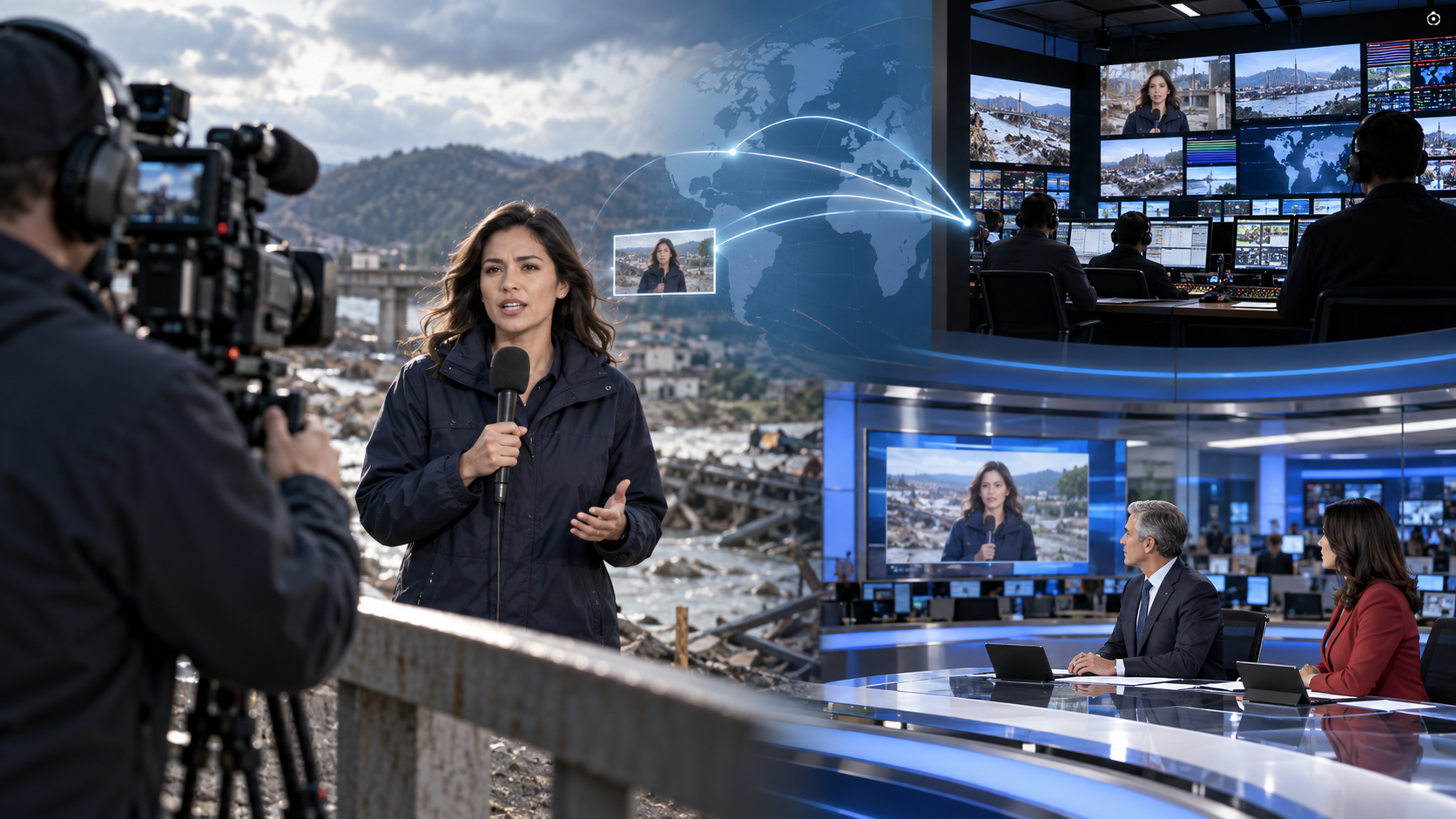
Behind each bulletin or newscast is a structured workflow. Assignment editors and producers decide which stories merit airtime based on factors like public importance, audience impact, geographic relevance, and how fresh or visual the developments are. Reporters in the field gather facts, record interviews, and capture footage or sound, often coordinating with camera crews, engineers, and editors. In the newsroom, writers and producers shape that material into short segments that fit strict time limits, checking names, titles, and basic facts to reduce errors. Technical teams manage microphones, lighting, and control rooms so the program runs smoothly, while anchors and correspondents present the stories live or pre-recorded, supported by graphics, video clips, and occasional expert analysis.
Broadcast journalism has distinctive strengths. Live coverage lets viewers and listeners follow events as they unfold, whether that is a severe weather warning, a press conference, a protest, or a local school board decision. Pictures and natural sound can make distant issues feel concrete and relatable, such as showing the impact of a flood or the atmosphere at a community celebration. At the same time, the format faces challenges. Limited airtime can lead to brief, simplified segments, and the need for compelling visuals may encourage a focus on dramatic images over quieter but equally important stories. These pressures make editorial judgment, verification, and transparency about sources especially crucial, as errors or misleading framing can spread quickly when broadcast to large audiences.
Digital technology is reshaping broadcast journalism but not replacing its core ideas. Many traditional TV and radio organizations now stream their programs, publish clips on social platforms, and send push alerts to mobile devices, competing with purely online outlets that also produce video and audio news. Newsrooms integrate user-generated photos or video while still applying standards for accuracy, context, and consent, and some invite audience questions or comments that can shape future coverage. Audiences, meanwhile, can replay segments on demand, watch live streams without a television set, or listen to news summaries as podcasts instead of tuning in at a fixed time. Through all these changes, broadcast journalism still centers on the same task: turning complex information into clear, timely audio and video storytelling so people can understand what is happening around them and why it matters.
Broadcast journalism is the practice of delivering news and information through audio and visual media such as television, radio, and now streaming platforms. It emerged in the early 20th century as radio networks began reporting current events directly into homes, transforming how people experienced breaking news.
Television later amplified this shift by pairing sound with live images, making news more immediate and impactful. Today, broadcasters combine traditional live reporting with digital tools, sending real-time storytelling across multiple devices and channels.
A broadcast newsroom coordinates assignment editors, producers, technical crews, and field reporters to gather news and relay it to the public quickly. Scripts must be concise, visuals must support the story, and anchors deliver updates with clarity—often under tight time pressure.
Field reporters work with camera and audio teams to capture footage and interviews. Editors shape that material into short segments while control rooms manage graphics, audio, and live cues so broadcasts feel seamless to viewers and listeners.
Broadcast journalism excels at immediacy—people can watch major events unfold live with images and sound that deliver emotional impact and vital context. It plays a central role during emergencies, elections, and rapidly evolving global developments.
However, limited airtime can lead to shortened or surface-level reporting, and a focus on compelling visuals can sideline important but less dramatic topics. As streaming and social platforms influence news consumption, broadcasters face growing pressure to balance speed, accuracy, and storytelling quality.
Explore more "Explainers"
Discover additional explainers across politics, science, business, technology, and other fields. Each explainer breaks down a complex idea into clear, everyday language—helping you better understand how major concepts, systems, and debates shape the world around us.