

Community Reporting Explainer
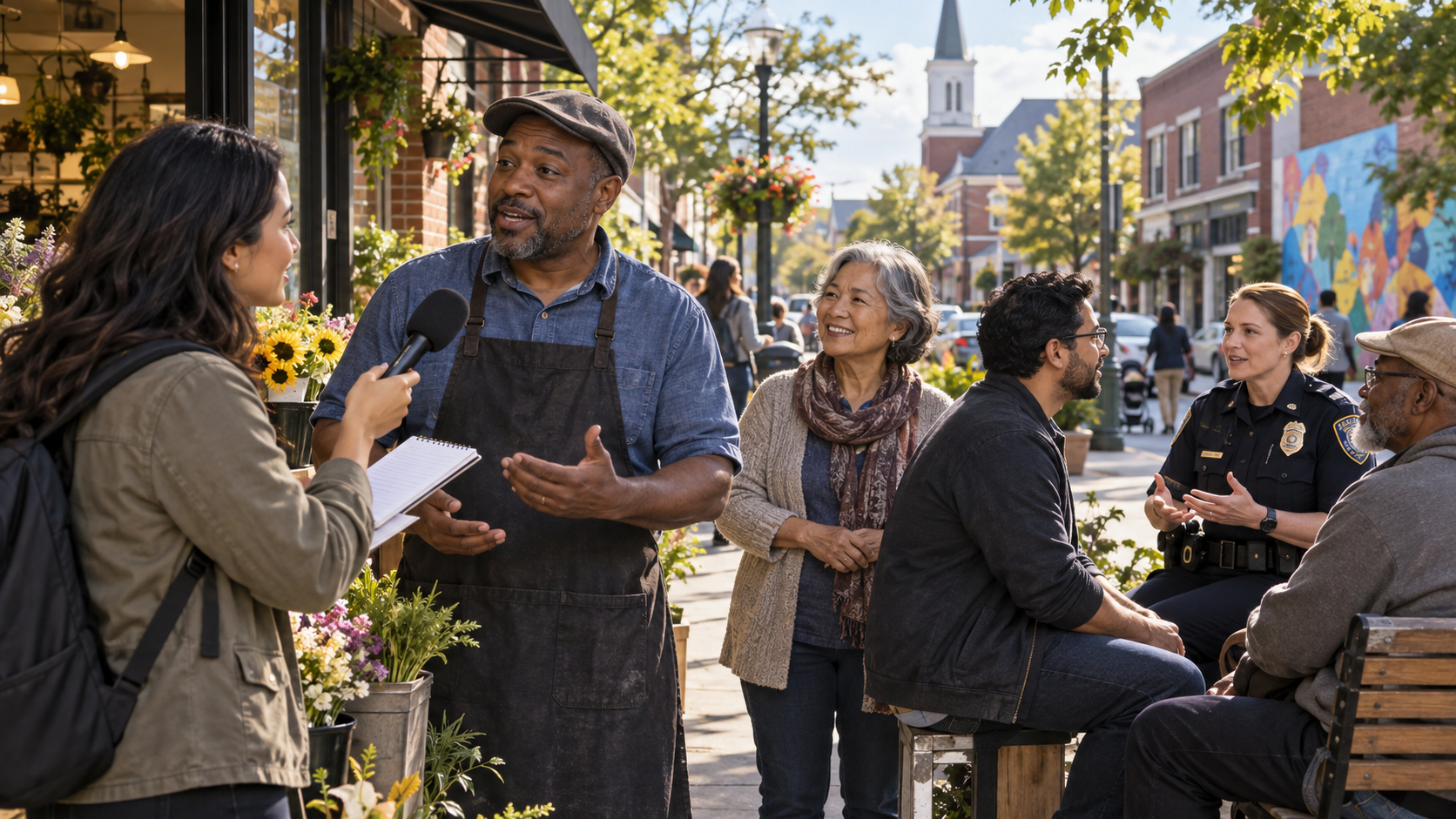
Community reporting is a style of journalism that starts with the people who live in a place, not with institutions or press releases. Instead of centering politicians, corporations, or national debates, it looks closely at how policies, events, and trends affect specific neighborhoods and communities. Reporters spend time on the ground, meeting residents where they are—at schools, places of worship, small businesses, parks, and online spaces where communities connect. The aim is to capture lived experience and local priorities, including issues that rarely reach national headlines.
In practice, community reporting often relies on deep relationship-building. Journalists cultivate trust by showing up consistently, listening more than they speak, and being transparent about what they plan to publish. Community members might help identify story ideas, share documents, keep reporters informed about unfolding issues, or even co-create content through storytelling workshops or collaborative investigations. This approach can surface stories about housing, schools, public safety, transportation, or cultural life that might otherwise be overlooked. It also helps correct imbalances, since many communities—especially low-income neighborhoods, rural areas, or minority groups—have historically been misrepresented or ignored by mainstream media.
Community reporting does not mean abandoning traditional journalistic standards. Reporters still verify information, seek multiple perspectives, and provide context. But the questions they ask are shaped by local concerns: How does a zoning change affect renters on a particular block? Why is a bus route important for workers with early shifts? What does a new development mean for long-time residents who fear displacement? By grounding stories in these concrete impacts, community reporting can make complex policies more understandable and relevant. It can also highlight solutions, such as local organizing, mutual-aid networks, or innovative programs that emerge from within the community.
At its best, community reporting strengthens democratic life. When people see their experiences reflected accurately in the news, they are more likely to trust local outlets, participate in public discussions, and hold officials accountable. Newsrooms that embrace this model often experiment with new formats: listening sessions, text hotlines, bilingual coverage, or partnerships with community organizations. The result is not just more inclusive storytelling, but also a feedback loop in which residents help shape coverage over time. In an era of shrinking local newspapers and growing news deserts, community reporting offers a way to keep people informed about decisions that directly affect their daily lives.
Community reporting is a form of journalism that centers the voices, concerns, and daily experiences of people in a specific neighborhood, town, or community. Instead of starting with official institutions or national storylines, it begins with what matters most to local residents and how broader trends show up in their lives.
The approach has deep roots in local papers, alternative weeklies, and grassroots newsletters, but it has gained renewed attention in response to “news deserts” and shrinking local newsrooms. As traditional outlets close or consolidate, community reporting models—often small, nonprofit, or volunteer-driven—aim to fill the gap by rebuilding trust and making coverage more responsive to local needs.
In practice, community reporting relies on close, ongoing relationships between journalists and residents. Reporters spend time in schools, local businesses, places of worship, and online community spaces, listening for story ideas that may not surface through official press releases or national feeds. Community members might suggest topics, share documents, or participate in listening sessions and town halls.
The work can include covering city council meetings, tracking changes to bus routes, or explaining new zoning rules through the lens of a single block. Formats vary—print stories, newsletters, text-message updates, social media threads, or multilingual coverage—but the goal is the same: to make information practical, understandable, and directly relevant to people’s daily decisions, while maintaining verification and editorial standards.
Community reporting faces significant challenges. Many projects operate with limited funding, small staffs, or heavy reliance on volunteers, which can make sustained coverage difficult. There is also a constant balance to strike between being close enough to a community to understand it well and maintaining enough distance to report fairly on disagreements, conflicts, or local power structures.
Supporters argue that community reporting can rebuild trust, counter stereotypes, and make local decision-making more transparent. Critics sometimes question whether small outlets can maintain independence from powerful local interests or avoid over-relying on the most vocal residents. Ongoing debates focus on sustainable business models, inclusive engagement, and how to ensure that community reporting reflects the full diversity of a place—not just the loudest voices.
Explore more "Explainers"
Discover additional explainers across politics, science, business, technology, and other fields. Each explainer breaks down a complex idea into clear, everyday language—helping you better understand how major concepts, systems, and debates shape the world around us.