

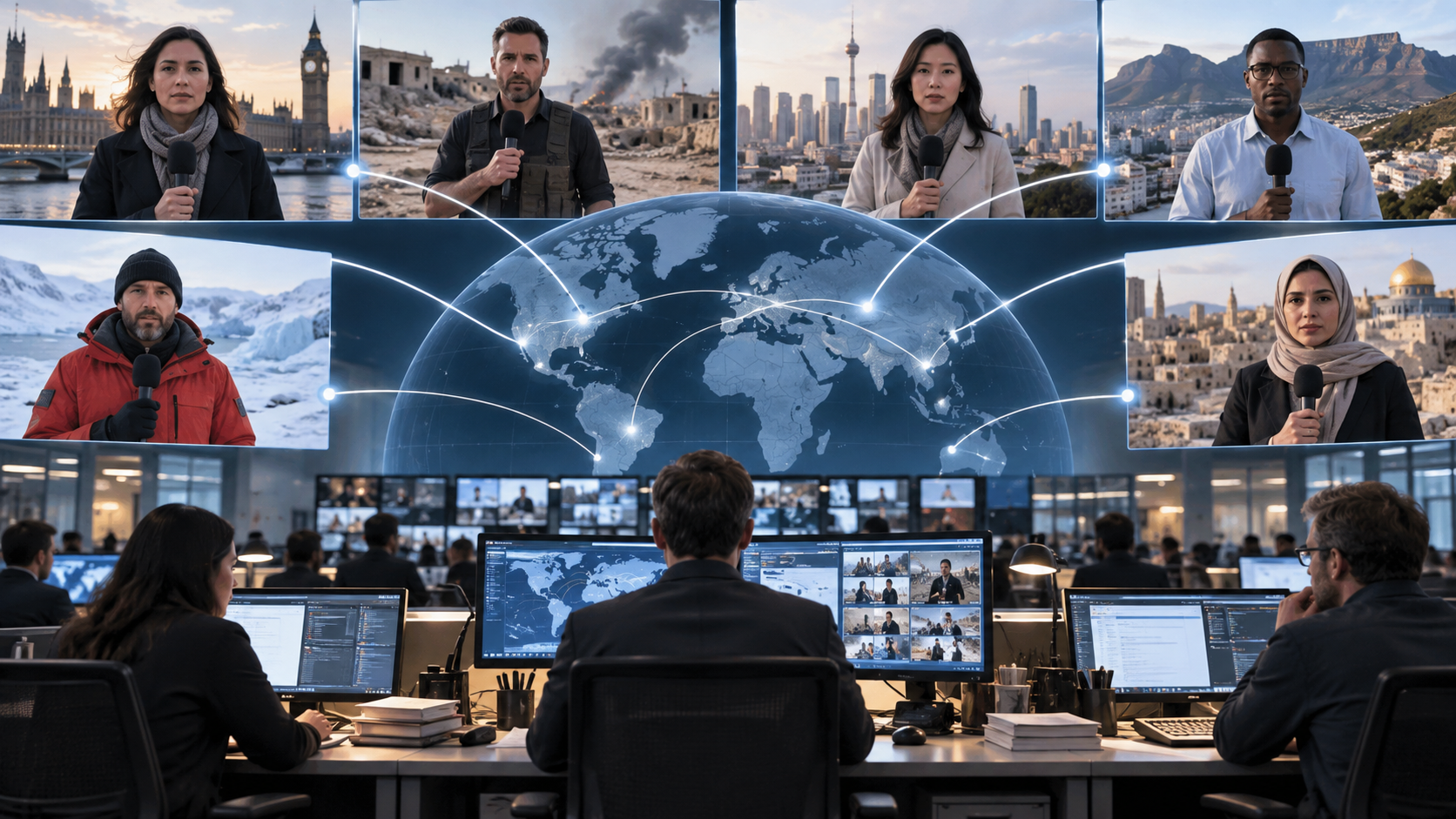
Correspondents Explainer
Correspondents are journalists assigned to report from specific locations or on specific subjects, providing firsthand accounts of major developments. Unlike studio-based reporters, correspondents often gather information directly from events as they unfold — whether that’s a political summit, a natural disaster, or a conflict zone. They work to supply context that audiences cannot get from a desk: What does the scene look like? What are people saying on the ground? How is a story evolving in real time? Their role helps bridge the gap between global events and public understanding, making far-away issues feel immediate and relevant.
There are several types of correspondents, each with a specialized focus. Foreign correspondents report on global affairs from international capitals or hotspots, explaining the politics and culture shaping each situation. War correspondents document the risks and human toll of conflict, often operating in dangerous conditions. Capitol or political correspondents track national power structures and policy decisions. Others cover beats like science, business, climate, technology, or entertainment — translating technical topics into accessible reporting. While many work for major networks or newspapers, freelance correspondents are increasingly common, selling their coverage to multiple outlets.
The job requires a combination of deep subject knowledge, local connections, adaptability, and strong storytelling. Technology has changed how correspondents work: satellite phones once defined remote journalism, but today live video, secure messaging apps, and social media allow faster and more interactive reporting. Yet those same tools introduce challenges — rapid news cycles can push correspondents to deliver updates before full facts are verified, and disinformation online can confuse what is actually happening. Safety concerns are also real, with correspondents sometimes targeted for documenting the truth.
Despite these challenges, correspondents remain crucial to journalism’s mission. They add nuance that cannot be achieved through secondhand reporting or automated updates. By being physically present, they identify overlooked voices and provide context that shapes how audiences interpret major events. In a world where information flows constantly but not always clearly, correspondents help people see not just what is happening — but why it matters.
Good correspondence also depends on preparation behind the camera or byline. Reporters develop trusted local contacts, arrange translation, study security risks, and learn the history that gives today’s events meaning. Editors must support safe working conditions and verify material without stripping away local knowledge. When a correspondent leaves, careful handoffs and continued relationships help the newsroom preserve context instead of treating each new event as an isolated spectacle.
Correspondents are journalists who report directly from specific locations or on particular subject areas, delivering firsthand details that studio-based reporters cannot capture. Their work became essential in the early days of international news services, when newspapers needed on-the-ground accounts from foreign capitals, war zones, and major political centers.
As global communication grew more complex, correspondents evolved into specialists who help audiences understand the local context behind world events. Whether covering elections, conflicts, or breaking developments in technology or science, correspondents serve as a vital link between distant communities and the public who relies on timely, accurate reporting.
Most correspondents work from the field, interviewing sources, capturing visuals, and gathering real-time updates. Foreign and war correspondents operate in challenging environments—sometimes under physical risk—to share verified facts amid fast-moving events. Others focus on specific beats, such as business, environment, sports, or entertainment, developing expertise that adds depth and clarity to their stories.
Tools and workflows have changed dramatically: live video streaming, mobile journalism kits, secure messaging apps, and geolocation tools allow correspondents to report faster than ever. Still, editorial checks and fact-verification remain core responsibilities before information reaches the public.
Correspondents routinely face obstacles including censorship, political pressure, limited access to information, and security threats. Some regions treat independent journalism as a crime, making reporters targets for intimidation or violence. Organizations increasingly prioritize protection protocols and advocacy to safeguard press freedom.
In an era of online misinformation, correspondents play a key role in strengthening public trust by showing what is happening with firsthand evidence. Their presence on location gives audiences insights that are harder to distort, helping journalism remain grounded in reality even as digital platforms accelerate rumor and speculation.
Explore more "Explainers"
Discover additional explainers across politics, science, business, technology, and other fields. Each explainer breaks down a complex idea into clear, everyday language—helping you better understand how major concepts, systems, and debates shape the world around us.