

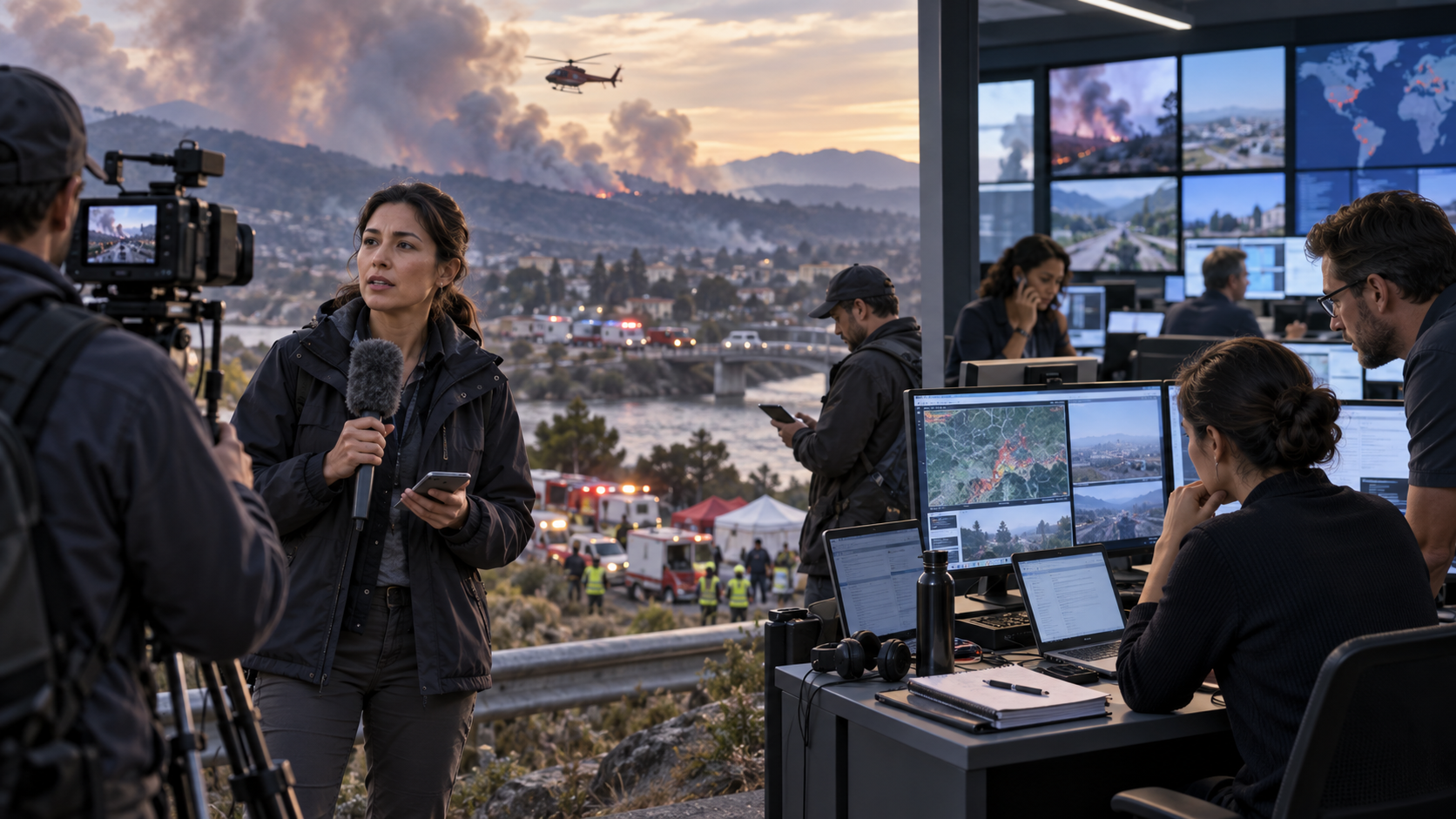
Crisis Reporting Explainer
Crisis reporting focuses on fast-moving and high-stakes situations such as natural disasters, terrorist attacks, public health emergencies, and humanitarian crises. Audiences rely on timely coverage to understand what is happening, where to find help, and how to stay safe. Journalists on the ground face unpredictable conditions, limited information, and heightened emotional stress. They must gather facts while coordinating logistics, protecting themselves and their sources, and avoiding interference with emergency responders.
Accuracy becomes especially critical during a crisis. Early details are often incomplete or contradictory, and rumors can spread as quickly as verified updates. Responsible journalists confirm information with multiple sources, clearly label what is known and unknown, and avoid sensational claims that could spark panic. Ethical decisions are constant: Should graphic images be shown if they help convey the scale of the event? How can reporters respect victims’ privacy while documenting the human impact? Newsrooms also consider potential political consequences — crisis narratives can influence public trust in institutions or shape how governments respond.
Technology has transformed crisis coverage. Satellite footage, livestreams, and social media posts offer real-time windows into unfolding events, but they also complicate verification. User-generated content may originate from people in danger, creating both opportunity and responsibility. Fact-checking teams track misinformation, while local journalists often serve as the most reliable witnesses, especially when outside media cannot reach affected areas. Collaboration with experts — such as meteorologists, public safety officials, or medical authorities — helps translate complex risks into clear, actionable guidance for the public.
When the immediate danger passes, crisis reporting doesn’t end. Follow-up coverage assesses response efforts, long-term recovery, and accountability. Which communities were most affected? Were early warnings ignored? How will policies change to prevent future harm? The role of crisis journalism is not only to inform during disaster but also to help societies learn from it. By combining speed with care, journalists ensure that urgent news can be trusted even when circumstances are chaotic — and that the people living through crisis are seen with dignity.
A strong follow-up process also checks the newsroom’s own performance. Editors review whether urgent updates were accurate, whether corrections reached the same audiences as the original reports, and whether coverage included people with limited access to official information. Returning to affected communities after attention fades can reveal unmet needs, unequal recovery, and lessons for future preparedness. That sustained reporting turns a moment of crisis into a fuller public record.
Crisis reporting is the branch of journalism that covers sudden, disruptive events that threaten lives, infrastructure, or social order—such as earthquakes, industrial accidents, terror attacks, pandemics, and large-scale conflicts. These are moments when people urgently need reliable information to make decisions and understand rapidly changing risks.
The modern idea of crisis coverage took shape with live radio and television, which brought distant disasters into homes in real time. As audiences began to expect instant updates, news organizations developed specialized teams, safety training, and ethical guidelines to handle high-pressure situations while maintaining accuracy and minimizing harm.
In a crisis, reporters work on tight timelines and often in hazardous environments. They coordinate with editors, field producers, and visual teams to gather verified details from emergency services, hospitals, local officials, and eyewitnesses. The goal is to deliver clear, practical information—where danger zones are, which routes are closed, and where aid is available.
Today, crisis reporters also rely heavily on digital tools. They monitor social media feeds, analyze user-generated photos and video, and cross-check claims with maps, sensor data, and official briefings. Newsrooms build verification workflows to separate credible reports from rumors, and they frequently add context from scientists, security experts, or humanitarian organizations to explain what might happen next.
Crisis reporting comes with significant challenges. Journalists may face personal danger, emotional strain, and restricted access to key locations or records. Coverage decisions—such as whether to show graphic images or live scenes of unfolding violence—can affect victims’ privacy, public anxiety levels, and perceptions of bias.
Critics worry that nonstop, dramatic coverage can sensationalize tragedy, misrepresent long-term risks, or overshadow slower-moving crises like displacement or reconstruction. Supporters argue that careful, sustained crisis reporting is essential for accountability and recovery, documenting what went wrong and which communities were most affected. Debates continue over how to strike a balance between urgent updates, human dignity, and deeper, follow-up investigations.
Explore more "Explainers"
Discover additional explainers across politics, science, business, technology, and other fields. Each explainer breaks down a complex idea into clear, everyday language—helping you better understand how major concepts, systems, and debates shape the world around us.