

Crowdsourcing Explainer
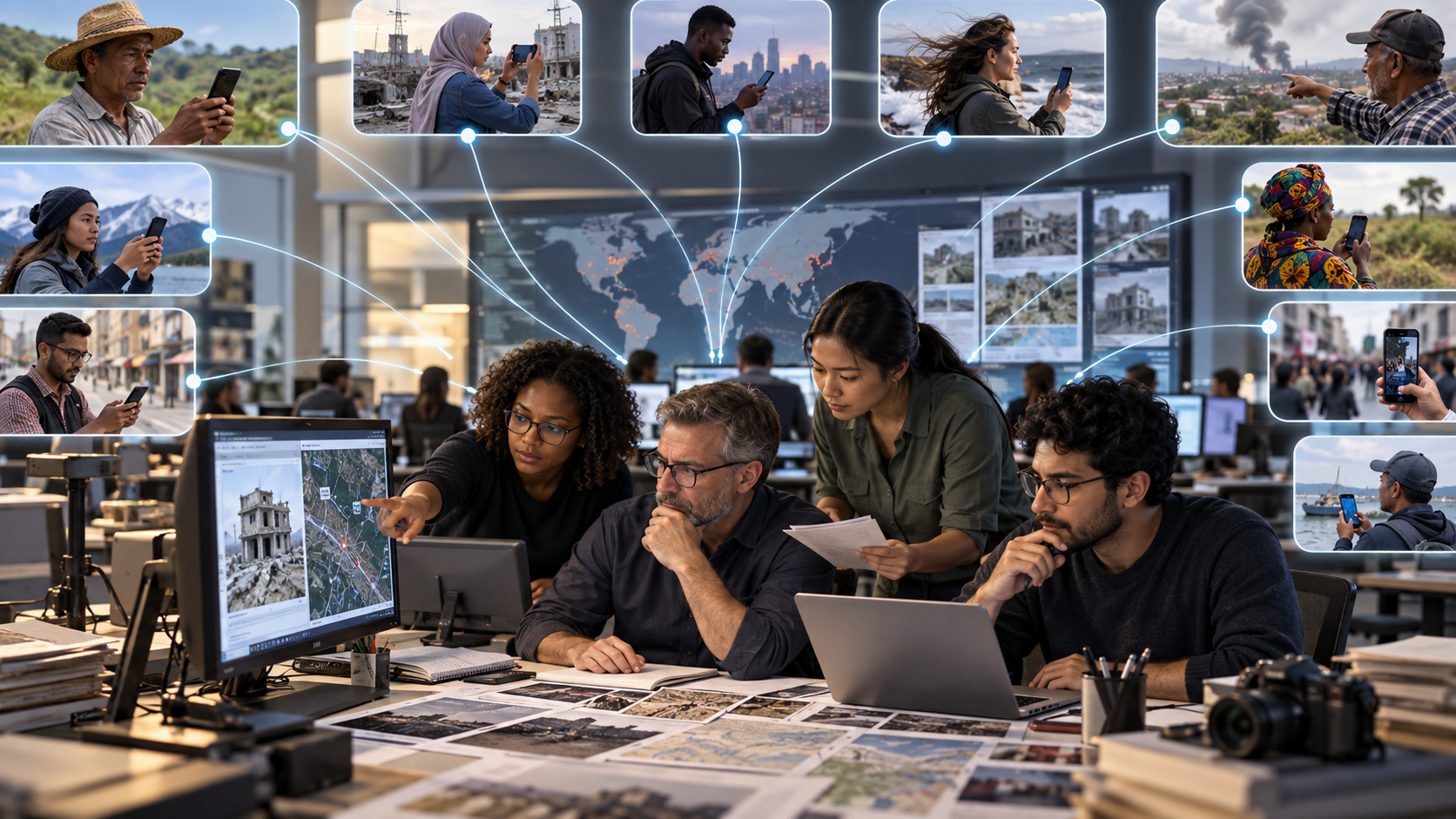
Crowdsourcing in journalism refers to collecting information, images, stories, and expertise directly from members of the public. Instead of relying solely on traditional sources such as officials and experts, reporters invite audiences to contribute what they know — from sharing photos of a severe storm to submitting tips about government misconduct. With smartphones and social platforms everywhere, ordinary people are often the first to witness newsworthy events. Crowdsourcing helps turn that immediacy into reporting that reflects a broader and more accurate picture of what is happening.
News organizations use crowdsourcing for many types of coverage. During natural disasters or protests, citizens upload photos and videos that show conditions reporters may not be able to reach. When investigative teams need insight from large groups — such as workers in a mistreated industry or residents affected by pollution — online forms allow people to submit confidential experiences that reveal hidden patterns. Even newsroom projects that track public sentiment, such as election concerns or inflation impacts, rely on direct participation to capture perspectives that data alone may overlook. In these ways, crowdsourcing strengthens journalism by elevating voices typically underrepresented in mainstream media.
However, public contributions require careful verification. False or misleading material can spread quickly, especially in chaotic situations, and journalists must confirm details before publishing. This can include checking metadata on images, comparing multiple submissions for consistency, or confirming a tip through independent records and additional interviews. Safety and ethics also matter: contributors should not put themselves at risk to obtain information, and sensitive personal stories must be handled with consent and privacy protections. When journalists clearly explain how submissions will be used and how accuracy will be ensured, trust between the newsroom and the public grows.
Crowdsourcing has opened a new form of collaboration, transforming audiences from passive consumers into active participants in the reporting process. It allows communities to hold institutions accountable, shine light on problems that insiders might ignore, and provide firsthand insight during fast-moving events. At the same time, it reinforces the essential role of journalists — not just gathering information, but verifying it, organizing it, and presenting it responsibly. When practiced thoughtfully, crowdsourcing can make journalism more inclusive, more informed, and more connected to the people it serves.
Crowdsourcing in journalism refers to gathering information, images, tips, and perspectives directly from the public. It emerged as digital tools and mobile devices made it easier for audiences to document and share what they experience in real time.
Newsrooms began using crowdsourcing more widely during major breaking events — such as natural disasters and protests — when eyewitnesses were closer to the story than professional reporters. It has since grown into an essential tool for investigations, accountability reporting, and community engagement.
News organizations invite the public to contribute through online forms, tip lines, social media calls, encrypted messaging apps, and community networks. Journalists sort submissions to identify patterns, confirm details, or locate new sources.
Eyewitness photos, videos, and firsthand accounts allow reporters to reach places or people they otherwise could not. Crowdsourcing can also help expose systemic issues — such as unsafe workplaces or environmental hazards — by collecting many individual experiences that reveal a bigger story.
Public contributions are valuable but require careful verification. False claims or manipulated media can spread quickly, especially during chaotic events. Journalists must confirm authenticity, protect contributor privacy, and avoid pressuring individuals into dangerous situations just to capture evidence.
When practiced responsibly, crowdsourcing strengthens journalism by connecting communities to the reporting process — while still relying on journalists to vet information and present it accurately and safely.
Explore more "Explainers"
Discover additional explainers across politics, science, business, technology, and other fields. Each explainer breaks down a complex idea into clear, everyday language—helping you better understand how major concepts, systems, and debates shape the world around us.