

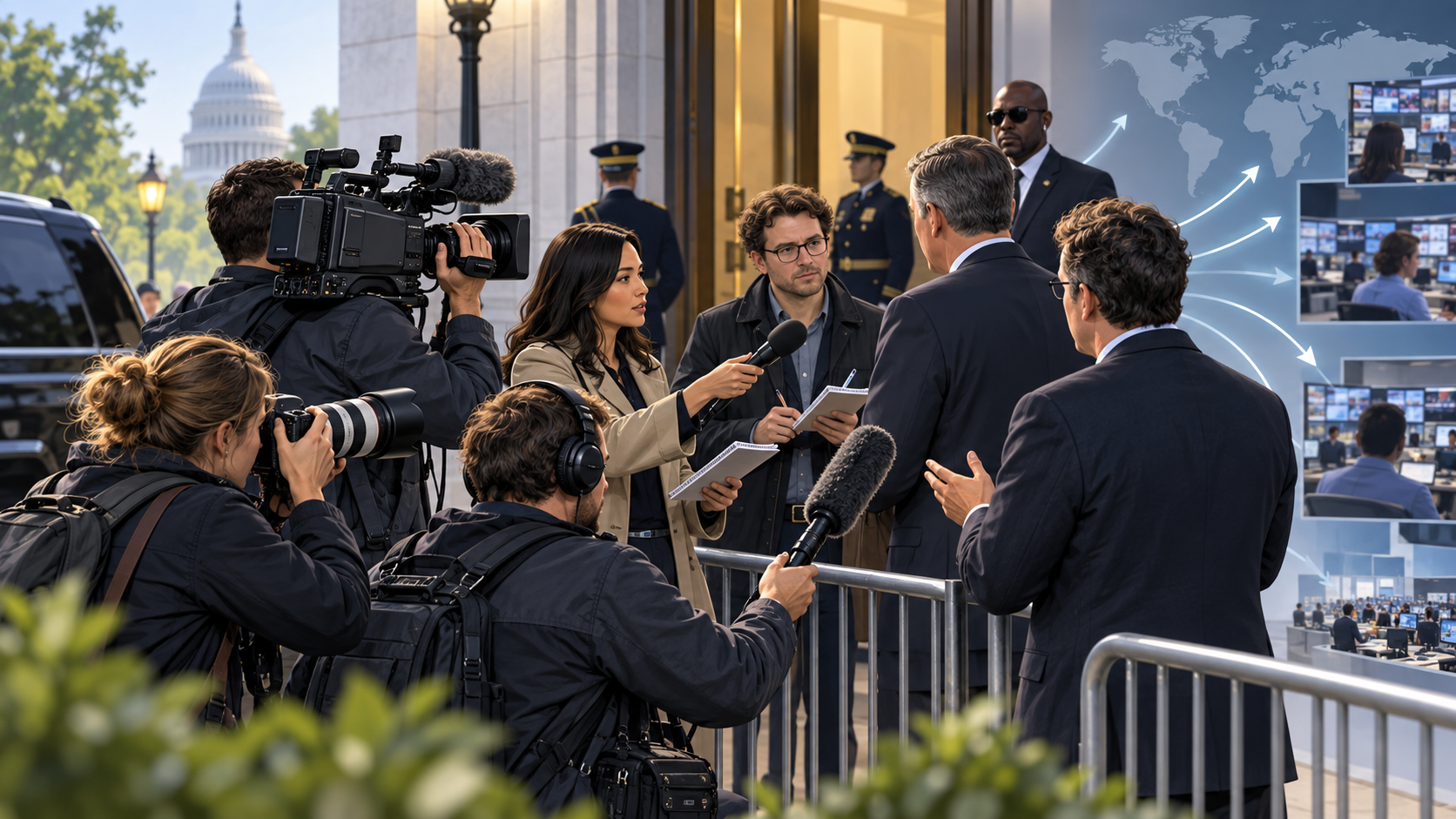
Press Pool Reporting Explainer
A press pool is a small group of journalists allowed into a place or event when there is not enough room, access, or security capacity for the entire press corps. The pool observes on behalf of many competing outlets and quickly shares what it sees and hears. Pools are common around presidents, courts, military operations, campaign travel, and other situations where unrestricted access is impractical. They are a logistical compromise: fewer people enter, but the resulting notes, quotes, photographs, audio, and video are distributed more broadly.
At the White House, for example, a rotating pool can include wire, print, television, radio, and still-photo journalists. The print pooler sends near-real-time reports describing the president’s movements, remarks, attendees, and relevant scene details. Other specialists provide pictures, sound, or video to participating organizations. Pool duty temporarily changes a reporter’s role. The first obligation is to the collective group, so important observations and quotes are shared with the pool before the reporter uses them exclusively for an individual outlet.
A useful pool report is fast, factual, and specific. It distinguishes what the reporter personally observed from information supplied by officials, includes complete quotes when possible, and corrects errors promptly. The report is raw newsgathering rather than a finished article. Each newsroom still decides what to verify further, what context to add, and whether an observation matters. Because many organizations may quote or publish a pool report, unclear wording or a missed detail can spread widely, making careful note-taking and transparent corrections especially important.
Pooling also creates tradeoffs. Officials may gain influence over who can witness an event or how close reporters can get. A small group can miss questions or perspectives that a larger, more varied corps would raise. The system works best when assignments rotate, the pool represents several media formats, access rules are visible, and journalists continue pressing for fuller access. A pool is not a substitute for independent reporting; it is a shared observation channel that helps preserve some public scrutiny when physical access is constrained.
After an event, the shared record should remain available long enough for participating newsrooms to compare notes and resolve discrepancies. Poolers label secondhand information, preserve recordings when rules allow, and send corrections through the same distribution channel as the original report. Editors should also tell audiences when meaningful access was limited. Those practices make the pool’s constraints visible and help prevent a convenient arrangement from being mistaken for a complete, independent view.
Some rooms, vehicles, court areas, and secure events cannot accommodate every journalist who wants access. A selected group covers the event for the rest. Pools may also reduce equipment, noise, and security demands while keeping at least one independent witness close to important officials or proceedings.
The goal is to preserve a record and distribute observations despite the constraint, not to give the pool members ownership of the news. Membership typically rotates so that the cost and opportunity of pool duty are shared and no single outlet becomes the permanent gatekeeper.
Print poolers file short updates as events unfold, then add fuller quotes and color. Television, radio, and photo members provide material through their own shared systems. Reports are numbered, time-stamped, and corrected openly so recipients can follow the sequence and identify changes.
News organizations may use the material immediately, but they remain responsible for editing, context, verification, and any additional reporting they publish. Pool reports often contain useful scene details and direct quotations, yet they may not answer every question that an individual newsroom considers important.
Pools can narrow the range of questions and viewpoints present in a room. They can also make the broader press dependent on access decisions made by officials or organizers. If officials restrict movement or information, the pool should describe those limits rather than allowing readers to assume full access.
Rotation, prompt corrections, neutral descriptions, and continued demands for direct access help reduce those risks. Pool notes should be treated as evidence to assess, not unquestionable transcripts. Independent interviews, documents, recordings, and reporting outside the event remain essential checks on the shared account.
Explore more "Explainers"
Discover additional explainers across politics, science, business, technology, and other fields. Each explainer breaks down a complex idea into clear, everyday language—helping you better understand how major concepts, systems, and debates shape the world around us.