

Press Conferences Explainer
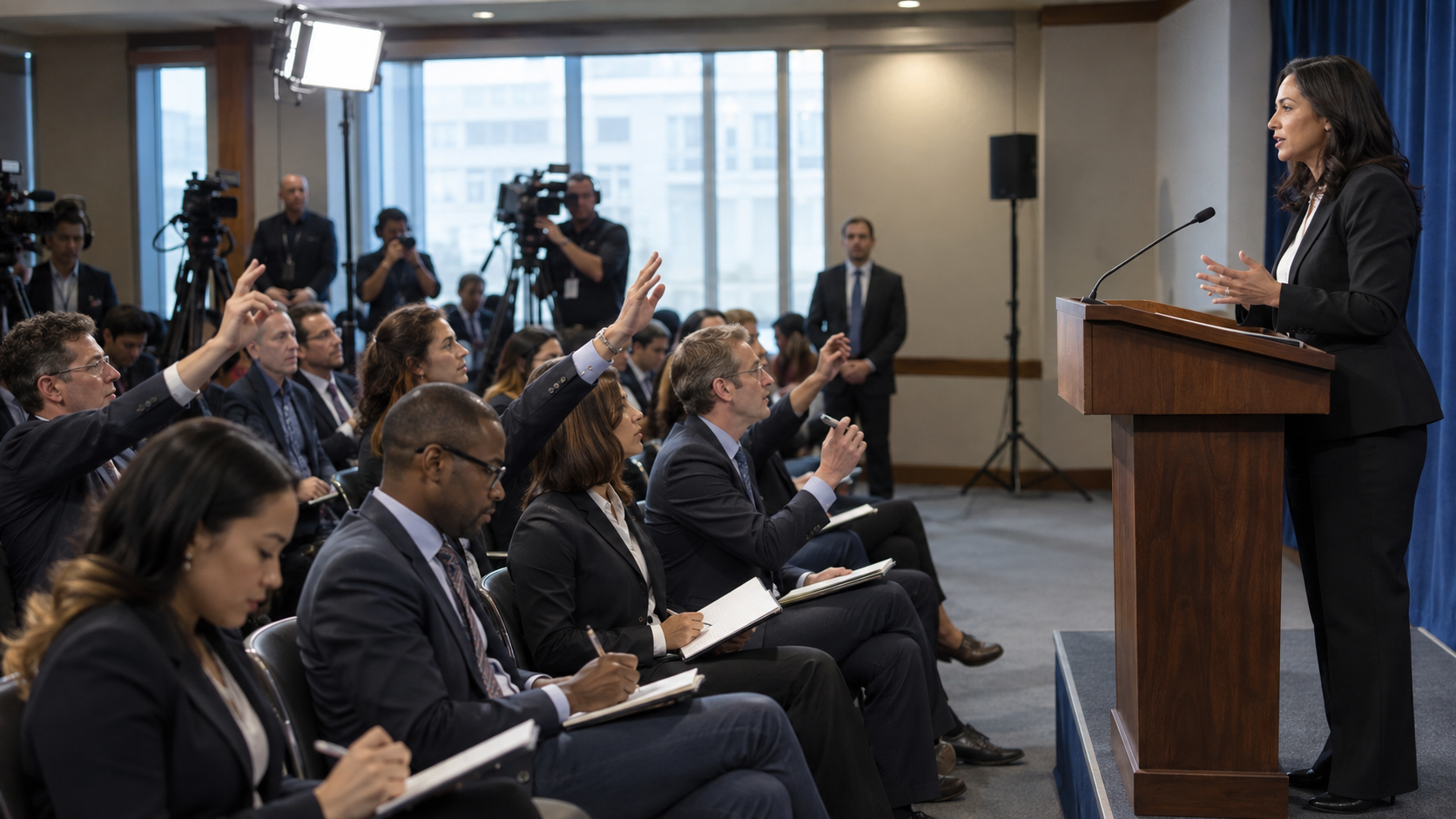
A press conference is an organized event where a public figure, institution, company, or other newsmaker makes statements and accepts questions from journalists. It gives many outlets access to the same announcement at roughly the same time, creating a public record that can be compared across reports. The format is common after government decisions, emergencies, court developments, scientific announcements, sports events, and corporate news. It is useful for direct questioning, but it is still a staged source event rather than a substitute for independent reporting.
Organizers usually control the time, place, speaker list, accreditation, and length of the session. A moderator may call on reporters, group questions by topic, or end the event after a fixed period. Journalists prepare by reviewing documents, checking earlier statements, and identifying questions that require a factual answer rather than a speech. When several reporters pursue the same unresolved point, the exchange can reveal whether a speaker has evidence, is declining to answer, or is relying on language that avoids the substance of the question.
Access is rarely perfect. Limited seating, security rules, travel costs, invitation lists, and online connection problems can exclude some outlets. Officials may favor friendly questioners, restrict follow-ups, or hold a briefing with no questions at all. In high-demand settings, a press pool may attend for a larger group and share notes, audio, photographs, or video. Those arrangements can broaden practical access, but reporters should explain restrictions that affected what they could observe or ask.
After the event, journalists verify the claims instead of treating the microphone as proof. They compare statements with records, data, prior promises, expert analysis, and accounts from people affected by the issue. A precise story distinguishes what the speaker said from what the newsroom independently confirmed. Readers can make the same distinction by noticing attribution and by comparing coverage from outlets that asked different questions. Press conferences matter because questioning can create accountability in public, but their value depends on access, persistent follow-ups, and reporting that continues after the room empties. Transcripts and recordings can preserve the exchange for later scrutiny, but they cannot capture every condition in the room. Reporters may note who was denied access, which questions went unanswered, and whether supporting documents were released. Those details help audiences judge both the briefing and the limits of the information it produced.
Organizers often require credentials and may use a moderator, a seating order, or a queue. Those rules can keep a crowded event orderly, but they also give the host influence over which journalists and topics receive attention.
Reporters watch for patterns in who is called on and whether local, independent, specialized, or international outlets have meaningful access. Coverage may disclose restrictions when they shape the available information.
A first answer may repeat prepared talking points, address only part of the question, or introduce a new claim. A focused follow-up asks for the missing evidence, a clear timeline, or a direct response to the unresolved point.
Time limits make follow-ups difficult, so journalists may coordinate by returning to an unanswered issue. Persistence is most useful when it seeks specific facts rather than producing an argument for its own sake.
Statements about numbers, causes, legal authority, scientific findings, or operational success are checked against primary records and knowledgeable independent sources. Video of the event confirms what was said, not whether the claim was true.
Reporters also seek people affected by the announcement and examine what the speaker omitted. The finished story should make clear which details came from the event and which were independently corroborated.
Explore more "Explainers"
Discover additional explainers across politics, science, business, technology, and other fields. Each explainer breaks down a complex idea into clear, everyday language—helping you better understand how major concepts, systems, and debates shape the world around us.