

Copy Editor Explainer
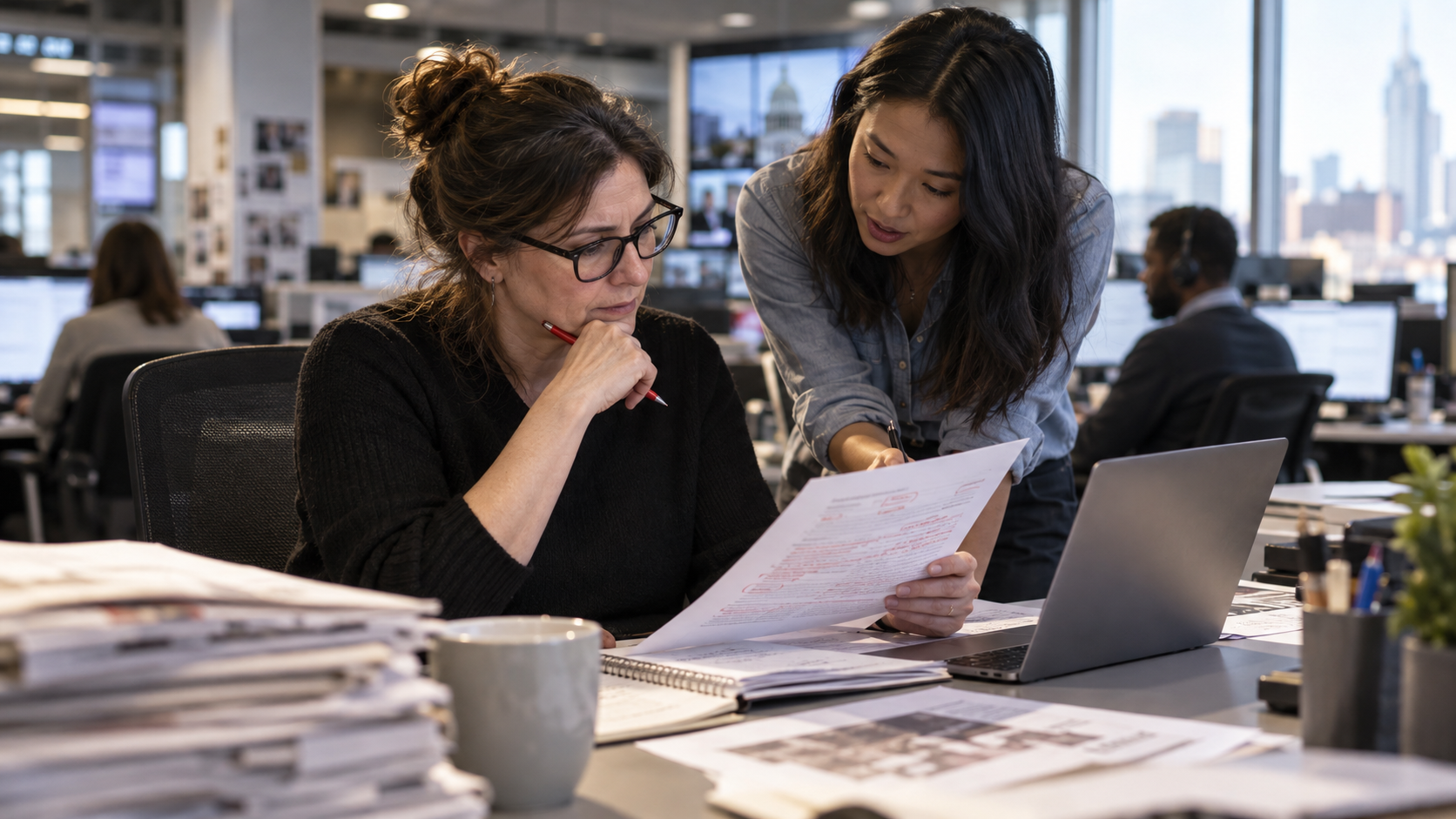
A copy editor reviews a news story before publication to improve its accuracy, clarity, structure, grammar, and consistency. The work begins after a reporter or assigning editor has shaped the main reporting, although copy editors may become involved earlier on complex stories. They read from the audience’s perspective, looking for confusing passages, unsupported conclusions, missing context, and details that do not agree with one another. Their task is not simply to correct punctuation. It is to help the article say exactly what the reporting can support.
A careful copy edit checks names, titles, dates, locations, numbers, quotations, links, and attributions. The editor may compare a spelling with an official record, recalculate a percentage, ask whether a quotation was transcribed correctly, or notice that a timeline cannot work as written. These checks do not replace the reporter’s verification, and the depth of review varies by newsroom and deadline. They provide another chance to catch errors before they reach the audience. When a question affects meaning, the copy editor consults the reporter rather than silently guessing.
Copy editors also make prose easier to follow. They may shorten a long sentence, remove repetition, define jargon, move essential context earlier, or flag a transition that implies a connection the evidence does not establish. They apply a newsroom’s style rules so recurring choices—such as capitalization, titles, abbreviations, and numbers—remain consistent. Good editing preserves the writer’s voice and the story’s nuance. It avoids turning cautious findings into certainty or replacing precise language with a more dramatic phrase merely because it sounds stronger.
Headlines, captions, summaries, alerts, and other display text may also pass through a copy desk. These short elements carry special risk because they compress complicated reporting and are often seen without the full article. An editor checks that a headline identifies the central fact without exaggerating it, that a caption correctly describes an image, and that a summary includes necessary attribution. Sensitive stories may require coordination with standards editors, lawyers, visual teams, or subject specialists before publication.
Newsrooms organize this function in different ways. Some maintain a dedicated copy desk; others ask assigning editors, producers, or reporters to share the work. Automated spelling and grammar tools can identify patterns, but they cannot reliably judge fairness, sourcing, legal risk, or whether a sentence matches the evidence. Copy editing remains an exercise in editorial judgment. At its best, it is both protective and constructive: a final independent reading that reduces preventable errors, respects the reporting, and makes trustworthy information easier for the public to understand.
No. It also addresses accuracy, logic, clarity, structure, sourcing, headlines, captions, consistency, and questions that require more reporting.
A copy editor should preserve the verified meaning. Substantive questions or changes are normally discussed with the reporter or assigning editor.
No. Some have dedicated copy editors, while others distribute the work among assigning editors, producers, and reporters.
Explore more "Explainers"
Discover additional explainers across politics, science, business, technology, and other fields. Each explainer breaks down a complex idea into clear, everyday language—helping you better understand how major concepts, systems, and debates shape the world around us.