

Live Shot Explainer
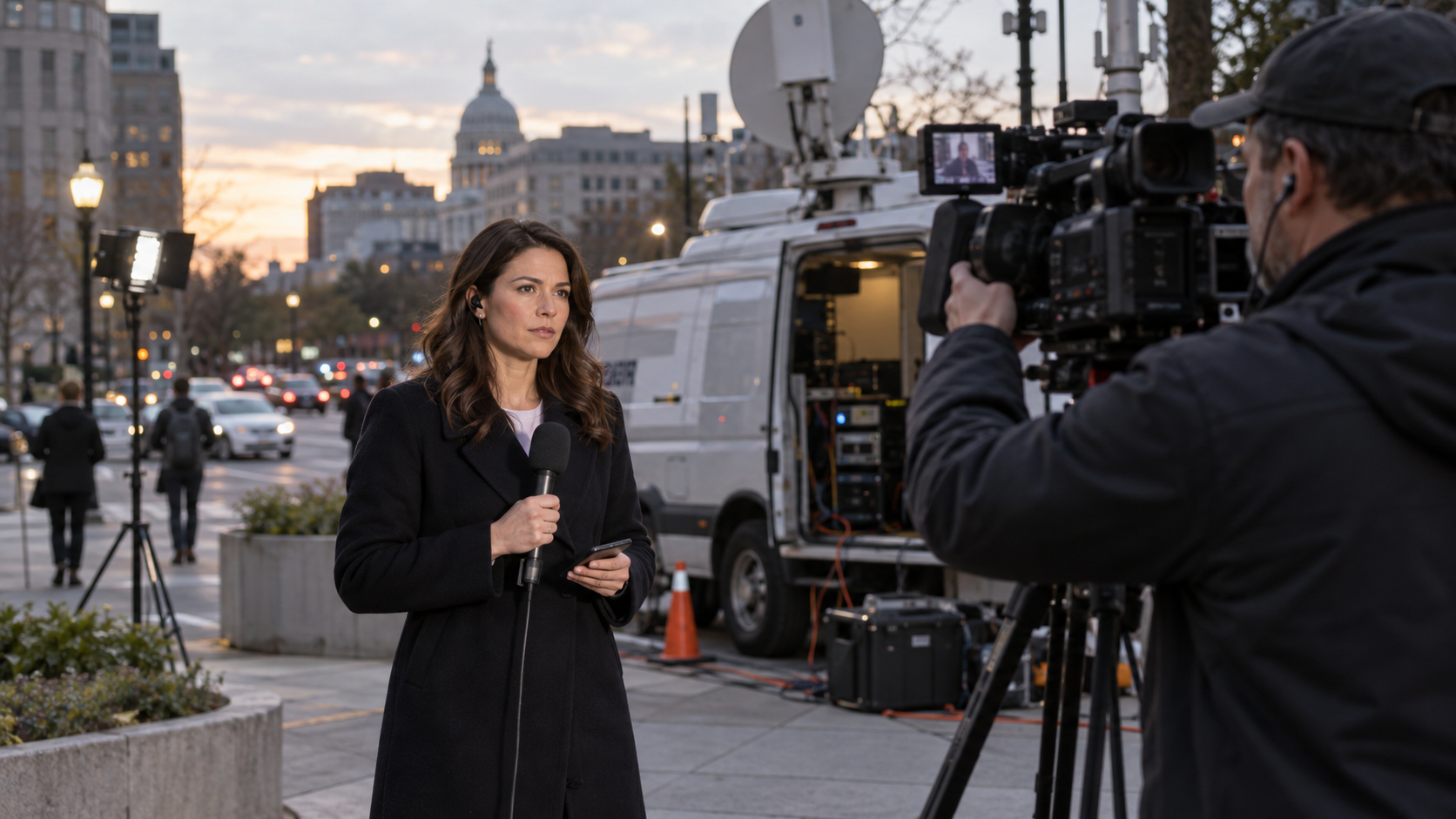
A live shot is an on-location television report transmitted to viewers in real time. The reporter may answer questions from an anchor, describe verified developments, interview someone at the scene, or introduce a recorded package. The defining feature is that the reporter’s image and sound are being carried live rather than recorded and edited beforehand.
Crews prepare by choosing a safe, relevant location and establishing a reliable connection to the station or network. Video may travel through a satellite truck, microwave link, bonded cellular system, or internet connection. The reporter and producer confirm the latest facts, rehearse the opening, test the microphone and earpiece, and agree on how much time the segment has. Even a short report requires coordination with the control room.
Live reporting creates immediacy but also removes the safety net of editing. Facts can change while the reporter is speaking, witnesses may offer unverified claims, and technical delays can make conversations awkward. Journalists therefore use careful attribution, distinguish what they personally observed from what officials reported, and say when information remains uncertain. Producers can end the shot if conditions or content become unsafe.
The background should help viewers understand the location, but it should never justify placing a crew in danger. Reporters avoid blocking emergency responders, revealing protected details, or standing in hazardous weather merely for dramatic effect. Lighting, traffic, crowds, noise, and escape routes are considered before the camera goes live. A less dramatic but controlled position often produces a clearer and more responsible report.
A live shot is most valuable when something meaningful is happening or when an on-scene journalist can add context that the studio cannot. It is less useful when the background is unrelated, no new information is available, or the format encourages speculation. Good live reporting combines presence with restraint: the audience sees where the journalist is while still receiving information that has been checked and clearly explained. Stations may also keep a recorded backup in case the transmission fails. Afterward, the live report can be clipped for digital use, but editors should add context when the original segment depended on events unfolding at a particular moment.
No. Live shots are common during breaking news, but they are also used for planned events, hearings, elections, weather, and follow-up coverage.
Signals can introduce a delay between the studio and the field, so participants may need an extra moment before answering.
Yes. A live reporter can introduce or discuss prerecorded footage while remaining connected to the studio in real time.
Explore more "Explainers"
Discover additional explainers across politics, science, business, technology, and other fields. Each explainer breaks down a complex idea into clear, everyday language—helping you better understand how major concepts, systems, and debates shape the world around us.