

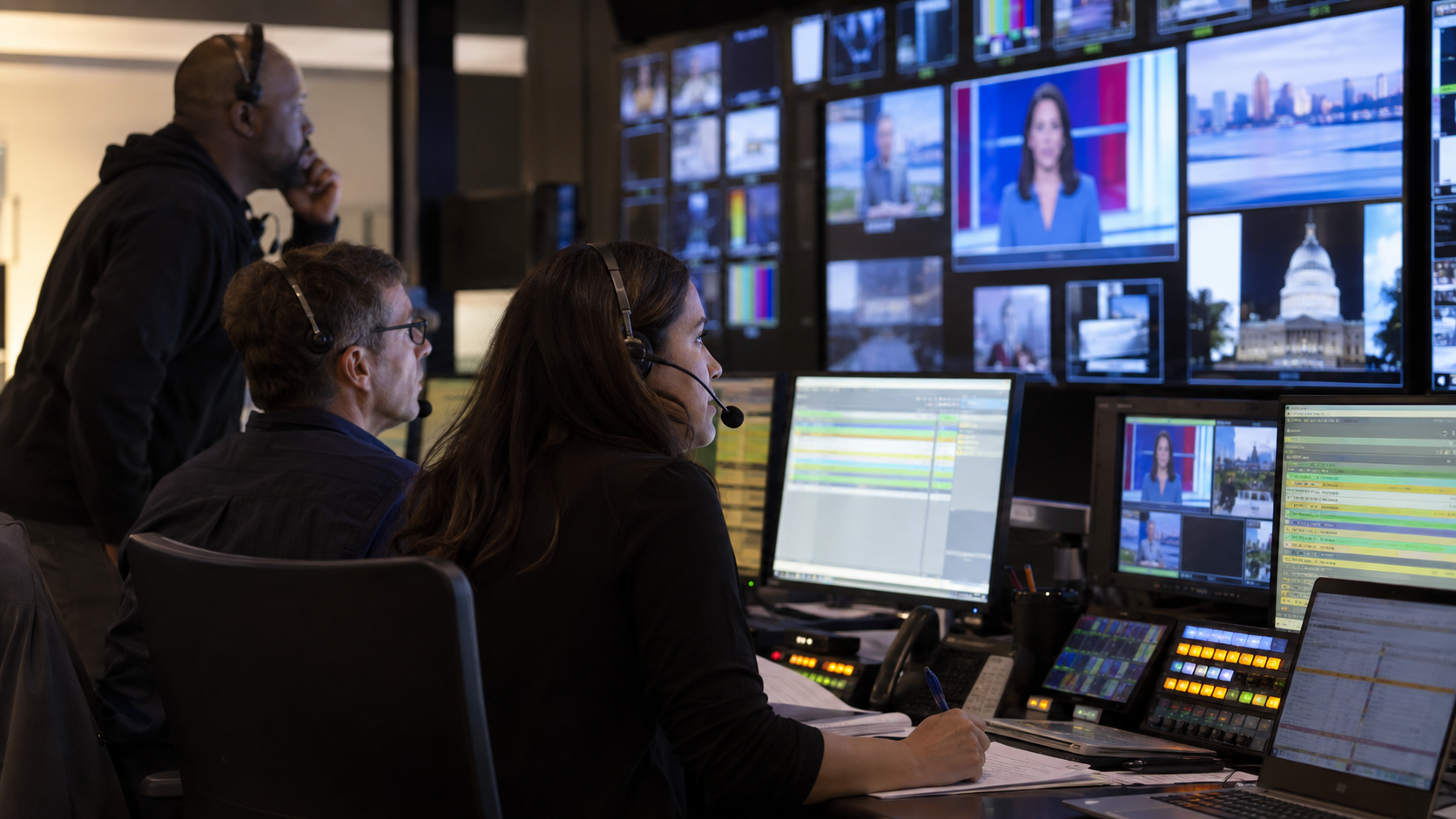
Broadcast Rundown Explainer
A rundown is the working plan for a television or radio news program. It lists the stories, scripts, interviews, video, graphics, live reports, teases, and commercial breaks in the order they are expected to air. It also assigns time to each element, giving the newsroom a shared road map for producing the show.
Producers build the rundown by weighing news importance, audience needs, available reporting, visual material, and the program’s fixed duration. Major developments usually receive prominent positions, while related stories may be grouped to create a logical flow. Each row can include a story slug, format, expected length, source notes, graphics instructions, and cues for anchors and the control room.
The document is not static. Breaking news may force a producer to add a live report, drop a feature, shorten an interview, or move a story moments before airtime. Changes must be communicated quickly because directors, audio operators, graphics teams, camera crews, editors, and anchors rely on the same sequence. Modern newsroom systems update the rundown and scripts together so teams can see revisions.
Timing is central. If early segments run long, later items may need to be trimmed; if a guest ends early, the producer may add a brief story or extend another element. Producers track the show’s actual running time against the plan while protecting essential reporting. Accuracy still comes first: a convenient slot in the rundown does not justify airing information that has not been verified.
For audiences, the rundown is invisible, but its effects shape the clarity and pace of a newscast. A strong rundown balances urgency with context, varies formats without becoming chaotic, and leaves room to respond when events change. It coordinates many specialized jobs while helping the program deliver the most important verified information within a strict broadcast clock. After the broadcast, producers may review where timing slipped, whether transitions worked, and which planned items were dropped. That review helps improve future shows and creates a record of what the team intended to air compared with what viewers actually received. Rundowns may be archived with scripts and production notes, giving editors a useful reference when reviewing corrections, follow-up coverage, or questions about how a rapidly changing story was handled.
The show producer usually leads it, while editors, anchors, directors, and other teams contribute information and respond to changes.
Yes. Producers routinely reorder, shorten, add, or remove elements as breaking news and timing require.
No. It organizes scripts and production elements, but each story or segment may have its own detailed script and technical cues.
Explore more "Explainers"
Discover additional explainers across politics, science, business, technology, and other fields. Each explainer breaks down a complex idea into clear, everyday language—helping you better understand how major concepts, systems, and debates shape the world around us.