

Natural Sound Explainer
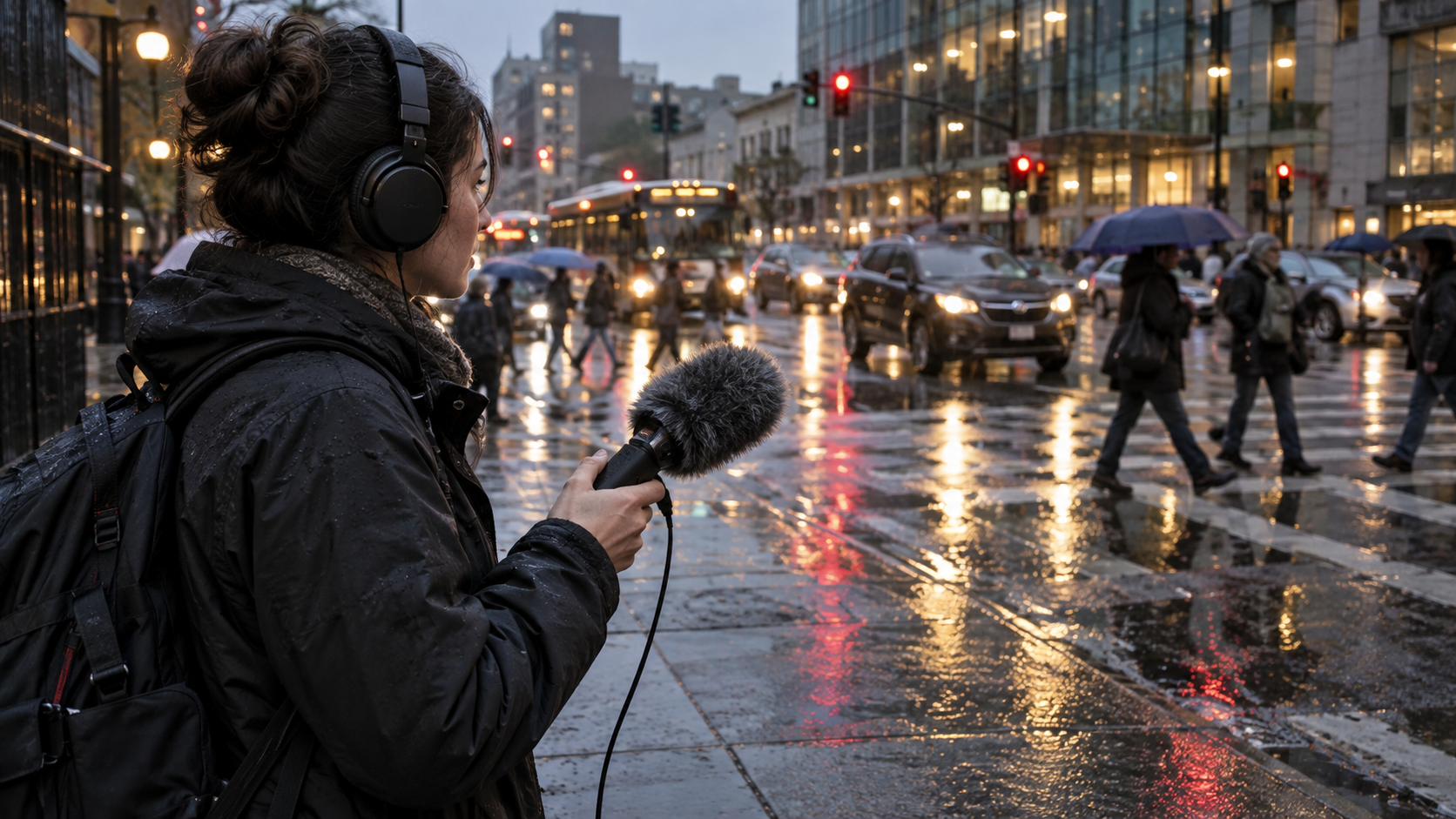
Natural sound is audio recorded from the real environment where a news event or scene takes place. In broadcast shorthand it is often called NAT sound or NATs. Examples include rain striking a roof, a crowd chanting, machinery running, footsteps in a hallway, or an ambulance passing. Unlike reporter narration or added music, natural sound originates in the scene and gives audiences direct sensory information about what was happening there.
Journalists use natural sound to establish location, reveal action, and create transitions within a story. A few seconds of a school bell can move a report into a classroom, while the sound of tools may show how a repair is being performed. Editors sometimes open a package with a strong natural-sound moment before narration begins. They may also place short bursts between interviews and voice-over so the story can breathe and viewers can observe the environment for themselves.
Collecting useful sound requires deliberate fieldwork. Reporters and photographers listen for moments that describe the story, position microphones close enough for clarity, and record longer than they expect to use. They monitor levels to avoid distortion and capture room tone for smooth edits. At the same time, they must continue documenting the event accurately rather than staging noises for the camera. Notes about where and when the sound was recorded help prevent later confusion.
Natural sound still needs editorial context. A loud shout from one person should not be edited to imply that an entire crowd reacted the same way. Sound recorded at a different time or location should not be presented as though it accompanied a particular image. Journalists also consider privacy, safety, and whether a microphone accidentally captured personal conversations. If audio is reconstructed, supplied by another source, or altered beyond routine level adjustments, the audience may need a clear explanation.
In radio and podcasts, environmental sound is especially valuable because listeners have no pictures. In television and digital video, it makes images feel immediate and can communicate details that narration misses. The most effective use is selective: every sound should add meaning, mood grounded in reality, or a clean transition. When editors let authentic audio be heard without overwhelming speech, natural sound helps audiences understand not only what a scene looked like but also what it was like to be there.
No. Natural sound comes from the recorded scene, while music is a separate production element.
Yes, but edits should preserve the truth of the scene and should not attach sound to events it did not accompany.
A stretch of the location’s background sound helps editors create smooth, believable audio transitions.
Explore more "Explainers"
Discover additional explainers across politics, science, business, technology, and other fields. Each explainer breaks down a complex idea into clear, everyday language—helping you better understand how major concepts, systems, and debates shape the world around us.