

TV News Voice-Over Explainer
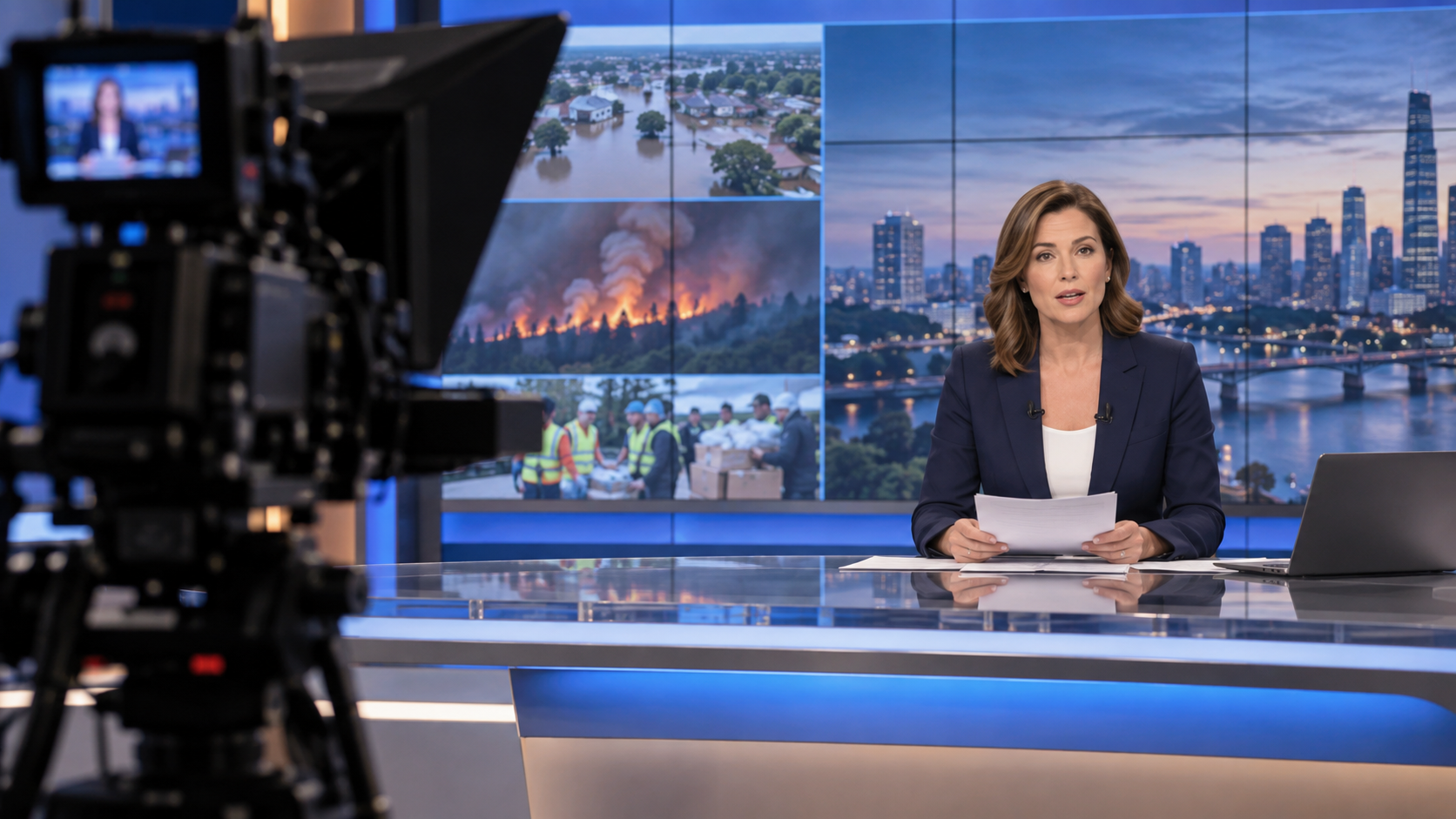
A voice-over, commonly marked VO in a television rundown, is a news element in which an anchor or reporter narrates while related video plays on screen. Viewers hear the journalist but usually see footage, photographs, maps, or graphics instead of the speaker. A VO can stand alone as a short story, introduce a soundbite, or form one part of a longer package. Its purpose is to combine concise writing with visual evidence.
In a typical anchor VO, the anchor begins on camera and the director then takes the supporting video while the anchor continues reading. The script and pictures are timed together so important facts arrive with relevant images. A VO followed by a soundbite is often labeled VO-SOT, meaning narration leads into recorded interview sound. Different newsrooms use slightly different shorthand, but the production team relies on the rundown to identify the order, timing, and source of every element.
Writing for voice-over requires attention to what viewers can already see. The words should add names, context, causes, and consequences rather than simply describe obvious action. Sentences are brief and conversational because the audience hears them only once. Producers estimate the reading time, select enough video to cover the script, and place edits where changes in subject or location make sense. The anchor reviews unfamiliar names and watches for cues that return the program to camera.
Accuracy applies to the relationship between audio and pictures as well as to the script itself. File footage must not be presented as current video, and generic images should not imply that an identifiable person committed an act. Editors label supplied material, verify dates and locations, and avoid repeating a dramatic clip in a way that exaggerates its importance. If the best available visual does not show the exact event, the wording or an on-screen label should prevent a false connection.
Voice-overs are efficient because they allow a newsroom to report a visual story without producing a full correspondent package. They are used in live broadcasts, streaming updates, and rapidly changing coverage where scripts may be revised close to airtime. The format still requires coordination among writers, editors, anchors, directors, and audio staff. When those parts align, a VO moves quickly while giving viewers useful context. When they do not, even accurate words can be undermined by confusing or misleading pictures.
No. Anchors often read VOs, but reporters or other journalists can narrate over pictures as well.
It is a voice-over that leads into a recorded soundbite or interview clip.
Viewers naturally connect narration with the images on screen, so mismatches can create a false impression.
Explore more "Explainers"
Discover additional explainers across politics, science, business, technology, and other fields. Each explainer breaks down a complex idea into clear, everyday language—helping you better understand how major concepts, systems, and debates shape the world around us.