

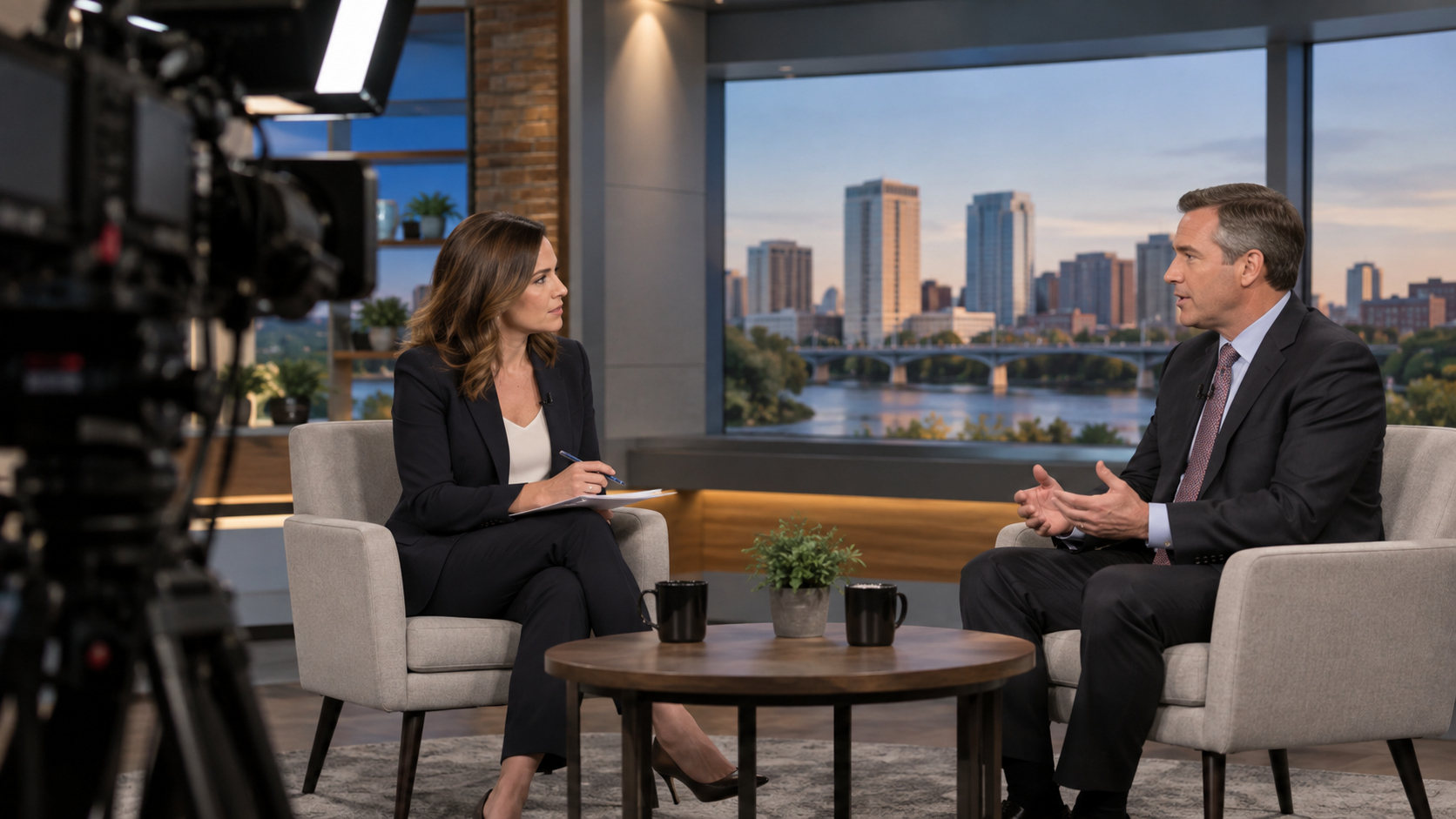
Television News Two-Shot Explainer
A two-shot is a camera composition that shows two people in the same frame. In television news, it is often used for an anchor and guest, two interview participants, or a reporter standing beside a source. The framing lets viewers see both people at once, including their posture, eye contact, and reactions. It can establish the relationship between speakers before the program moves to tighter individual shots.
The name describes how many principal subjects are visible, not the number of cameras used. A single camera can create a two-shot, and a multicamera production may offer several versions from different angles. Most are medium or medium-wide views because those sizes leave enough room for natural gestures without making faces too small. The composition should still follow ordinary visual rules, with comfortable headroom and balanced space between the subjects.
Producers commonly open an interview with a two-shot to orient the audience. The director may return to it during a greeting, transition, shared demonstration, or closing exchange. Editors can also use it to bridge between separate close-ups or cover a conversational pause. In a live program, the wider view provides a dependable backup when the next speaker is uncertain or when both people react at the same time.
Good two-shots require careful staging. Chairs, microphones, eyelines, and lighting need to work for both people, and the background should not distract from either face. The camera operator must avoid awkward cropping or perspective that makes one participant appear unintentionally dominant. Journalists should also consider whether showing a vulnerable source beside another person could reveal identity, location, or a relationship that the source expected to remain private.
The technique is useful because it supplies context that isolated close-ups cannot. Viewers can see listening as well as speaking and understand that the exchange is happening in a shared space. Still, directors should choose it for a clear editorial reason rather than leaving it on screen by habit. A strong two-shot feels natural, supports the conversation, and gives the audience truthful visual information about who is present and how the interaction unfolds.
No. The term refers to two principal subjects in one frame; a single camera can produce the shot.
It establishes who is present, where they are positioned, and how the conversation is organized.
No. It can be wide, medium, or tight, although medium framing is common because it shows faces and gestures clearly.
Explore more "Explainers"
Discover additional explainers across politics, science, business, technology, and other fields. Each explainer breaks down a complex idea into clear, everyday language—helping you better understand how major concepts, systems, and debates shape the world around us.