

Hostage Situation Reporting Explainer
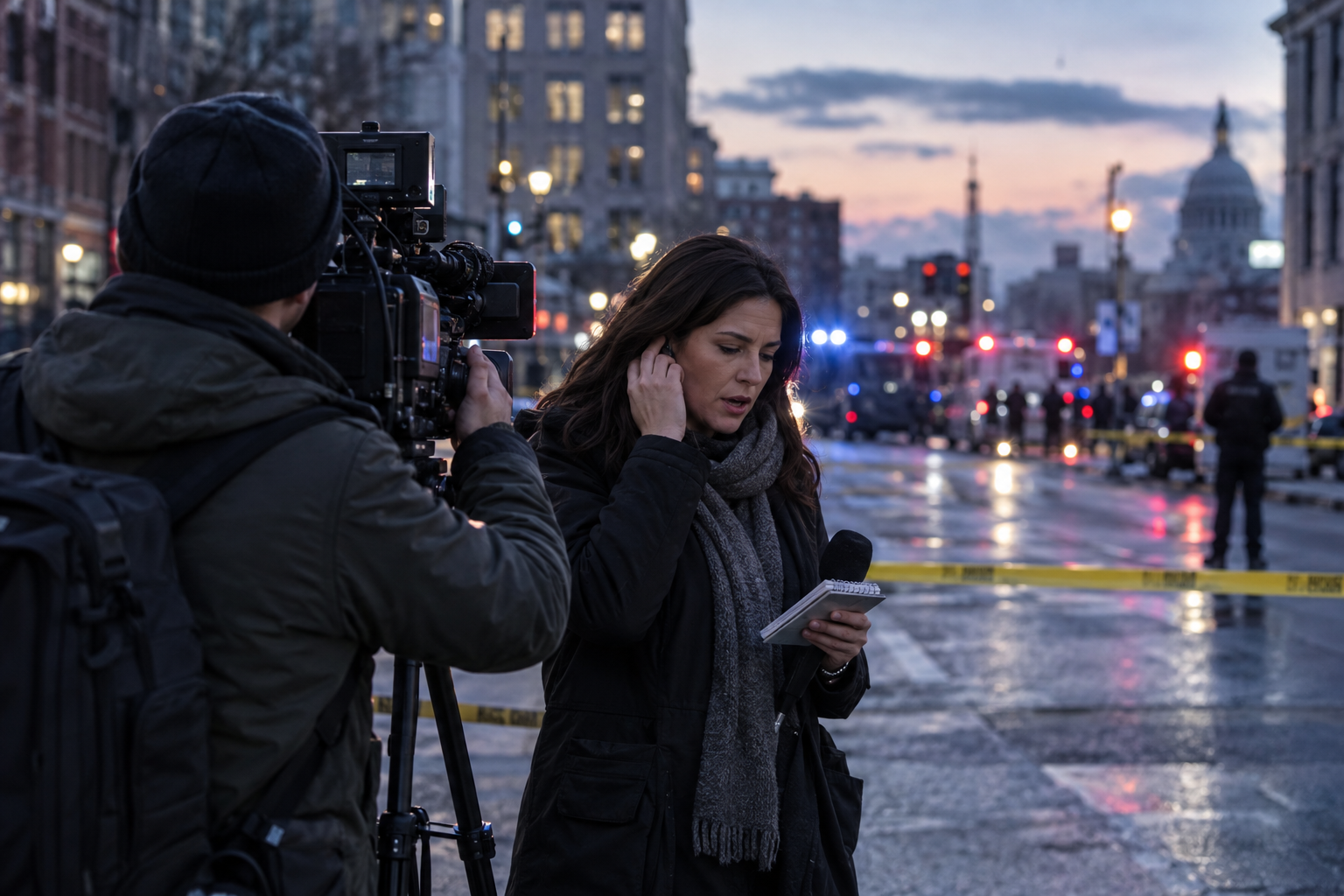
A hostage situation is breaking news in which ordinary reporting choices can affect immediate safety. Journalists need to inform the public without revealing tactical positions, escalating panic, or interfering with negotiations. Newsrooms establish a single coordinating editor, verify the location and official response, and remind field crews to obey safety perimeters. Early information is often fragmentary, so reports separate confirmed facts from witness accounts and avoid guessing about motives or the number of people involved.
Live pictures and social posts require delay and judgment. Camera angles may expose officers, staging areas, entrances, or people attempting to escape. Audio can reveal commands or movements. Producers monitor what is visible and withhold details that could give a person inside useful tactical information. A fact can be true and still be unsafe to broadcast in real time; it may be reported later when the operational risk has passed.
Contact with a hostage or hostage-taker creates exceptional risks. Reporters do not initiate or prolong communication simply to obtain an interview, and they promptly involve newsroom leaders and appropriate authorities if someone inside contacts them. Journalists should not make promises, negotiate, relay demands, or describe private communications without careful consultation. The priority is preserving life, not producing exclusive material.
Sources include police or emergency briefings, public records, verified witnesses, nearby residents, and organizations connected to the location. Official statements can also be incomplete or wrong during a fast-moving incident, so attribution remains clear. Newsrooms avoid naming victims before families are notified and avoid publishing personal details that could increase danger. They are cautious with claims about weapons, injuries, identities, or ideology until independent evidence supports them.
Language and imagery shape public understanding. Coverage should not romanticize violence, reward a perpetrator's publicity strategy, or repeatedly display disturbing material without editorial purpose. Reporters provide practical information about closures and safety instructions while resisting the urge to fill continuous airtime with speculation. Experts can explain general procedures, but they should not pretend to know the private negotiating plan in a specific event.
After resolution, reporting turns to a verified timeline, official actions, survivor experiences, and unanswered questions. Newsrooms review whether any live detail created risk and correct early errors prominently. Ethical hostage coverage is measured not only by what it reveals but also by what it responsibly withholds. Accuracy, delay, coordination, and respect for victims allow journalism to serve the public without becoming part of the emergency.
A delay allows editors to prevent tactical positions, escape routes, or dangerous movements from being broadcast in real time.
The reporter should not negotiate or prolong contact and should immediately involve newsroom leadership and appropriate authorities.
It can be attributed as an official statement, but journalists should still seek confirmation and explain when details remain preliminary.
Explore more "Explainers"
Discover additional explainers across politics, science, business, technology, and other fields. Each explainer breaks down a complex idea into clear, everyday language—helping you better understand how major concepts, systems, and debates shape the world around us.