

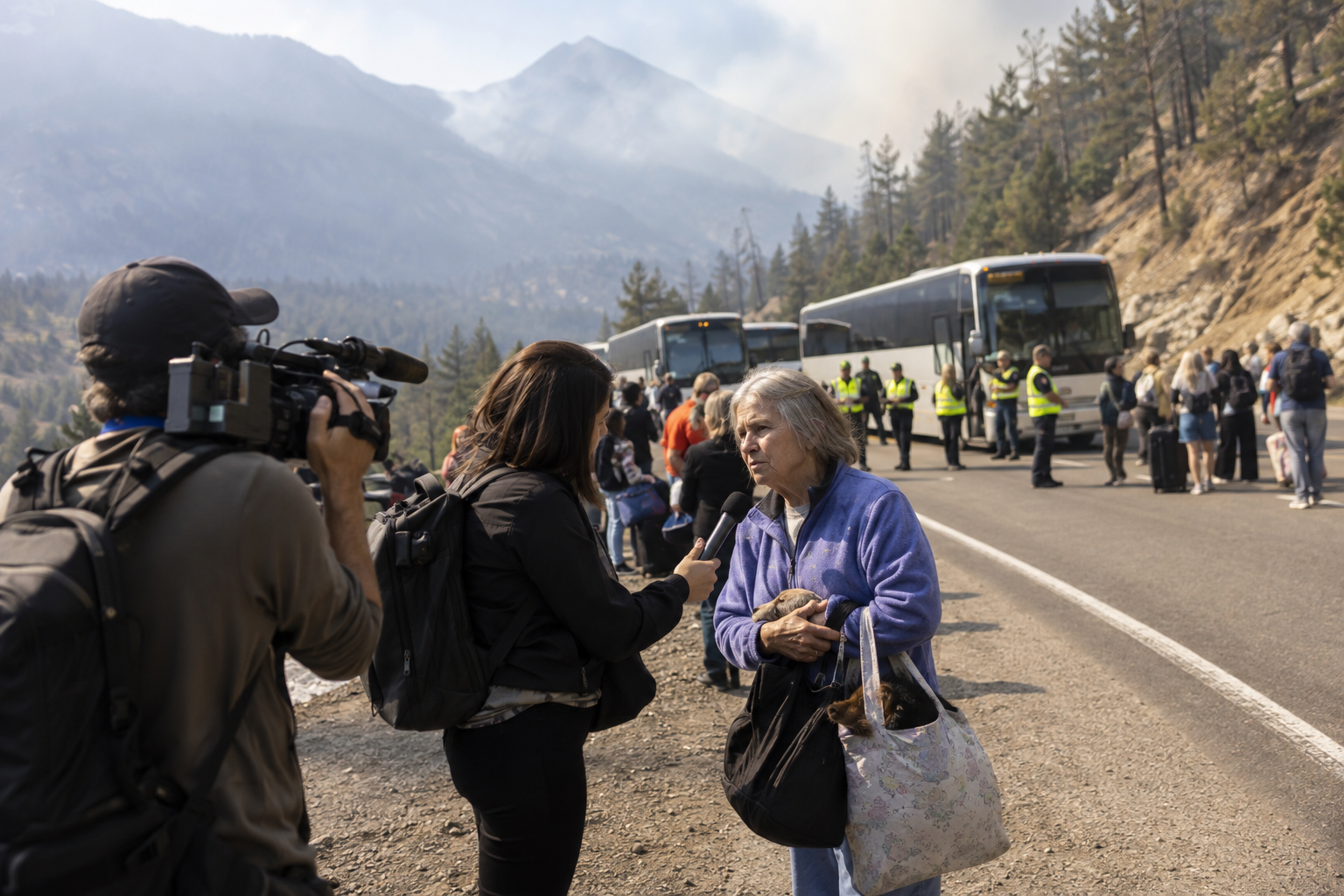
Evacuation Coverage Explained
Evacuation reporting gives people timely information about where danger exists, who must leave, which routes are available, and where verified help can be found. The newsroom begins by defining what is known, what remains uncertain, and why the information matters to the public. Editors resist treating urgency as proof and make the scope of the reporting clear so audiences can separate established facts from developing claims.
Journalists confirm the geographic boundaries, effective time, issuing authority, transportation options, shelter locations, and whether an order is mandatory or advisory. This first-stage work is documented so another editor can understand how the information was obtained and which questions remain open. Deadlines may be short, but the reporting process still requires an accountable source, precise attribution, and a clear record of decisions.
Updates draw from emergency agencies, maps, field crews, transportation systems, shelter operators, utility providers, and residents in different parts of the affected area. No single source is assumed to settle the issue when independent confirmation is possible. Reporters compare timing, terminology, incentives, and access, then explain material disagreements instead of hiding them behind a simplified conclusion.
Incorrect routes, premature all-clear messages, or live images of vulnerable locations can place residents and responders in greater danger. Editors also consider privacy, safety, fairness, and whether publication could amplify a false or harmful claim. Specific detail is included when it helps readers evaluate the evidence, but unnecessary personal or operational information is withheld when the likely harm outweighs its public value.
Strong reporting on evacuation coverage makes methods visible without turning the article into a technical manual. It uses plain language, identifies the origin of important claims, gives subjects a meaningful opportunity to respond, and distinguishes direct observation from analysis. Headlines, images, captions, alerts, and social posts should reflect the same level of certainty as the article itself.
Coverage tracks changing boundaries, access rules, reunification, assistance, return conditions, and corrections until the emergency and recovery phases are complete. Editors preserve source material, monitor new evidence, and correct the record promptly when facts change. The finished work should help readers understand both the subject and the verification behind it, providing useful context without pretending that an evolving story is more settled than it is.
They should establish the source, timing, scope, and firsthand basis of the central claim before treating it as confirmed.
Incorrect routes, premature all-clear messages, or live images of vulnerable locations can place residents and responders in greater danger. Careful attribution and independent corroboration help readers understand the remaining uncertainty.
Coverage tracks changing boundaries, access rules, reunification, assistance, return conditions, and corrections until the emergency and recovery phases are complete. Updates should identify meaningful changes and correct earlier information clearly.
Explore more "Explainers"
Discover additional explainers across politics, science, business, technology, and other fields. Each explainer breaks down a complex idea into clear, everyday language—helping you better understand how major concepts, systems, and debates shape the world around us.