

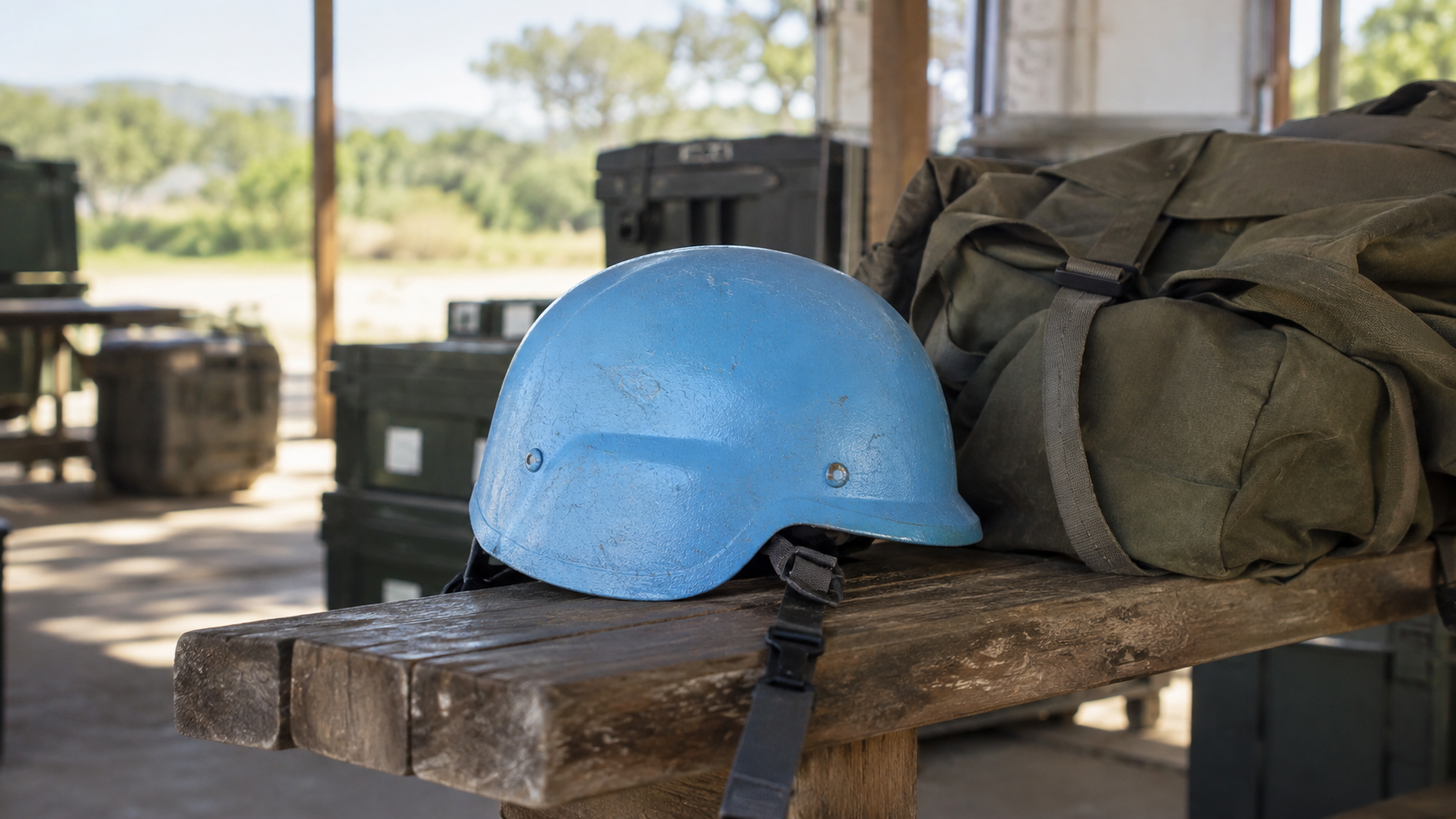
United Nations Peacekeeping Explainer
United Nations peacekeeping is a tool for supporting peace and stability in places affected by conflict. Missions operate under mandates that define their authorized tasks and objectives. Their work can involve military, police, and civilian components, with responsibilities that differ across operations. Peacekeeping is therefore more than sending uniformed personnel to stand between opposing forces. A mission’s role depends on the political situation and the authority given to it. Its presence does not by itself establish that a conflict has ended or that a durable settlement is assured.
The United Nations identifies three basic peacekeeping principles: consent of the parties, impartiality, and non-use of force except in self-defence and defence of the mandate. Consent from the main parties creates room for the mission to operate, although it does not guarantee agreement by every local group. Impartiality means applying the mandate fairly; it does not require ignoring violations. The authorization and circumstances governing force also matter. Some missions receive robust mandates, but robust peacekeeping should not be confused with peace enforcement.
The Security Council determines mission mandates and can extend, change, or end them. Tasks can include monitoring a ceasefire, assisting implementation of a peace agreement, supporting institutions, or protecting civilians where authorized. A mandate does not automatically supply every resource needed to perform those tasks. Actual capacity depends on personnel, equipment, logistics, access, and cooperation. Identifying the task and the available means helps explain why different missions face different constraints, even when they are discussed under the same broad peacekeeping label.
Peacekeeping operates within a political process rather than replacing the need for one. Disputes about consent, security, public trust, and the behavior of conflict parties can affect a mission’s effectiveness. Evaluating a reported success or failure requires attention to the mandate and the conditions in which personnel worked. It also requires distinguishing expectations from responsibilities the mission was actually authorized to undertake. Understanding UN peacekeeping means connecting principles, legal authority, practical capability, and efforts toward a political settlement. Those elements show both why missions can help and why their powers have limits.
Missions have defined mandates rather than identical responsibilities. Their tasks respond to particular situations.
Consent, impartiality, and limited grounds for force guide UN peacekeeping. The principles reinforce one another.
Impartiality does not require inactivity when obligations are violated. The mission must carry out its mandate fairly.
The Security Council establishes and revises mandates. Authorized tasks can change as conditions and decisions change.
Resources and cooperation affect implementation. A legal mandate does not itself guarantee operational capacity.
Peacekeeping supports a political process. Durable peace requires more than the presence of a mission.
Explore more "Explainers"
Discover additional explainers across politics, science, business, technology, and other fields. Each explainer breaks down a complex idea into clear, everyday language—helping you better understand how major concepts, systems, and debates shape the world around us.