

Election Canvassing Explainer
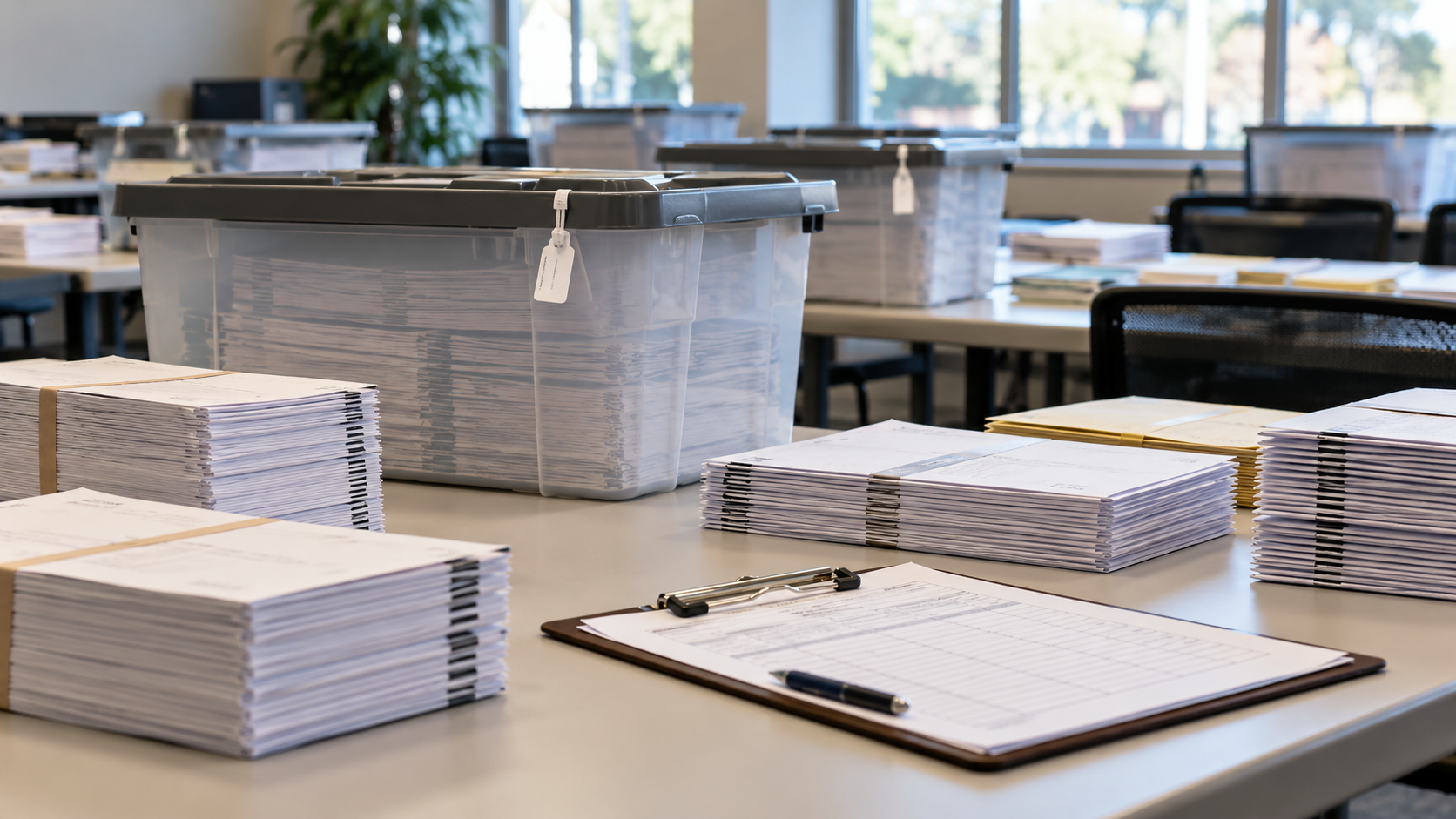
Election canvassing is the official process of assembling, reviewing, and reconciling election records and vote totals. It helps establish an accurate accounting before results become final under the jurisdiction's procedures. This meaning of canvass is different from a campaign knocking on doors to contact voters. In the United States, state and local law determine who conducts the official canvass, its deadlines, and required steps. The process is part of election administration, rather than a new opportunity for officials to choose their preferred political outcome.
The review can bring together ballots and records from Election Day, early voting, mail voting, and other authorized voting methods. Officials reconcile counts, investigate discrepancies, and include eligible ballots that are not part of the first election-night report. Provisional ballots may require eligibility review, and applicable deadlines can affect when particular mail ballots are included. Procedures vary, so one state's sequence should not be treated as a universal national timetable. The aim is to account for valid votes and explain the records supporting the totals.
Imagine that an election-night display includes counted precinct ballots while a set of eligible provisional ballots remains under review. Completing the canvass can add those valid votes and correct a documented reporting error. Such changes do not, by themselves, establish misconduct; their explanation depends on the records and procedures. A canvass also differs from a recount, which involves counting votes again under separate rules, and from an audit examining aspects of the process or equipment. These activities may interact without being interchangeable.
Certification is the formal attestation to the results after the required work is complete. The canvass supplies an important basis for that step, but the responsible bodies and sequence differ among jurisdictions. Public access and observation rules can help people understand the process while protecting ballot secrecy and orderly administration. When following changing totals, identify which records are being reconciled, which ballots remain to be evaluated, and which officials explain the update. Those details make a developing count easier to interpret than assuming that an early display already contains every valid vote.
The official election canvass reviews and reconciles election records and totals.
It differs from campaign canvassing aimed at contacting voters.
Eligible ballots from different voting methods must be accounted for under applicable rules.
Documented corrections or additional eligible ballots can change preliminary totals.
Canvasses, recounts, audits, and certification perform different functions.
State and local procedures determine responsible officials, deadlines, and opportunities for observation.
Explore more "Explainers"
Discover additional explainers across politics, science, business, technology, and other fields. Each explainer breaks down a complex idea into clear, everyday language—helping you better understand how major concepts, systems, and debates shape the world around us.