

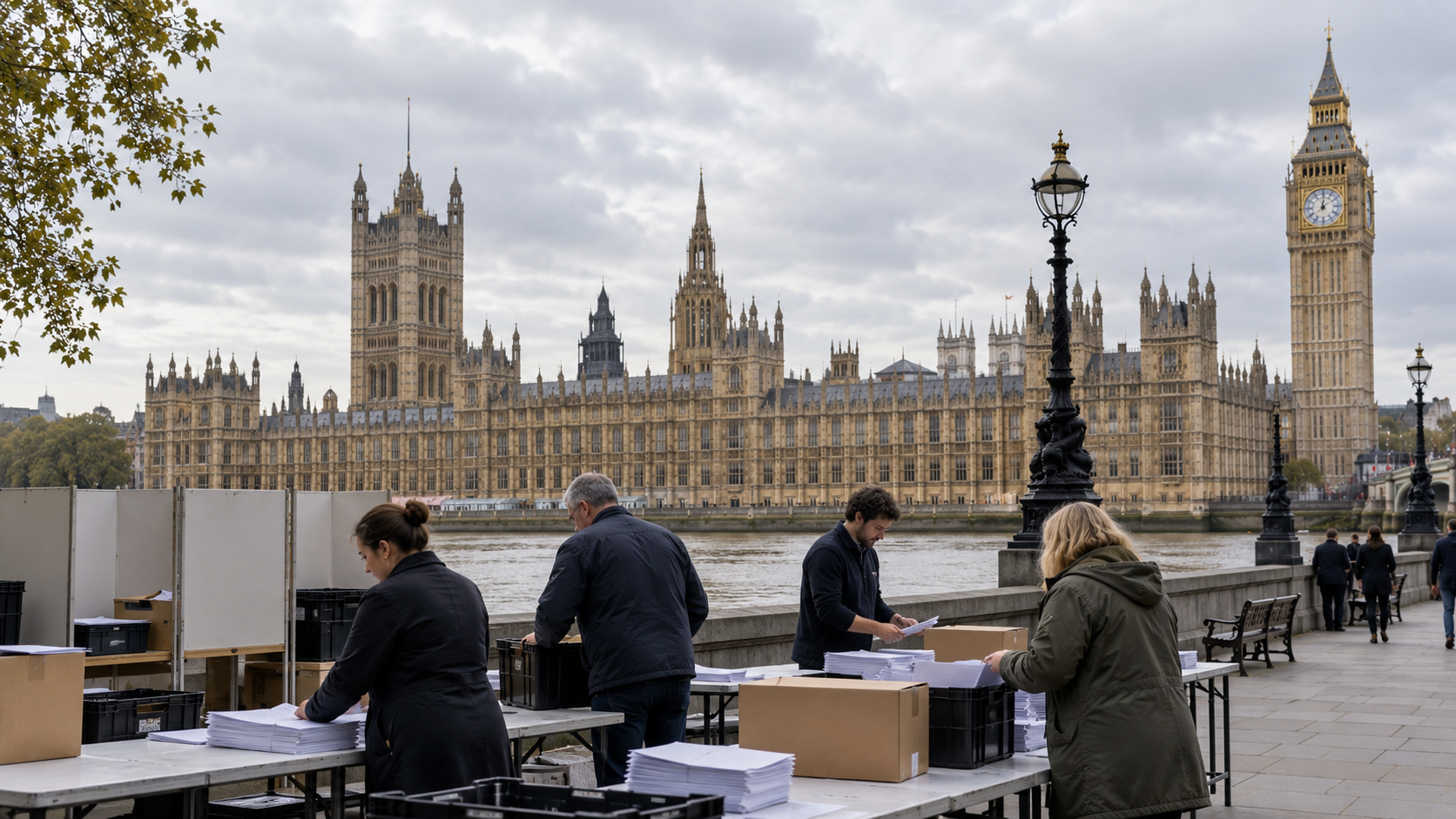
Dissolution of Parliament Explainer
Dissolution ends a Parliament so that a general election can take place. In the United Kingdom, it brings the elected House of Commons to the end of its parliamentary life, with every Commons seat becoming vacant. The people who held those seats cease to be members of Parliament until any subsequent election returns them. The term describes a constitutional change in the legislature, rather than an ordinary recess or a decision to suspend one particular debate in the chamber.
The distinction between dissolution and prorogation is essential. Prorogation closes a parliamentary session while the same Parliament continues. Dissolution ends that Parliament, after which voters choose the next Commons. An adjournment or recess usually represents a more limited pause in meetings. These different acts can all produce images of an empty chamber, but their consequences are not interchangeable. A parliamentary calendar therefore needs to be read alongside the formal decision determining whether the institution is between sittings, between sessions, or between Parliaments.
Dissolution also affects unfinished parliamentary business. Bills that have not completed the necessary stages generally cannot simply continue as though the election were a short interruption. A new Parliament begins its own legislative work, and proposals may need to be introduced again. The House of Lords is not elected at a general election, so its members do not face the same constituency contests as Commons members. Nevertheless, dissolution affects Parliament's legislative activity as a whole, including the work that requires both Houses to participate.
Consider a hypothetical bill approaching its final stages when dissolution occurs. Public discussion may continue, and candidates may promise to return to the proposal, but campaigning is not the same as completing parliamentary consideration. After the election, the composition of the Commons and the government's priorities may be different. For readers, the useful questions are when dissolution took effect, which business remained unfinished, and what a future Parliament would need to do. Those details distinguish an electoral commitment from a measure that actually became law before the previous Parliament ended.
Dissolution ends a Parliament and precedes the election of a new House of Commons.
Commons seats become vacant, so former members must win election to serve in the next Parliament.
Prorogation ends a session; recess or adjournment usually pauses sittings more narrowly.
Unfinished legislation generally cannot continue through dissolution as though no institutional break occurred.
House of Lords membership is not determined by the Commons general election.
A campaign promise to revive a bill is different from completed legislation in the previous Parliament.
Explore more "Explainers"
Discover additional explainers across politics, science, business, technology, and other fields. Each explainer breaks down a complex idea into clear, everyday language—helping you better understand how major concepts, systems, and debates shape the world around us.