

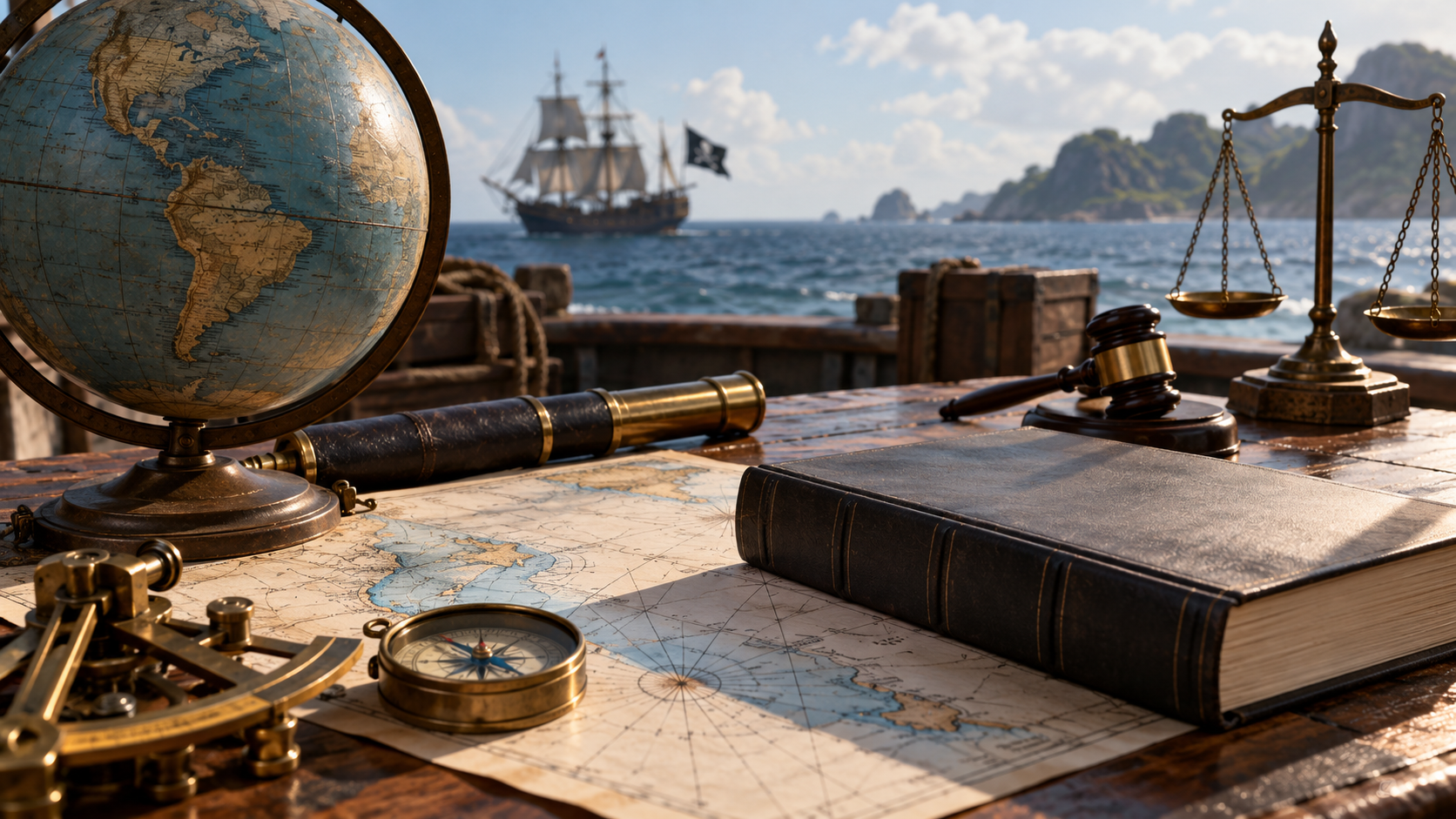
Define and Punish Clause Explainer
Define and Punish Clause is Congress’s power to define and punish piracies and felonies committed on the high seas and offenses against the law of nations. It matters because it gives the national government tools to address conduct beyond ordinary state territory and violations with international consequences. The concept belongs to a constitutional system that divides authority, creates procedures, and asks public institutions to justify how they use power.
The foundation begins with the Confederation government struggled to enforce maritime and international obligations consistently, creating risks of retaliation and conflict for the young nation. The operative legal framework is this: Article I, Section 8, Clause 10 grants the power, while treaties, customary international law, and federal criminal statutes help identify the conduct and jurisdiction involved. Read together, those sources explain both the provision’s democratic purpose and the institutional setting in which officials, courts, and the public evaluate it.
In practice, Congress defines offenses and penalties by statute, federal investigators and prosecutors build cases, and courts evaluate constitutional, statutory, and international-law boundaries. A useful illustration is that Congress may criminalize piracy committed on the high seas even when the conduct occurs far from any particular state. Real disputes rarely turn on a label alone; they require attention to the responsible institution, the legal trigger, the available record, and the remedy or consequence that follows.
The most important boundary is that the power is not a free-floating license to punish any overseas conduct; courts examine recognized international offenses, statutory clarity, due process, and the required connection to U.S. jurisdiction. The continuing policy and legal debate is that modern disputes involve extraterritorial reach, universal jurisdiction, evolving international norms, and how clearly Congress must define an offense. Understanding both the governing rule and its limits helps readers separate ordinary disagreement from a genuine constitutional conflict.
the Confederation government struggled to enforce maritime and international obligations consistently, creating risks of retaliation and conflict for the young nation. Article I, Section 8, Clause 10 grants the power, while treaties, customary international law, and federal criminal statutes help identify the conduct and jurisdiction involved.
This background matters because constitutional rules usually grow from a concrete governance problem rather than abstract theory alone. The text must be read with surrounding structure, historical practice, implementing statutes, and the facts of a particular dispute. Examining those sources together prevents a memorable label from replacing the legal inquiry the provision actually requires.
Congress defines offenses and penalties by statute, federal investigators and prosecutors build cases, and courts evaluate constitutional, statutory, and international-law boundaries. Congress may criminalize piracy committed on the high seas even when the conduct occurs far from any particular state.
Each step creates a record that may be reviewed by other officials, courts, auditors, voters, or the public as governing law permits. Timing and institutional authority can matter as much as the outcome, so sound analysis begins with the exact source of the challenged action. Concrete records help distinguish a lawful use of power from an attractive description unsupported by the relevant facts or procedures.
the power is not a free-floating license to punish any overseas conduct; courts examine recognized international offenses, statutory clarity, due process, and the required connection to U.S. jurisdiction. modern disputes involve extraterritorial reach, universal jurisdiction, evolving international norms, and how clearly Congress must define an offense.
Those boundaries protect competing constitutional values and keep useful powers from becoming unlimited. Enforcement may depend on litigation, congressional oversight, executive review, elections, or several mechanisms working together, with reasonable observers assigning different weight to accountability, expertise, speed, uniformity, and local autonomy. Durable governance therefore combines a clear rule with transparent reasons, meaningful review, and remedies suited to the institution involved.
Explore more "Explainers"
Discover additional explainers across politics, science, business, technology, and other fields. Each explainer breaks down a complex idea into clear, everyday language—helping you better understand how major concepts, systems, and debates shape the world around us.