

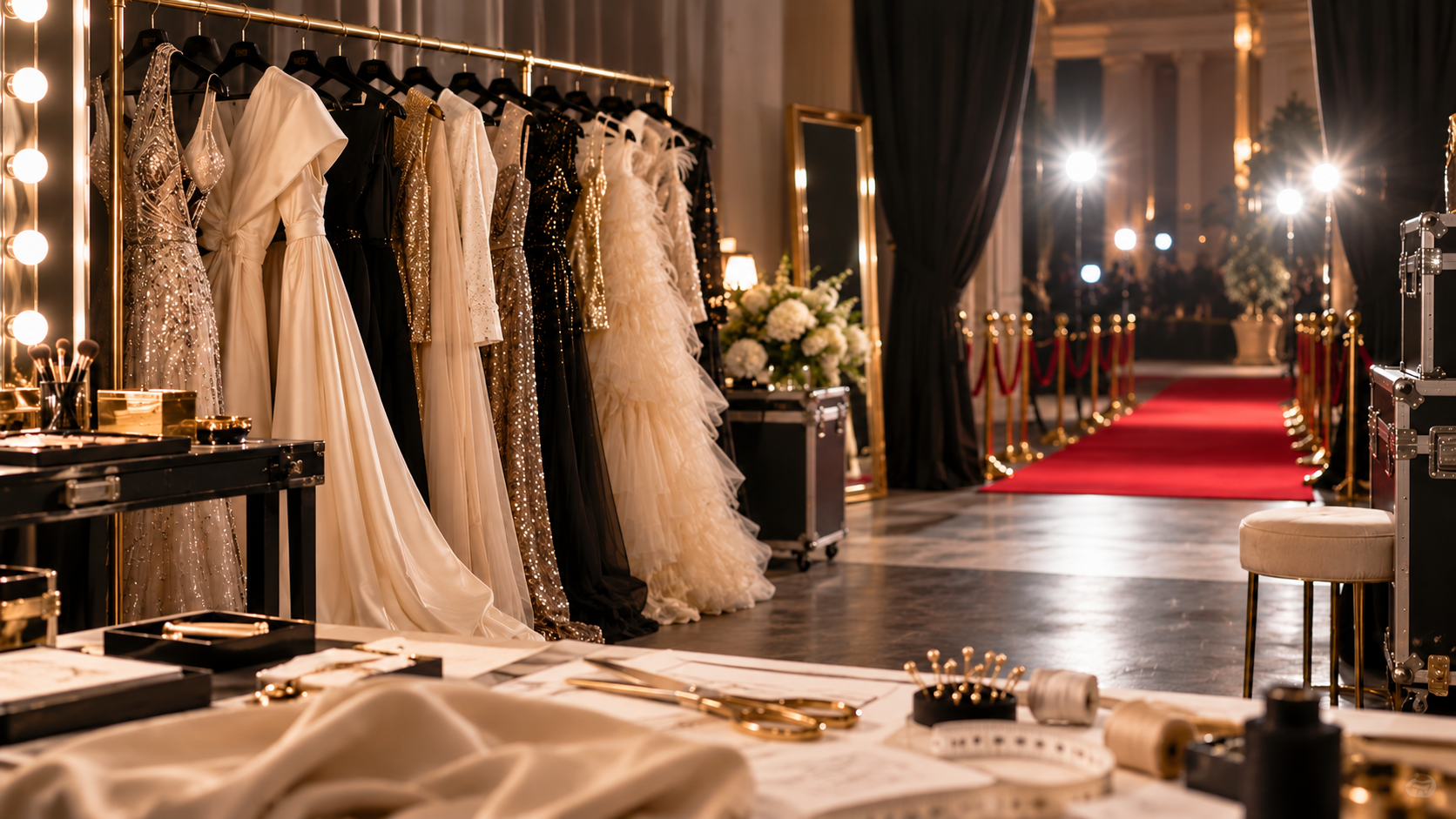
Red Carpet Fashion Explainer
Red carpet fashion is the coordinated presentation of clothing, accessories, grooming, and celebrity image at premieres, awards, festivals, and other high-visibility events. The carpet itself creates a controlled route where photographers and interviewers can capture arrivals, turning a brief appearance into material distributed around the world. A look may communicate glamour, character, cultural identity, a designer relationship, or the tone of a current project. Although the wearer receives most public attention, the result usually reflects collaboration among a stylist, fashion house, tailor, jeweler, hair and makeup teams, publicist, and event organizers.
Stylists begin with the event, dress code, client preferences, body, schedule, and publicity goals. They request options from designers, showrooms, and vintage archives, then manage fittings and alternatives. A garment may be borrowed from a current collection, selected from an archive, purchased, or created as a custom piece. Tailors adjust fit and reinforce details for movement, stairs, sitting, weather, and long periods under lights. Shoes, jewelry, bags, nails, hair, and makeup are considered in relation to the whole image and the camera angles that will reproduce it, not merely how the outfit looks in a quiet fitting room.
Fashion loans are business arrangements, not simple gifts. A house may lend a garment because the appearance can generate editorial coverage and social visibility, while the stylist assumes responsibilities for transport, security, alterations, and return. High-value jewelry can arrive with guards or insurance conditions. An ambassador contract may require a celebrity to wear one brand, and a competing sponsorship can limit choices. Publicists coordinate timing and credits so media outlets can identify the designers correctly. Paid relationships and gifts may also trigger disclosure rules, depending on the platform and jurisdiction in which the appearance is promoted.
The red carpet influences fashion because a single image can circulate more widely than a runway show. Designers gain recognition, archival pieces receive new meanings, and viewers debate taste, representation, craft, and symbolism in real time. That attention can also reduce a complex person to appearance or encourage commentary that is harsher toward some genders, bodies, and identities. Questions directed to women about clothing once dominated many broadcasts, leading campaigns for more substantive interviews. The fashion remains meaningful, but it exists alongside achievement, labor, and the event's stated purpose rather than replacing them. A memorable look can appear effortless even though it is built through negotiations, fittings, contingency plans, and coordinated communication. Weather changes, a delayed sample, a broken closure, or a last-minute dress-code shift can require immediate substitution. The carpet is therefore both a fashion stage and a production environment with marks, schedules, lighting, media positions, and security. Understanding that system makes credits more important: the designer supplies one part of a larger creative effort. Red carpet fashion endures because it turns arrival into narrative, letting a public figure present a carefully composed image at the exact moment the largest audience is prepared to look. A practical way to read or discuss Red Carpet Fashion is to separate the basic definition from the choices made in a particular example. Red carpet fashion combines wardrobe, accessories, tailoring, grooming, celebrity image, publicity, and event production. Then identify who sets the relevant rules, which parts are creative decisions, and which parts follow from law, contracts, technology, or production limits. Examples that look similar on the surface can operate differently because their purpose, audience, timing, and surrounding agreements are different. Brand-ambassador and sponsorship agreements may restrict what a celebrity can wear at particular events. It is also useful to check whether a source is describing a formal industry category, an informal critical label, or one organization's current practice. Those distinctions prevent a memorable anecdote from becoming a false universal rule. Finally, compare the visible result with the less visible work that produced it. The look is collaborative even though media coverage often credits only the wearer or designer. That approach keeps the explanation grounded while leaving room for reasonable disagreement about borderline cases.
Red carpet fashion combines wardrobe, accessories, tailoring, grooming, celebrity image, publicity, and event production.
Stylists source runway, archival, purchased, or custom garments and coordinate fittings plus backup options.
Loaned clothing and jewelry can involve return rules, security, insurance, alteration limits, and precise designer credits.
Brand-ambassador and sponsorship agreements may restrict what a celebrity can wear at particular events.
Carpet photography can give one appearance global reach and turn a garment into a lasting cultural image.
The look is collaborative even though media coverage often credits only the wearer or designer.
Explore more "Explainers"
Discover additional explainers across politics, science, business, technology, and other fields. Each explainer breaks down a complex idea into clear, everyday language—helping you better understand how major concepts, systems, and debates shape the world around us.