

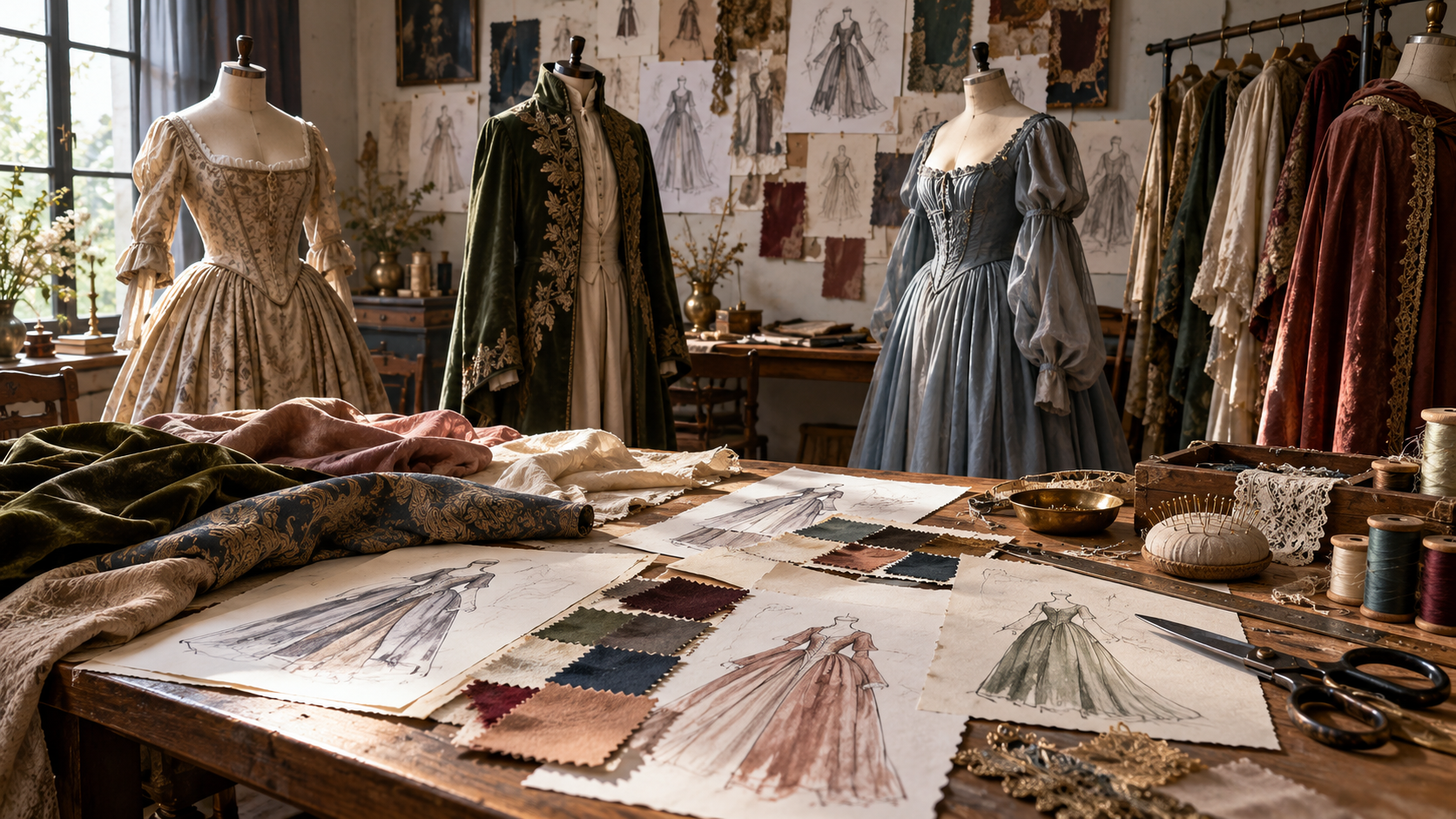
Costume Design Explainer
Costume design is the craft of using clothing and accessories to tell a screen story. A costume designer considers who a character is, when and where the action occurs, what the character can afford, how they want to be seen, and how their appearance changes. The Costume Designers Guild describes clothing as a visual language that can establish identity before dialogue begins. Costumes therefore do more than make a production attractive or historically accurate. Color, silhouette, wear, fit, repetition, and contrast can communicate status, occupation, mood, allegiance, transformation, or a deliberate attempt by the character to hide those things.
The process begins with the script and conversations with the director, production designer, cinematographer, hair and makeup leaders, and producers. Research may cover period garments, social customs, subcultures, professions, climate, or invented-world rules. Designers create boards and sketches, then decide what to build, buy, rent, alter, age, or source from archives. Budget and schedule shape every choice. A custom garment may deliver an exact silhouette, but multiples may be needed for stunts, weather effects, blood, damage, or simultaneous shooting units. Background performers also require a coherent population, not a random collection of clothes.
Fittings test character and function on the performer. The designer studies proportion and movement while the actor discovers how a garment affects posture, gesture, and confidence. Costumes must accommodate microphones, harnesses, padding, quick changes, dance, weather, and long shooting days. Fabrics can behave differently under set lighting and camera sensors than they do in ordinary rooms; tiny patterns may create visual interference, while bright white or reflective material can complicate exposure. Collaboration turns a drawing into a durable working object that looks intentional from wide shots through close-ups.
Continuity is essential because scenes are rarely filmed in story order. The costume department photographs and records each look, including accessories, fastenings, sleeves, dirt, damage, and the exact stage of a change. A jacket removed halfway through a conversation must match when the reverse angle is filmed days later. Aging and distressing can tell time or hardship through controlled layers. Costume supervisors, assistant designers, shoppers, cutters, stitchers, dyers, agers, illustrators, coordinators, and set costumers divide this work, with titles and responsibilities varying by production. The designer leads a department rather than personally sewing every item. Costume should also be distinguished from fashion styling. Fashion often presents clothing as a desirable object in the present, while costume serves a character and narrative, even when the result is unfashionable, repetitive, or deliberately uncomfortable to view. Product placement, actor preferences, safety, cultural consultation, and intellectual-property concerns can influence choices, but the design remains accountable to story. The best work may be spectacular or nearly invisible. What makes it successful is not cost or historical ornament; it is the clarity with which clothing helps audiences understand people, relationships, and change while surviving the practical demands of production. A practical way to read or discuss Costume Design is to separate the basic definition from the choices made in a particular example. Costume design tells visual story through clothing, accessories, silhouette, color, condition, repetition, and change. Then identify who sets the relevant rules, which parts are creative decisions, and which parts follow from law, contracts, technology, or production limits. Examples that look similar on the surface can operate differently because their purpose, audience, timing, and surrounding agreements are different. Fittings test character, proportion, movement, comfort, microphones, harnesses, quick changes, and camera behavior. It is also useful to check whether a source is describing a formal industry category, an informal critical label, or one organization's current practice. Those distinctions prevent a memorable anecdote from becoming a false universal rule. Finally, compare the visible result with the less visible work that produced it. Costume serves character and narrative; it is not the same task as presenting clothing primarily as current fashion. That approach keeps the explanation grounded while leaving room for reasonable disagreement about borderline cases.
Costume design tells visual story through clothing, accessories, silhouette, color, condition, repetition, and change.
Designers analyze the script and collaborate with direction, production design, cinematography, hair, makeup, stunts, and sound.
A costume can be built, bought, rented, altered, aged, or sourced from an archive depending on story, budget, and schedule.
Fittings test character, proportion, movement, comfort, microphones, harnesses, quick changes, and camera behavior.
Continuity records preserve exact costume details when scenes and angles are filmed out of story order.
Costume serves character and narrative; it is not the same task as presenting clothing primarily as current fashion.
Explore more "Explainers"
Discover additional explainers across politics, science, business, technology, and other fields. Each explainer breaks down a complex idea into clear, everyday language—helping you better understand how major concepts, systems, and debates shape the world around us.