

Audiobooks Explainer
An audiobook is a recorded spoken performance of a written work. It may be unabridged, presenting the complete text, or abridged by agreement to create a shorter version. A single narrator can perform every voice, a group can divide characters or sections, and a full-cast production can add music and designed sound. The audiobook is not simply the text read aloud: pacing, pronunciation, characterization, breath, editing, and audio perspective create a distinct listening experience.
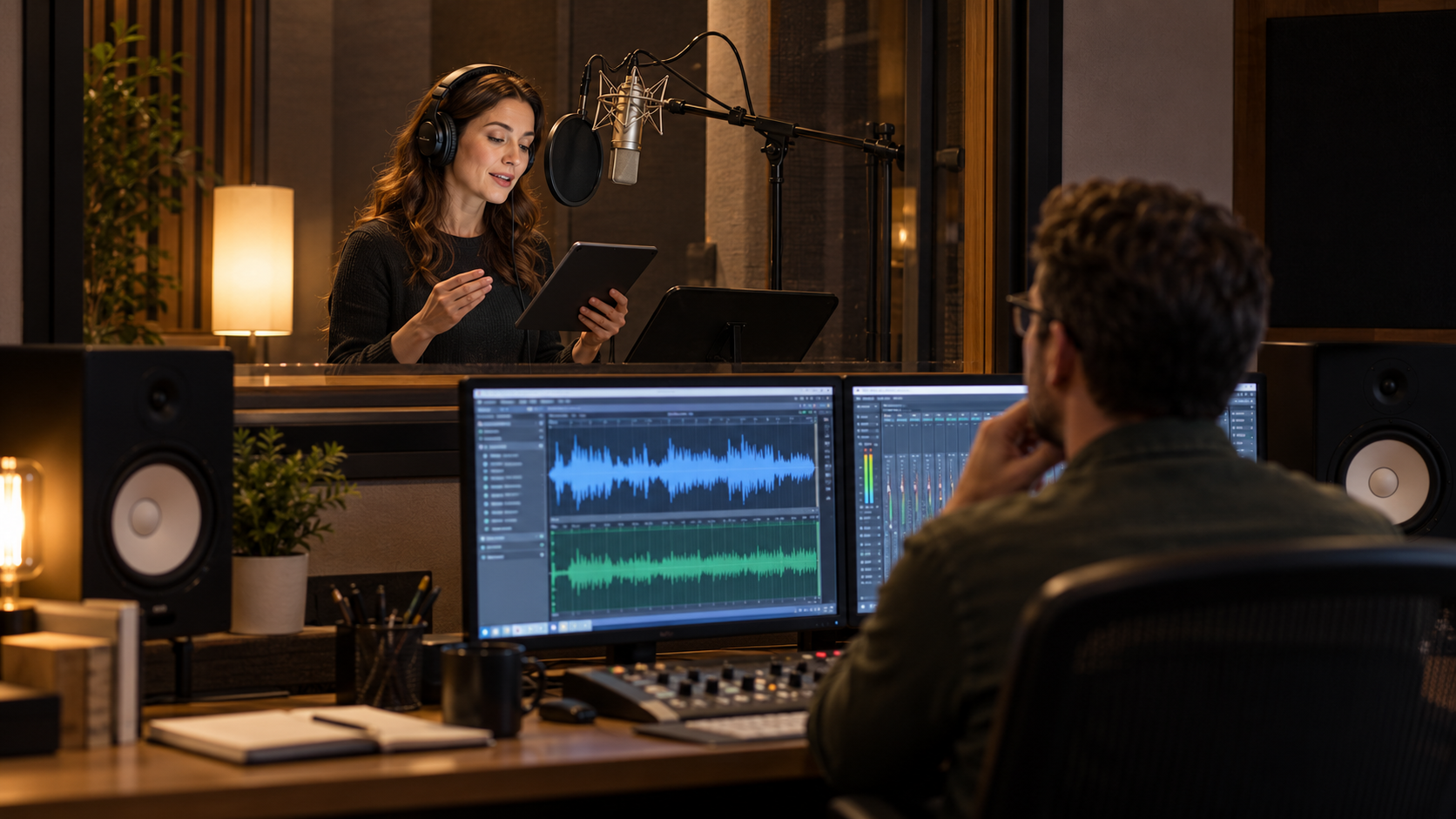
Production begins with rights, casting, script preparation, and research. The narrator or producer marks pronunciations, character details, foreign-language passages, footnotes, tables, and other elements that may not translate directly into continuous speech. During recording, a director or engineer monitors performance and technical quality. Mistakes are repeated, room tone is captured, and sessions may span many days. Editors assemble the preferred takes, remove unwanted noise and gaps, and keep continuity across chapters and recording dates.
Narration requires sustained interpretation. The performer must make structure audible, differentiate speakers without turning every line into caricature, and preserve the author's tone over many hours. Nonfiction may demand authority and clarity; fiction may require intimate character work; memoir can gain special meaning when read by its author. No single style is correct. The production team chooses a degree of performance suited to the material and to the audience's ability to follow without a printed page.
Mastering establishes consistent level, tone, chapter boundaries, file specifications, and quality control for distribution. Retail services may have detailed technical requirements, while libraries and accessibility programs use their own delivery systems. The Library of Congress National Library Service traces talking-book development in the United States to the 1930s, when recorded books expanded access for blind readers. That history is central: audio publishing is entertainment and commerce, but also a major mode of reading and accessibility. Digital distribution made long recordings easier to deliver, bookmark, search, and play at variable speed. It also created new questions about subscription compensation, synthetic voices, library licensing, and preservation. Human narration remains a credited creative performance, while authorized synthetic narration is a separate production choice that should be described accurately. Listeners can evaluate an audiobook by both textual fidelity and audio craft: whether it communicates the work clearly, sustains attention, and uses sound to support rather than obscure the writing. A practical way to read or discuss Audiobooks is to separate the basic definition from the choices made in a particular example. Audiobooks may be unabridged, abridged, single-narrator, dual-narrator, multicast, or fully dramatized, depending on rights and production design. Then identify who sets the relevant rules, which parts are creative decisions, and which parts follow from law, contracts, technology, or production limits. Examples that look similar on the surface can operate differently because their purpose, audience, timing, and surrounding agreements are different. Editors assemble takes and correct timing or noise; mastering standardizes chapters, levels, formats, and delivery specifications. It is also useful to check whether a source is describing a formal industry category, an informal critical label, or one organization's current practice. Those distinctions prevent a memorable anecdote from becoming a false universal rule. The date and market matter too: tools, distribution systems, and standard agreements change, while older examples can preserve assumptions that no longer apply everywhere. When a claim sounds absolute, compare it with a second type of source and look for the conditions under which it is actually true. Finally, compare the visible result with the less visible work that produced it. Playback speed and digital convenience change listening habits, but they do not eliminate the interpretive authorship of the performed narration. That approach keeps the explanation grounded while leaving room for reasonable disagreement about borderline cases.
Audiobooks may be unabridged, abridged, single-narrator, dual-narrator, multicast, or fully dramatized, depending on rights and production design.
Script preparation identifies pronunciations, characters, visual material, notes, and structural cues that need an audible solution.
Narrators shape pace, emphasis, voice distinction, and emotional continuity while maintaining technical consistency across long sessions.
Editors assemble takes and correct timing or noise; mastering standardizes chapters, levels, formats, and delivery specifications.
Talking books developed as an accessibility service long before modern commercial downloads, linking audiobook history to disability access and libraries.
Playback speed and digital convenience change listening habits, but they do not eliminate the interpretive authorship of the performed narration.
Explore more "Explainers"
Discover additional explainers across politics, science, business, technology, and other fields. Each explainer breaks down a complex idea into clear, everyday language—helping you better understand how major concepts, systems, and debates shape the world around us.