

Location Scouting Explainer
Location scouting is the process of finding and evaluating real places for film, television, advertising, photography, and other productions. A location must support the story's period, geography, mood, and action, but visual resemblance is only the beginning. The locations department also studies access, safety, cost, ownership, permits, noise, power, parking, weather, public impact, and the space needed for cast, crew, vehicles, equipment, catering, and holding areas. A beautiful site that cannot support the unit may be unusable.
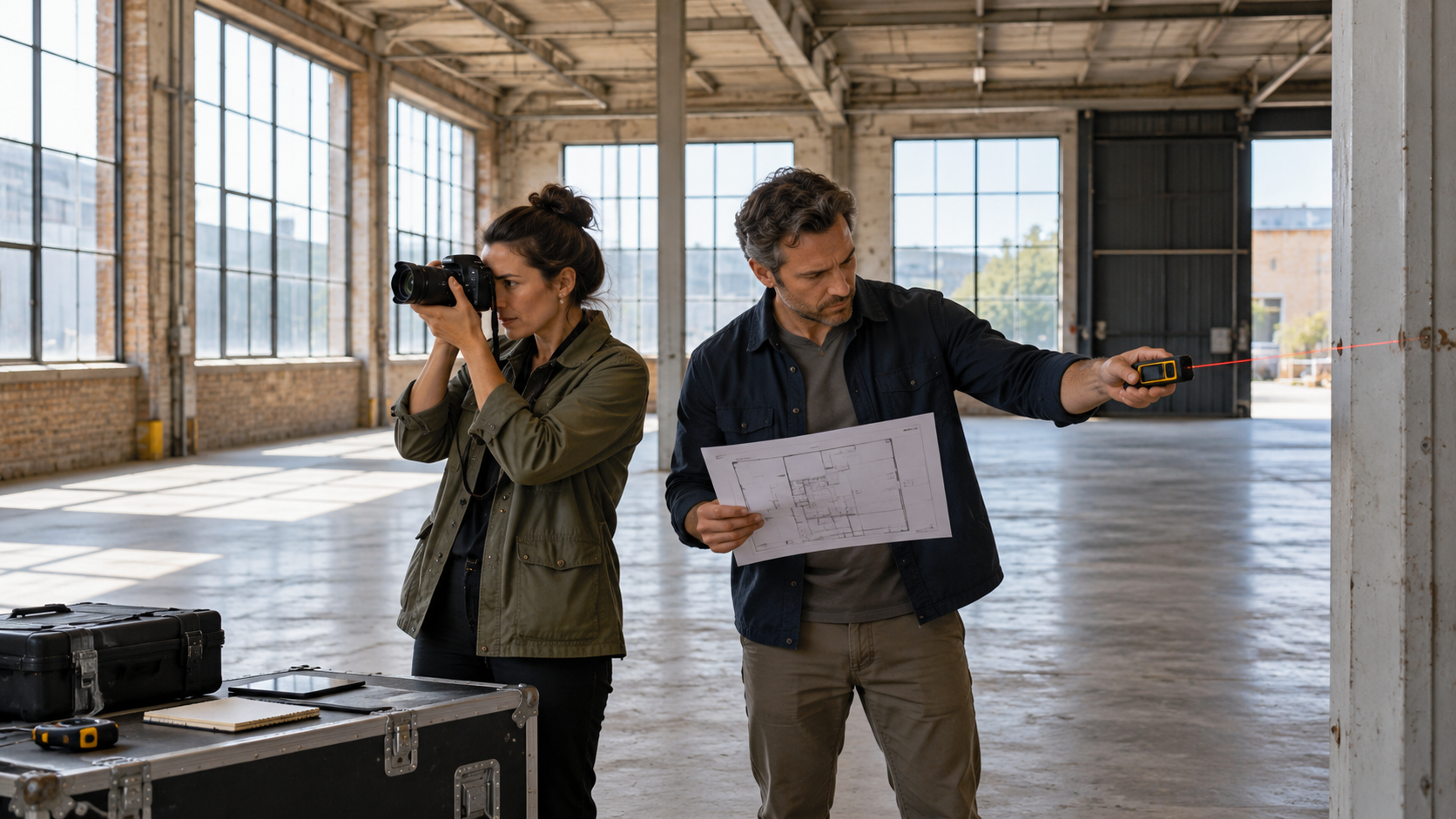
The search begins with a script breakdown and a brief from the director, production designer, producer, and other department heads. Scouts research possibilities, contact owners or film offices, visit candidates, and document them with wide photographs, angles, measurements, compass direction, sound notes, access routes, and practical observations. They consider what the camera must see and what it should avoid. A single property may need to play several spaces, while a public exterior may require control over traffic, pedestrians, signs, and changing daylight.
Promising sites advance to a technical recce, where representatives from direction, camera, lighting, grip, sound, art, special effects, stunts, security, transport, and production assess the plan together. They test camera positions, rigging, electrical supply, communications, emergency access, weather cover, floor loading, and protection for fragile surfaces. The locations team gathers departmental requirements and translates them into agreements, schedules, maps, movement orders, risk assessments, and plans for restoring the property after the shoot.
Permission is layered. A property owner's agreement may not replace municipal permits, parking control, road closures, environmental approval, heritage restrictions, or releases for separate artworks and trademarks visible in the space. Requirements depend on jurisdiction and activity. Productions also manage neighbors and businesses affected by noise, light, crowds, or lost access. Clear notice and realistic timing can reduce disruption, while poor planning can damage both the location and the production's relationship with the community. Locations are creative collaborators as well as containers. Existing architecture can suggest staging, a real view can provide scale, and uncontrolled details may add texture that a set would struggle to reproduce. The tradeoff is reduced control: weather changes, aircraft pass, residents need access, and the physical site cannot always move for the camera. Location managers balance those realities before and during photography and oversee cleanup afterward. Viewers can appreciate the craft by noticing how characters move through space and how naturally the chosen place supports the scene. A practical way to read or discuss Location Scouting is to begin with the basic definition and then identify the choices made in a particular example. Scouting evaluates a location's visual suitability and its ability to support people, equipment, vehicles, safety, sound, light, time, and budget. Next, ask who sets the relevant rules, who performs the work, and which results follow from creative judgment, law, contracts, technology, budget, or production limits. Similar-looking examples can operate differently because their audience, market, format, timing, and agreements are different. Owner consent may be only one layer; permits, traffic control, heritage rules, environmental conditions, insurance, and releases can also apply. It also helps to distinguish a formal industry category from an informal critical label or one organization's current practice. That separation keeps a memorable anecdote from becoming a false universal rule. Dates and territories matter: tools, distribution systems, audience behavior, and standard agreements change, while older examples can preserve assumptions that no longer apply everywhere. When a claim sounds absolute, compare it with a second kind of source and look for the conditions under which the claim is true. Then trace the process from the visible result back through the less visible decisions, handoffs, and quality checks that produced it. A strong location contributes architecture, scale, texture, and movement to the story, but production must adapt to conditions it cannot completely control. Finally, compare the example with a contrasting case and note which part of the definition still holds. This method keeps the explanation grounded, highlights the people and systems behind the outcome, and leaves room for reasonable disagreement about hybrid or borderline cases.
Scouting evaluates a location's visual suitability and its ability to support people, equipment, vehicles, safety, sound, light, time, and budget.
Scouts photograph and document candidate sites from useful angles while recording access, ownership, power, noise, daylight, restrictions, and nearby services.
A technical recce brings department heads to the shortlisted site so creative plans and practical requirements can be tested together before filming.
Owner consent may be only one layer; permits, traffic control, heritage rules, environmental conditions, insurance, and releases can also apply.
The locations department coordinates residents, businesses, authorities, transport, security, protection, waste, restoration, and claims throughout the shoot.
A strong location contributes architecture, scale, texture, and movement to the story, but production must adapt to conditions it cannot completely control.
Explore more "Explainers"
Discover additional explainers across politics, science, business, technology, and other fields. Each explainer breaks down a complex idea into clear, everyday language—helping you better understand how major concepts, systems, and debates shape the world around us.