

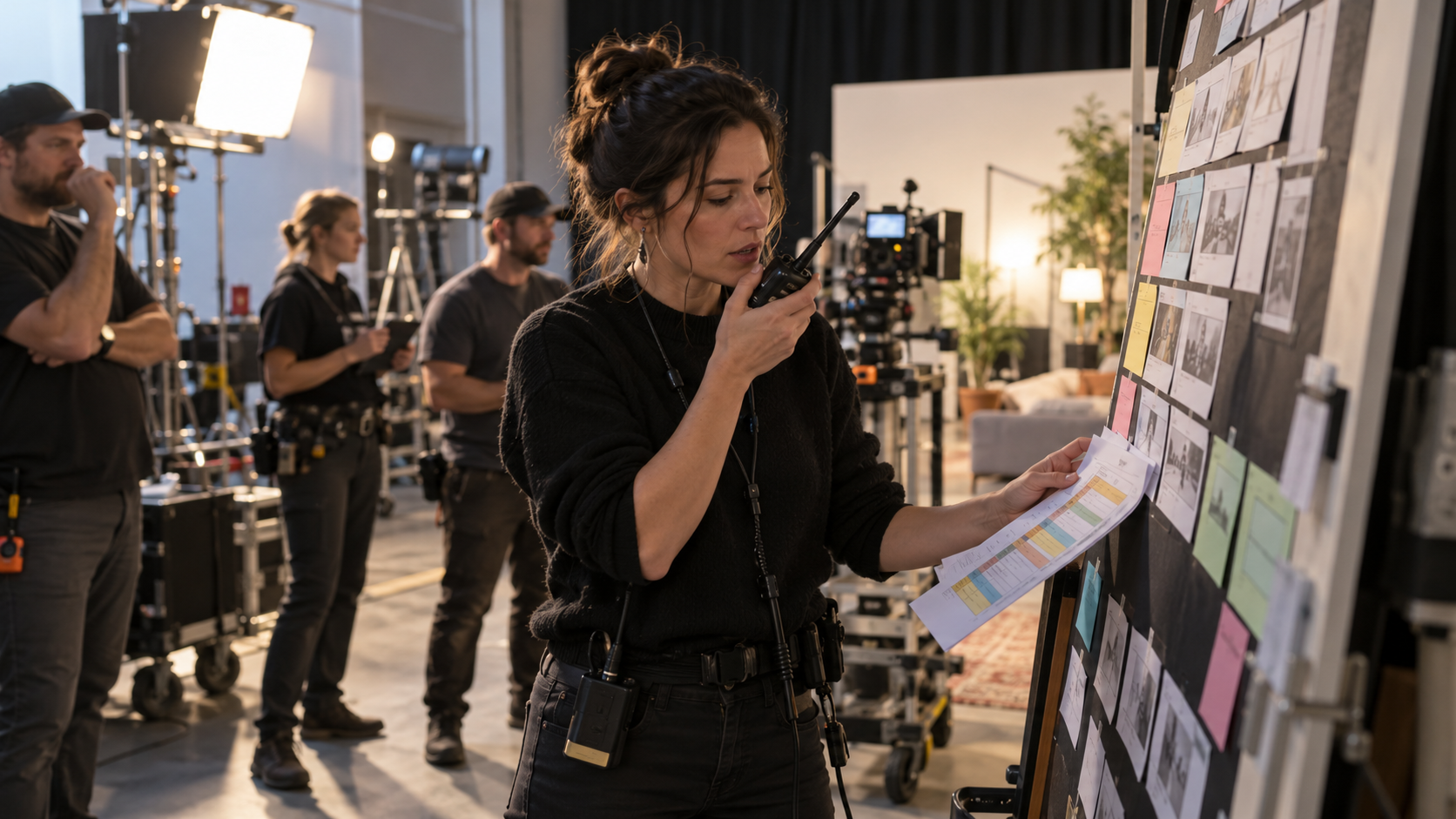
Assistant Directors Explainer
An assistant director, usually shortened to AD, is a production manager for the shooting process rather than a junior version of the director. The first AD translates the script and creative plan into a schedule that accounts for cast, locations, daylight, equipment, preparation, and safety. During filming, that person coordinates the set so the director can focus on actors, blocking, and camera choices without losing track of what must be completed.
Preparation begins with a script breakdown. Scenes are separated into practical elements such as performers, extras, props, vehicles, special effects, costumes, and locations. The first AD works with the director, producer, cinematographer, department heads, and production office to decide a feasible order for filming. Because movies are rarely shot in story order, the schedule must also protect continuity and allow departments enough time to prepare each setup.
The AD department divides the information flow. A second AD typically coordinates off-set activity, helps prepare call sheets, and makes sure cast members move through transport, hair, makeup, wardrobe, and rehearsals when needed. Additional ADs and production assistants may manage background performers, hold areas, lockups, and communications. Titles and boundaries vary by country, contract, production scale, and whether the work is film, episodic television, or commercials.
On set, the first AD calls attention to each stage of a take, confirms that departments are ready, and monitors progress against the day. The job depends on clear authority without confusing logistics with creative direction. Safety is integrated into planning: stunts, vehicles, weather, minors, crowds, weapons, water, and long hours require specialized procedures and qualified personnel. An AD coordinates the process but does not replace those experts or the producer's legal duties. The best measure of assistant directing is not simply speed. A rushed set can produce mistakes, unsafe conditions, and unusable footage. Effective ADs create reliable information, realistic transitions, and a calm chain of command so hundreds of interdependent tasks arrive at the right moment. Their work is most visible when a disruption occurs and the plan can change without losing the creative priority or the people responsible for carrying it out. A practical way to read or discuss Assistant Directors is to begin with the basic definition and then identify the choices made in a particular example. Assistant directors manage the practical process of filming; they do not ordinarily replace the director's creative role. Next, ask who sets the relevant rules, who performs the work, and which results follow from creative judgment, law, contracts, technology, budget, or production limits. Similar-looking examples can operate differently because their audience, market, format, timing, and agreements are different. The AD team coordinates call sheets, cast movement, background performers, set access, timing, and communication between departments. It also helps to distinguish a formal industry category from an informal critical label or one organization's current practice. That separation keeps a memorable anecdote from becoming a false universal rule. Dates and territories matter: tools, distribution systems, audience behavior, and standard agreements change, while older examples can preserve assumptions that no longer apply everywhere. Because the concept sits inside a larger workflow, examine what comes before and after it, which records move between stages, and where responsibility changes hands. This broader view prevents one visible task from being mistaken for the entire system. When a claim sounds absolute, compare it with a second kind of source and look for the conditions under which the claim is true. Then trace the process from the visible result back through the less visible decisions, handoffs, and quality checks that produced it. A strong AD department protects both the creative plan and the conditions that let a crew execute it consistently. Finally, compare the example with a contrasting case and note which part of the definition still holds. This method keeps the explanation grounded, highlights the people and systems behind the outcome, and leaves room for reasonable disagreement about hybrid or borderline cases.
Assistant directors manage the practical process of filming; they do not ordinarily replace the director's creative role.
A script breakdown identifies the cast, locations, equipment, effects, and departmental preparation needed for every scene.
The shooting schedule groups work by real constraints rather than by the order in which scenes appear in the story.
The AD team coordinates call sheets, cast movement, background performers, set access, timing, and communication between departments.
Safety planning is part of the schedule and must involve the qualified specialists responsible for particular hazards.
A strong AD department protects both the creative plan and the conditions that let a crew execute it consistently.
Explore more "Explainers"
Discover additional explainers across politics, science, business, technology, and other fields. Each explainer breaks down a complex idea into clear, everyday language—helping you better understand how major concepts, systems, and debates shape the world around us.