

How Deep-Sea Hydrothermal Vents Support Life Explainer
Hydrothermal vents form where seawater circulates through hot, fractured ocean crust, often near mid-ocean ridges. The water is heated by magma and reacts with rock, losing some chemicals and gaining others, including hydrogen sulfide, hydrogen, methane, iron, and metals. Buoyant fluid then rises and escapes through the seafloor, sometimes at temperatures above 300 degrees Celsius.
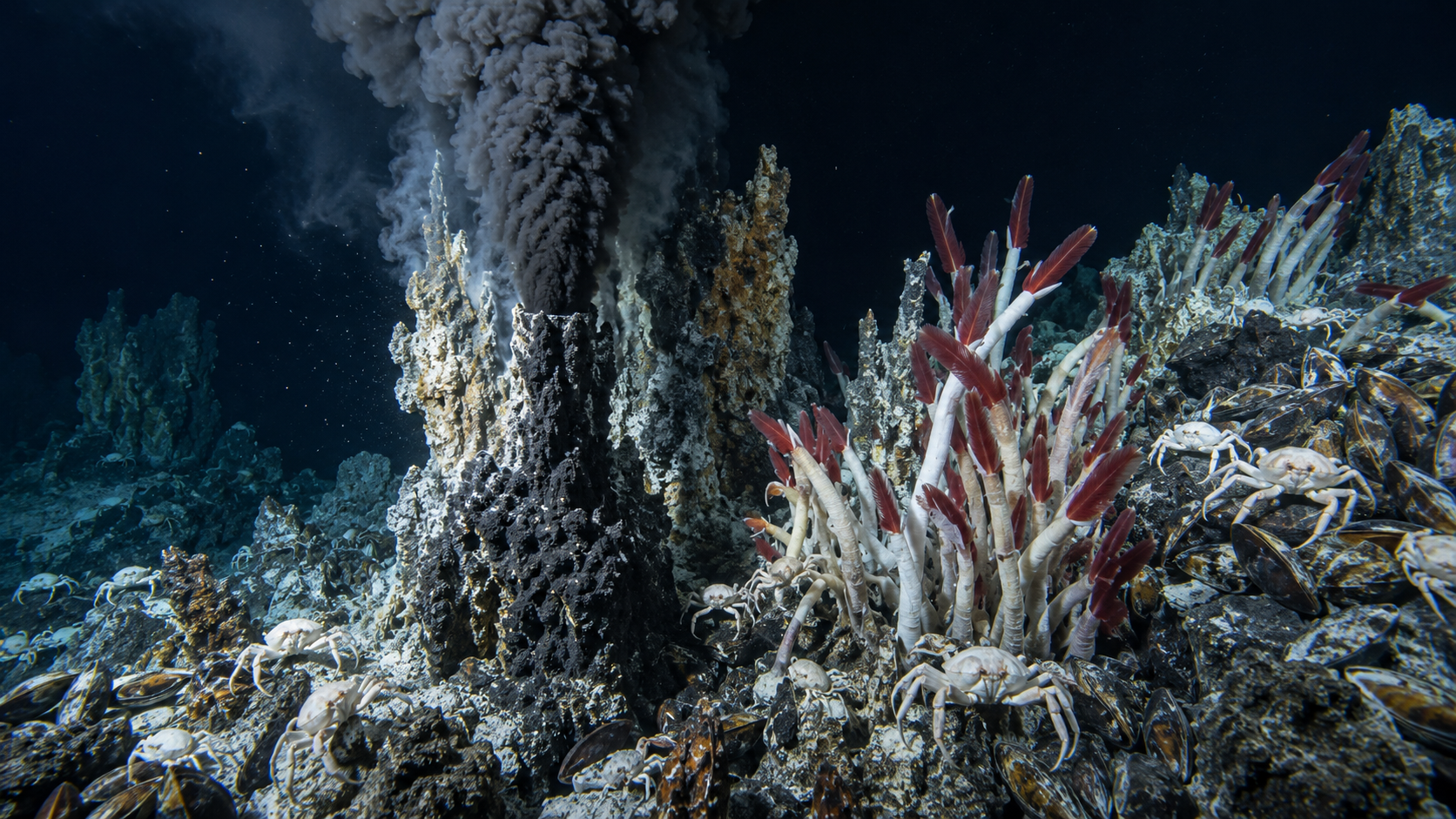
When the hot fluid meets cold, oxygenated seawater, minerals precipitate and build chimneys. Dark clouds from black smokers contain fine metal-sulfide particles; the water itself is not smoke. The mixing zone also brings together chemically reduced vent compounds and oxidants such as oxygen or nitrate. That chemical imbalance is an energy source for microorganisms.
Chemosynthetic bacteria and archaea use energy from reactions involving sulfur, hydrogen, methane, or iron to fix carbon dioxide into organic molecules. This chemosynthesis plays the ecological role that photosynthesis fills at the surface: it creates new biomass from inorganic carbon. Different microbes occupy different temperatures and chemical niches within fluids, chimneys, sediments, and animal tissues.
Many vent animals rely directly on microbial partners. Giant tubeworms lack a conventional digestive tract as adults and house sulfur-oxidizing bacteria in a specialized organ. Their blood transports sulfide, oxygen, and carbon dioxide to those symbionts. Vent mussels and clams may also contain chemosynthetic bacteria, while shrimp, crabs, snails, fish, and other animals graze, filter, scavenge, or prey within the food web.
Vent habitats are dynamic. Chimneys grow and collapse, eruptions bury communities, and fluid flow can shift or stop. Larvae disperse through the ocean to colonize new sites, but vents may be separated by great distances. Species must balance access to energy-rich chemicals against heat, toxicity, low oxygen, high pressure, and rapid environmental change.
Not all deep-sea life depends on vents; much of the ocean floor relies on organic material sinking from sunlit waters. Vent ecosystems are distinctive because local primary production begins with chemical rather than solar energy. They reveal biological flexibility, influence ocean chemistry, and provide natural laboratories for studying symbiosis, extreme environments, mineral formation, and possible habitats on other ocean worlds.
Heated seawater reacts with ocean crust and returns carrying reduced chemicals. Mixing with cold seawater creates reactions microbes can exploit for energy.
Black-smoker plumes are mineral particles precipitating from fluid, not combustion smoke.
Chemosynthetic bacteria and archaea use chemical reactions to fix carbon dioxide into biomass without sunlight.
Tubeworms, mussels, and clams may host symbiotic microbes, while other animals graze, filter, scavenge, or hunt around the vent.
Vent flow can begin, shift, and stop. Organisms tolerate pressure and chemicals but must disperse to new sites when a habitat fails.
Most deep-sea ecosystems still depend on surface photosynthesis. Vents are unusual centers of local chemical primary production.
Explore more "Explainers"
Discover additional explainers across politics, science, business, technology, and other fields. Each explainer breaks down a complex idea into clear, everyday language—helping you better understand how major concepts, systems, and debates shape the world around us.