

How Batteries Store and Release Energy Explainer
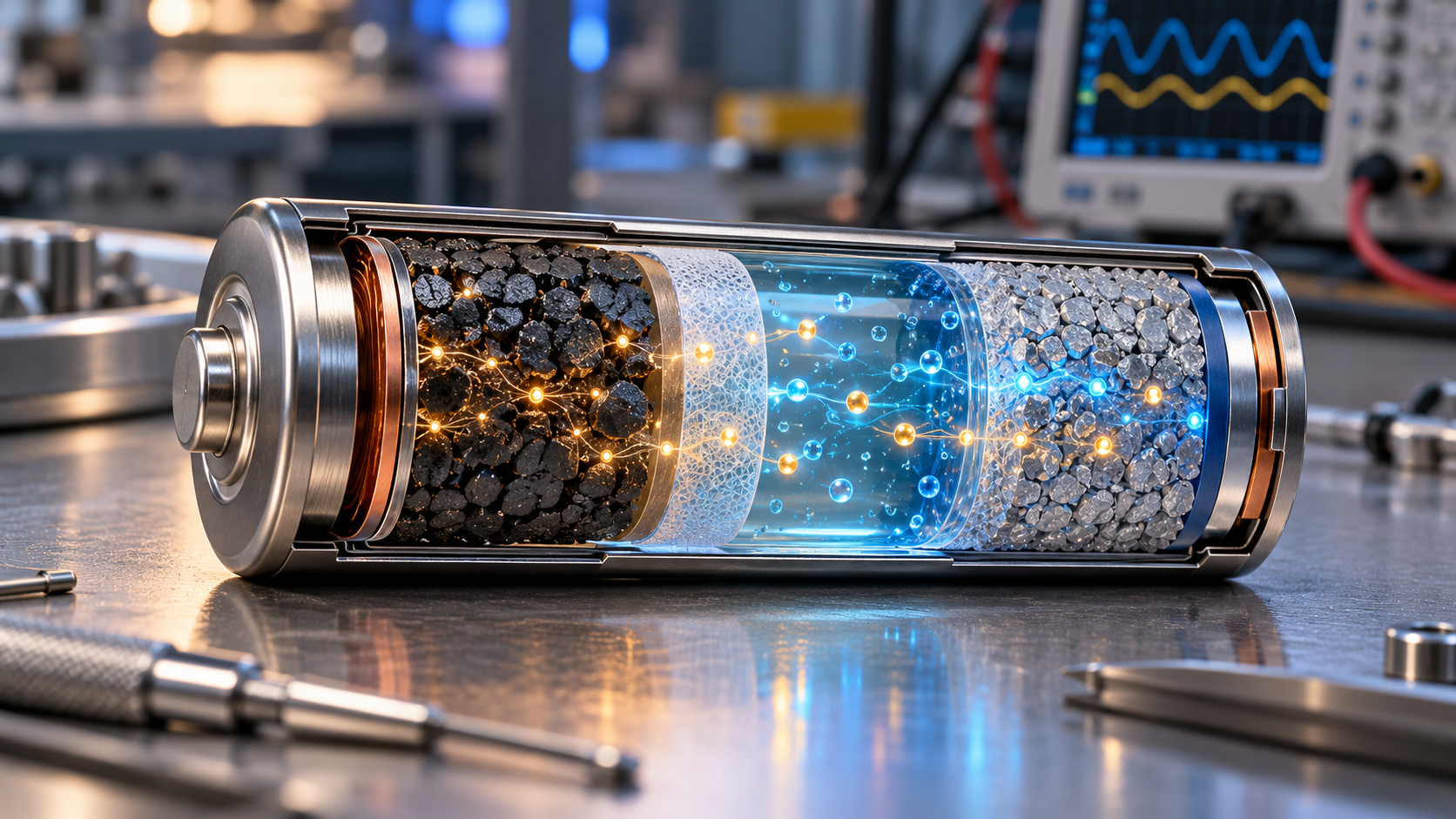
A battery stores energy in chemical arrangements that can drive an electrochemical reaction. Each cell contains two electrodes and an electrolyte that conducts ions between them. When the cell powers a device, oxidation at the anode releases electrons. Reduction at the cathode accepts them. The separated reactions create a voltage that can push electrons through an external circuit.
Electrons cannot normally cross the electrolyte directly, so they travel through the connected wire, motor, lamp, or electronic device. Ions move inside the cell to preserve charge balance as the reactions proceed. A separator keeps the electrodes from touching, which would create an internal short circuit, while still allowing the needed ionic movement.
Voltage reflects the difference in electrochemical potential between the electrode reactions. Capacity describes how much charge can pass before usable reactants are depleted or inaccessible. The energy a battery can deliver depends on both voltage and capacity. Temperature, discharge rate, age, and cell design determine how much of the theoretical energy is available in practice.
In a rechargeable battery, an outside power source applies a voltage that drives the reactions mainly in reverse. Electrons are forced back toward the electrode that released them during discharge, and ions return through the electrolyte. The reversal is never perfect. Side reactions, structural changes, and growth of interfacial layers gradually reduce capacity and increase internal resistance.
Different chemistries make different tradeoffs. Lead-acid cells are heavy but robust, lithium-ion cells offer high energy density, and other systems emphasize low cost, long life, rapid charging, safety, or abundant materials. A battery pack also needs electronics and thermal management to keep individual cells within safe voltage and temperature limits.
A battery does not contain stored electrons waiting to pour out. It contains chemical reactants arranged so a redox reaction can separate and move charge when a circuit is completed. Charging restores a higher-energy chemical state. Careful materials design, manufacturing, monitoring, and recycling are as important as the basic reaction in determining real-world performance.
Oxidation at the anode releases electrons and reduction at the cathode accepts them during discharge.
Electrons move through the external circuit while ions cross the electrolyte to maintain charge balance.
Electrode potential differences create voltage; capacity and voltage together determine stored energy.
Charging applies outside energy to reverse the main reactions and rebuild a higher-energy chemical state.
Side reactions, structural damage, and rising resistance cause rechargeable cells to age.
Chemistry, pack electronics, temperature control, safety, and recycling shape practical battery performance.
Explore more "Explainers"
Discover additional explainers across politics, science, business, technology, and other fields. Each explainer breaks down a complex idea into clear, everyday language—helping you better understand how major concepts, systems, and debates shape the world around us.