

How Ocean Upwelling Feeds Marine Ecosystems Explainer
Upwelling is the upward movement of deeper water toward the ocean surface. Along many coasts, winds blowing parallel to shore move the surface layer offshore through the combined effects of wind stress and Earth’s rotation. Water from below rises to replace it. Similar divergence occurs near the equator and in other open-ocean settings where surface currents move apart.
Deep water is often colder and richer in nitrate, phosphate, silicate, and other nutrients than the sunlit surface. Those nutrients accumulate as sinking organic matter decomposes. When upwelled water reaches the euphotic zone, phytoplankton can use the nutrients and sunlight for rapid growth. Blooms then support zooplankton, small fish, larger predators, seabirds, and marine mammals.
Upwelling regions are among the ocean’s most productive ecosystems and support major fisheries, but productivity changes with timing and location. Strong transport can carry plankton, eggs, and larvae away from suitable coastal habitat. If winds are weak, nutrients may not reach the surface. If winds are extremely strong, the productive water and organisms may be swept offshore before the local food web can use them.
The chemistry of deep water creates tradeoffs. Respiration at depth consumes oxygen and produces carbon dioxide, so upwelled water may be low in oxygen and relatively acidic. Nutrient-fueled blooms can add more organic matter that later decomposes. In poorly ventilated coastal zones, these processes can contribute to hypoxia that stresses or displaces marine animals.
Seasonal winds, coastline orientation, seafloor shape, and climate patterns such as El Niño alter upwelling. Warm surface water during some events suppresses the usual supply of cold nutrients, reducing plankton and affecting fisheries and wildlife. Long-term climate change may shift wind patterns, stratification, oxygen, and the intensity or seasonality of regional upwelling systems.
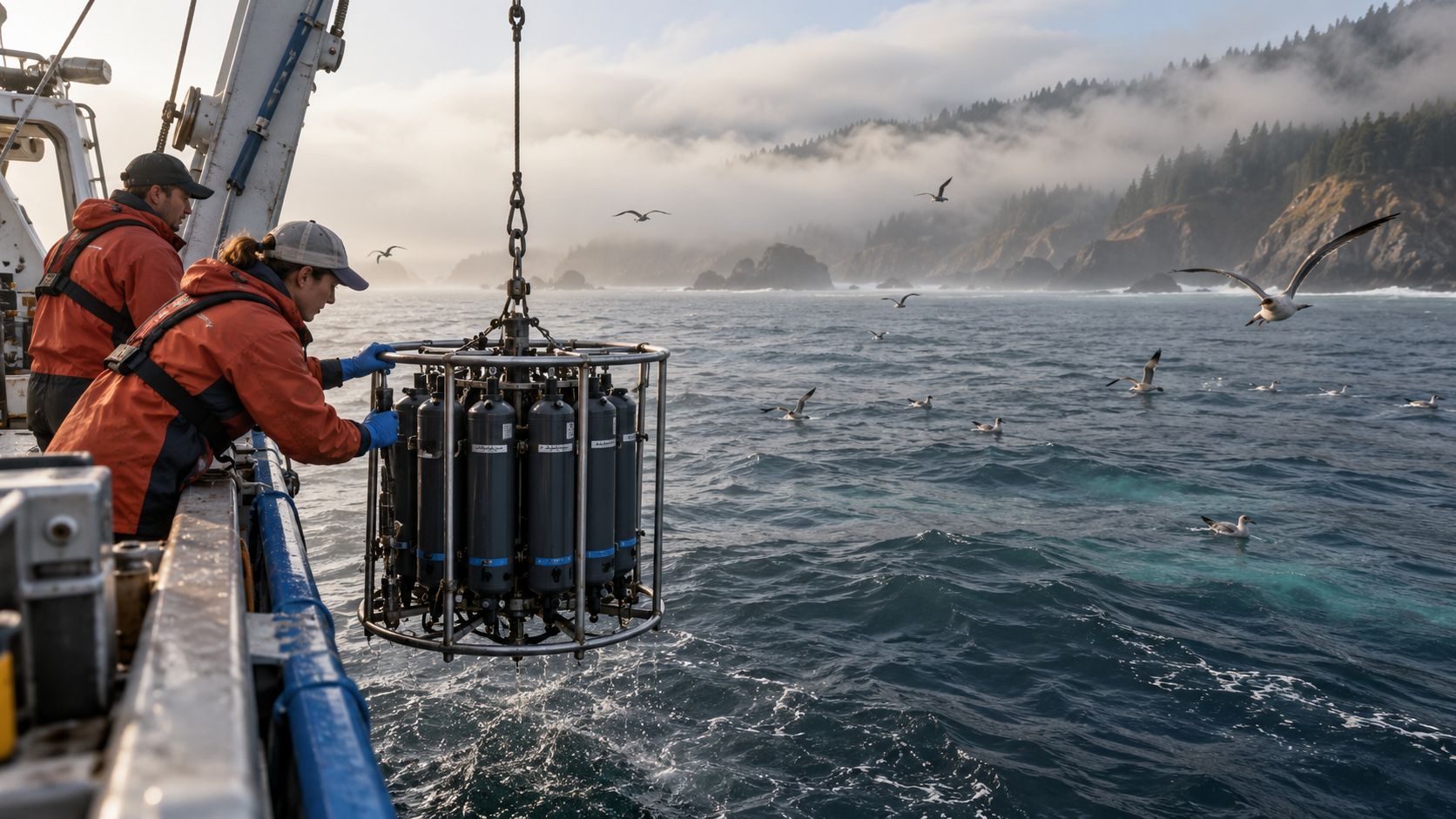
Scientists track upwelling with temperature, salinity, nutrients, oxygen, chlorophyll, currents, satellites, moorings, and ship surveys. Cold surface water alone is not a complete measure because biology depends on light, nutrient ratios, grazing, and retention. Upwelling connects atmospheric circulation, ocean physics, chemistry, and food webs, making it a central process in coastal ecosystem forecasting.
Winds and Earth’s rotation move surface water aside so deeper water rises to replace it.
The rising water carries nutrients regenerated by decomposition below the sunlit zone.
Phytoplankton blooms transfer that nutrient supply into productive marine food webs.
Transport can also sweep larvae offshore, and very strong or weak events may reduce local benefit.
Deep water can be acidic and oxygen-poor, creating risks alongside high productivity.
Climate patterns, coast shape, stratification, and seasonal winds determine where and when upwelling occurs.
Explore more "Explainers"
Discover additional explainers across politics, science, business, technology, and other fields. Each explainer breaks down a complex idea into clear, everyday language—helping you better understand how major concepts, systems, and debates shape the world around us.