

How Stem Cells Become Specialized Explainer
Stem cells combine two abilities: they can self-renew through division and they can produce descendants that differentiate into more specialized cell types. Their developmental potential varies. Pluripotent stem cells can generate nearly every cell type of the adult body, while most adult stem cells are multipotent and replenish a narrower family, such as blood, skin, or intestinal cells.
Differentiation begins when signals inside and outside a cell alter which genes are active. Growth factors, neighboring cells, extracellular matrix, mechanical forces, and metabolic state activate networks of transcription factors. These proteins reinforce some genetic programs and suppress others. The DNA sequence usually remains the same, but chromatin structure and epigenetic marks change which regions are accessible to the transcription machinery.
Cell division can be symmetric, producing two similar stem cells or two differentiating cells, or asymmetric, producing one of each. In tissues, a specialized niche helps regulate that balance through local signals and physical support. Stem-cell descendants often pass through progenitor stages that divide rapidly but have progressively limited options before acquiring mature structures, proteins, and functions.
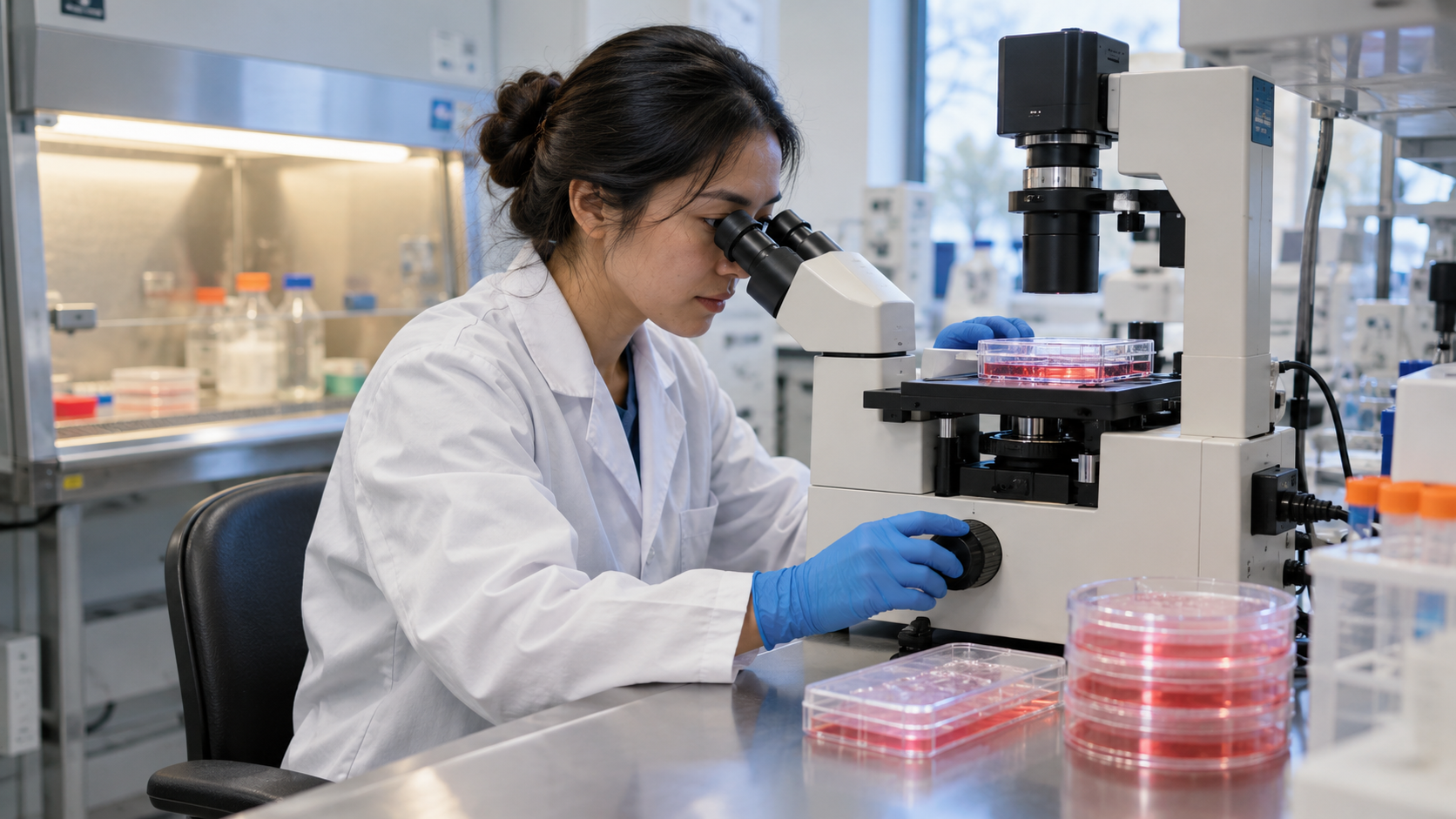
Laboratories guide differentiation by recreating parts of this developmental environment. Researchers change growth factors in a timed sequence, adjust the culture surface, control three-dimensional organization, and monitor molecular markers. Induced pluripotent stem cells are made by reprogramming mature cells back toward a pluripotent state, allowing patient-derived models without assuming that the resulting cells are identical to natural embryonic cells.
A cell that expresses one marker is not necessarily fully mature or functional. Cultures may contain mixed cell types, retain epigenetic memory, or behave differently from cells in an organ with blood vessels, nerves, immune cells, and mechanical load. Undifferentiated pluripotent cells can also form tumors if transplanted. Quality control therefore includes identity, function, purity, genomic stability, and long-term behavior.
Stem-cell differentiation explains normal development and lifelong tissue maintenance while offering models for disease and possible regenerative therapies. The central lesson is that specialization is a regulated trajectory rather than a single switch. Cell history, signal timing, gene-regulatory feedback, and the surrounding niche together narrow developmental choices and stabilize a working cell identity.
Stem cells self-renew and generate differentiated descendants, but their potency differs by type.
External signals activate transcription factors that reshape gene expression and chromatin access.
Tissue niches regulate whether divisions preserve stem cells or produce committed progenitors.
Differentiation usually proceeds through intermediate stages with increasingly limited options.
Laboratory protocols mimic developmental timing but may yield mixed or incompletely mature cells.
Identity, function, purity, stability, and tumor risk all matter in regenerative applications.
Explore more "Explainers"
Discover additional explainers across politics, science, business, technology, and other fields. Each explainer breaks down a complex idea into clear, everyday language—helping you better understand how major concepts, systems, and debates shape the world around us.