

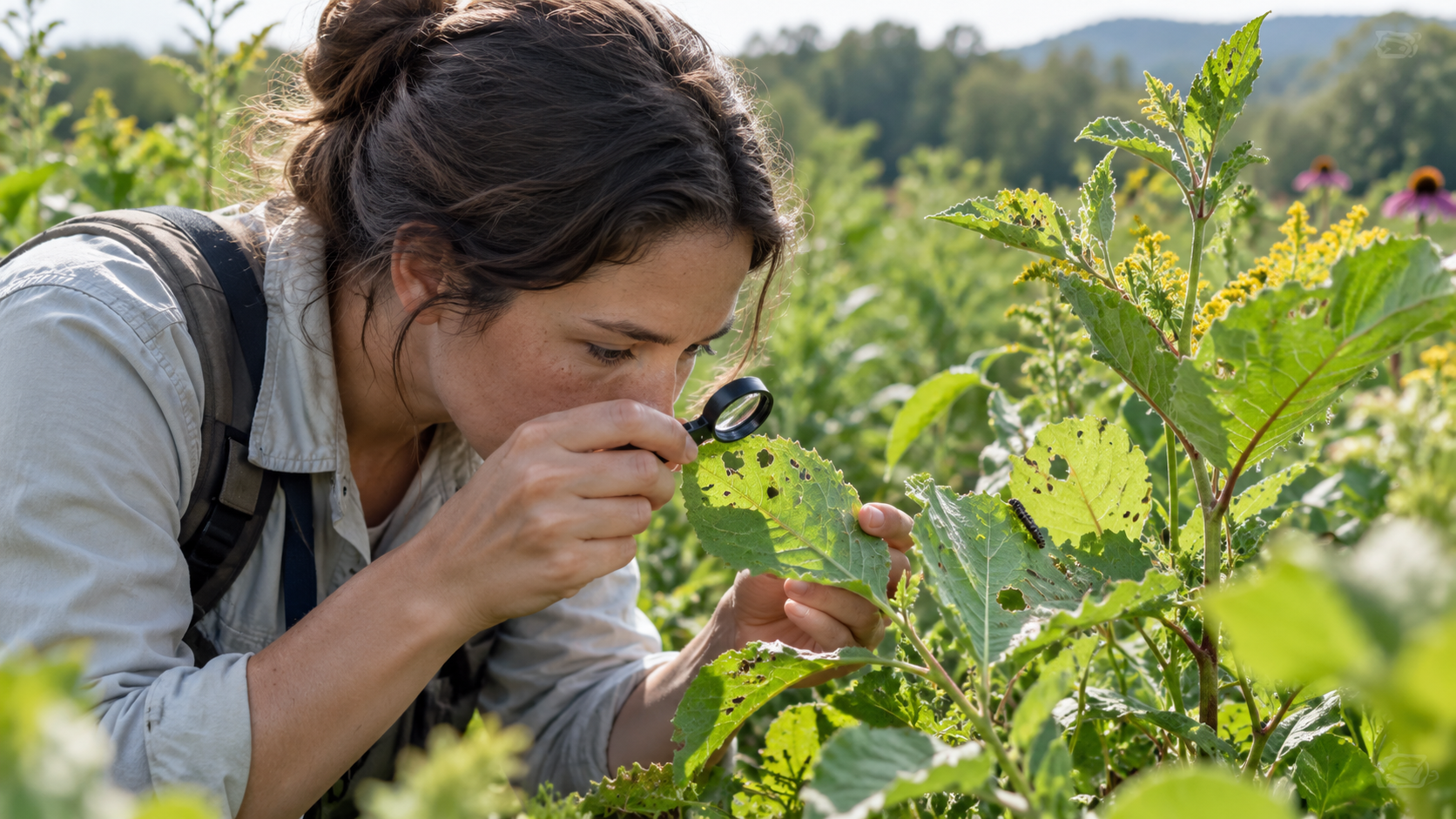
How Plants Defend Themselves from Herbivores Explainer
Plants cannot flee, but they are not passive food. Defenses can be present before attack or induced after damage. They include tough tissues, spines, hairs, sticky surfaces, mineral crystals, toxic compounds, digestion inhibitors, rapid wound responses, and partnerships with predators or microbes. The useful combination depends on plant age, tissue value, and the attacking herbivore.
Physical defenses make feeding or attachment difficult. Lignified leaves resist chewing, trichomes can obstruct small insects, and thorns discourage larger browsers. These structures cost carbon and nutrients and may interfere with growth or photosynthesis. A defense effective against a mammal may do little against a sap-feeding insect that bypasses leaf surfaces with a narrow mouthpart.
Plants also produce diverse secondary metabolites, including alkaloids, terpenes, phenolics, glucosinolates, and cyanogenic compounds. Some poison cellular processes, taste unpleasant, or reduce protein digestion. Concentration and activation matter: certain compounds are stored separately from activating enzymes and become reactive only when tissue is crushed.
Wounding and herbivore saliva trigger electrical, calcium, peptide, and hormone signals. Jasmonate pathways often coordinate anti-herbivore responses, while other hormones modify the outcome. Undamaged leaves can strengthen defenses, and volatile organic compounds released into air may signal nearby tissues or attract parasitoid wasps and predators that attack the herbivore.
Herbivores evolve countermeasures. Specialists may detoxify a compound, avoid defended tissues, suppress signaling, or even store plant toxins for their own protection. Plants may tolerate damage by regrowing instead of preventing every bite. Defense therefore reflects an evolutionary contest and a resource-allocation problem, not an impenetrable immune system.
Researchers combine feeding trials, chemical analysis, gene expression, field experiments, and natural-enemy observations. A compound that deters insects in a dish may have little effect in a windy, variable field. Understanding these networks supports crop breeding and pest management, but boosting one defense can reduce yield, harm beneficial insects, or redirect attack to another tissue.
Constitutive defenses are present before attack; induced defenses rise afterward.
Tough tissues, thorns, hairs, and crystals physically obstruct different herbivores.
Secondary metabolites can poison, repel, or reduce nutrient digestion.
Jasmonate-linked wound signals coordinate changes across plant tissues.
Volatile cues can recruit predators and parasitoids of the attacker.
Defense costs and herbivore counteradaptation prevent one universal solution.
Explore more "Explainers"
Discover additional explainers across politics, science, business, technology, and other fields. Each explainer breaks down a complex idea into clear, everyday language—helping you better understand how major concepts, systems, and debates shape the world around us.