

How Lysosomes Maintain an Acidic Interior Explainer
Lysosomes are membrane-bound compartments whose interior is far more acidic than the surrounding cytosol. Their typical pH near 4.5 to 5 allows acid hydrolases to digest proteins, lipids, nucleic acids, and carbohydrates efficiently. Cells regulate the pathway in context, so the outcome reflects both molecular recognition and cellular state. This distinction prevents a regulated pathway from being mistaken for a single all-or-nothing switch.
V-type ATPase complexes in the lysosomal membrane hydrolyze ATP and pump protons from the cytosol into the lumen. Because pH is logarithmic, the resulting proton concentration can be roughly one hundred times that of neutral cytosol. Location matters because membranes and molecular partners determine which reactions can occur together.
Moving positive charge inward creates a voltage that eventually resists further proton pumping. Chloride and other ions move through channels or exchangers, dissipating charge and helping the pump continue building the chemical gradient. The sequence is coordinated rather than automatic, and checkpoints can redirect or stop it.
The lysosomal membrane also contains transporters that use or work alongside the gradient to export digestion products. Fusion with endosomes, autophagosomes, or phagosomes temporarily changes volume and ion content, so acidity must be restored dynamically. Different organisms tune the same core machinery to suit their structure, metabolism, and surroundings.
Acidification activates resident enzymes while limiting their activity if they escape into the near-neutral cytosol. Too little acidity can slow cargo breakdown and contribute to accumulation, but excessive leakage or membrane damage creates other hazards. Researchers separate cause from correlation with imaging, molecular perturbations, and measurements over time.
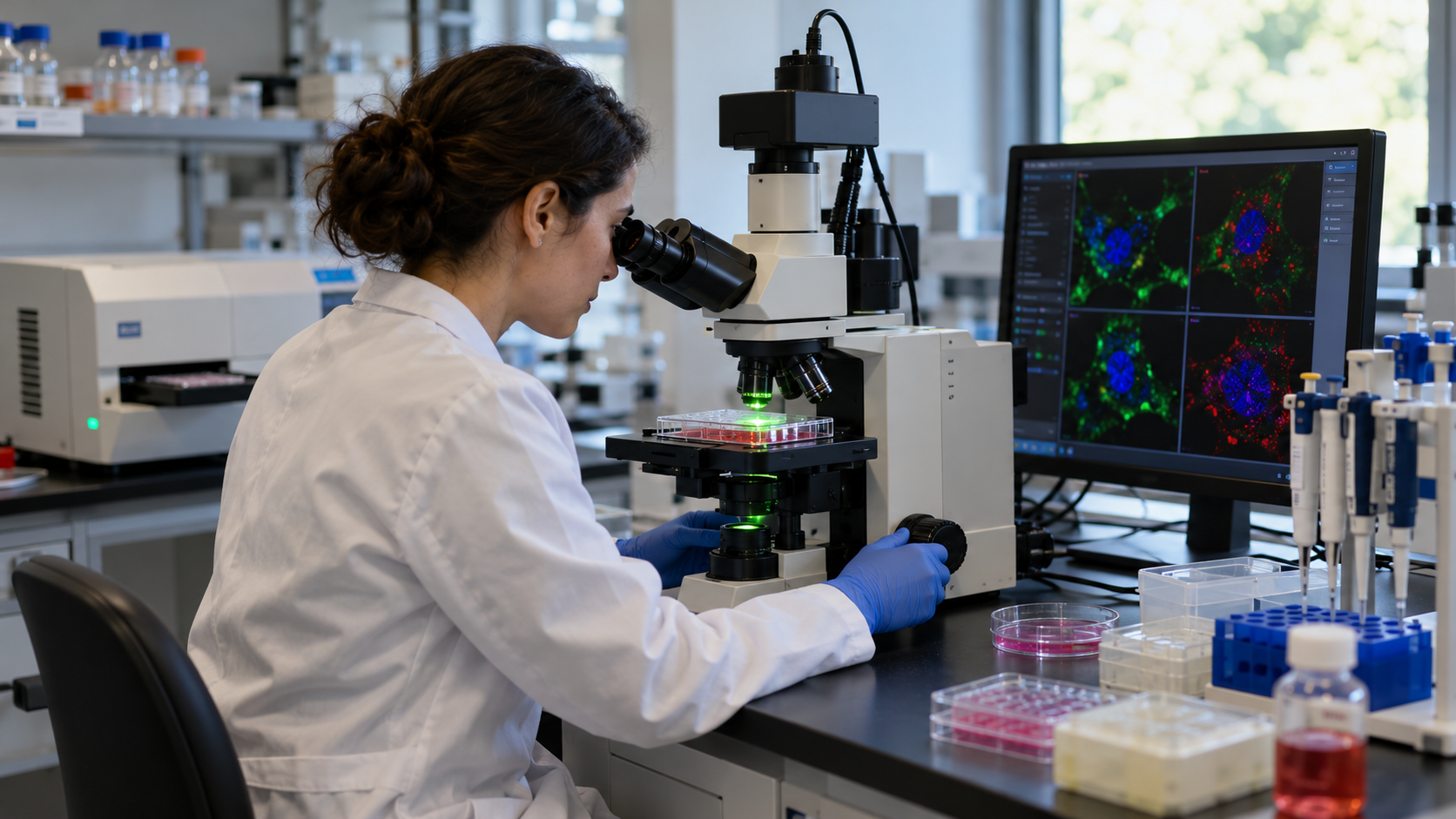
Researchers track lysosomal pH with calibrated fluorescent probes and perturb the proton pump or ion pathways. A bright acidic marker alone is not proof of normal digestion, so measurements of enzyme activity and cargo clearance are also needed. That evidence supports a general mechanism while leaving room for variation among species and conditions.
V-type ATPase uses ATP to move protons into the lysosome.
The accumulating protons lower luminal pH.
Counterion movement prevents voltage from stopping the pump.
Fusion events change volume and require renewed acidification.
Acid hydrolases work best in the low-pH compartment.
Fluorescent probes and cargo assays test acidity and function separately.
Explore more "Explainers"
Discover additional explainers across politics, science, business, technology, and other fields. Each explainer breaks down a complex idea into clear, everyday language—helping you better understand how major concepts, systems, and debates shape the world around us.