

How Redox Reactions Transfer Electrons Explainer
A redox reaction transfers electrons or shifts electron density between chemical species. Oxidation means loss of electrons, while reduction means gain; the two processes must occur together because electrons are conserved. The useful explanation follows energy, matter, and fields while respecting material properties at each boundary. Keeping track of losses explains why practical performance falls short of an ideal limit.
The electron donor is the reducing agent and becomes oxidized. The electron acceptor is the oxidizing agent and becomes reduced, terminology that describes each species by the change it causes in its partner. Geometry and composition set the available pathways, so small design changes can alter the response. Scale changes the balance among surface effects, bulk behavior, and heat flow.
Chemists separate a reaction into oxidation and reduction half-reactions to track electrons, atoms, and charge. Balancing the half-reactions shows how many electrons move and ensures that none appear or disappear from the net equation. The process continues only while a driving difference overcomes losses, resistance, or competing motion.
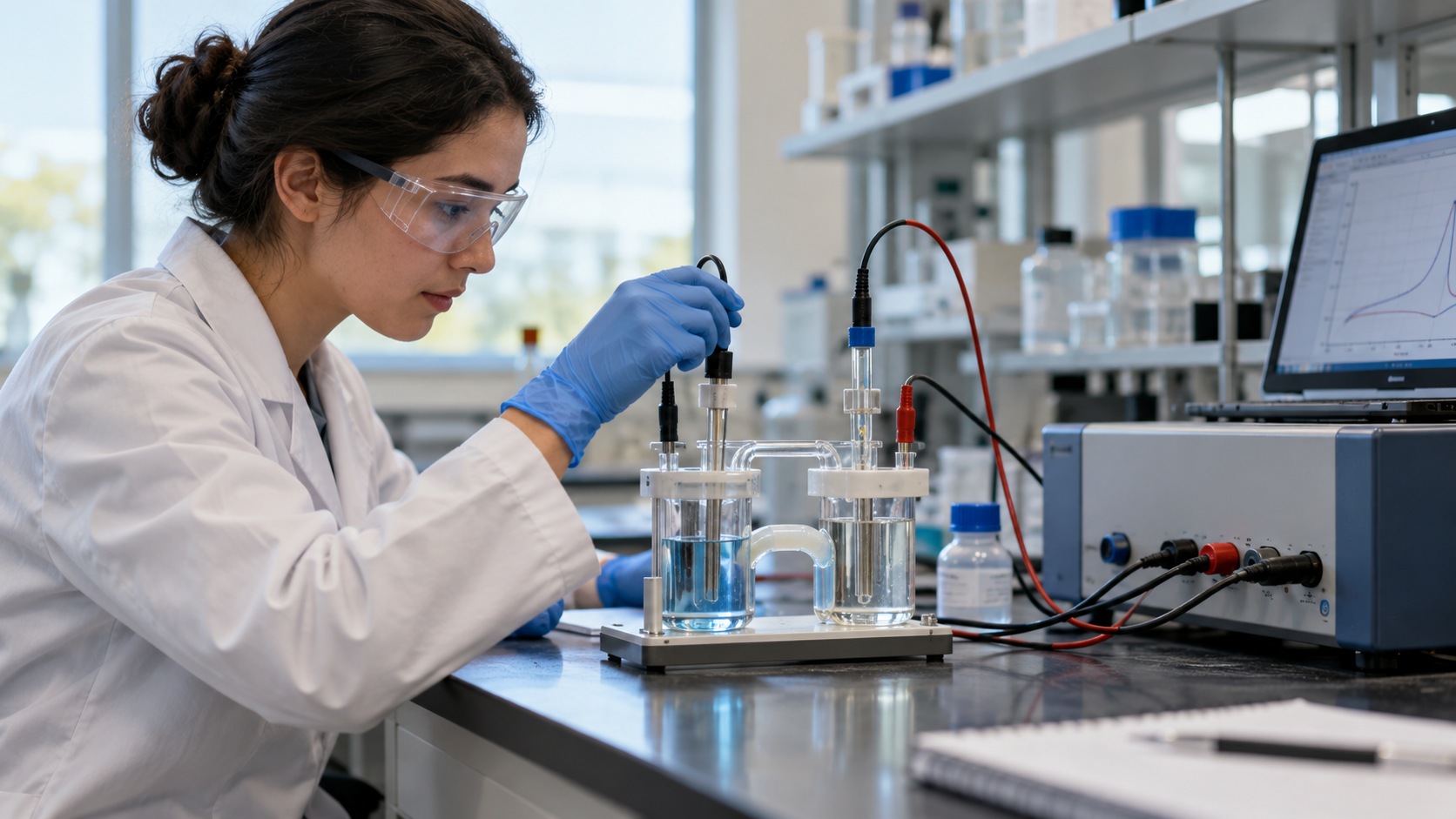
In an electrochemical cell, the half-reactions occur at different electrodes and electrons travel through an external circuit. Ions move through the electrolyte to maintain charge balance, converting chemical free energy into electrical work. Real systems add interfaces and imperfections that idealized diagrams usually leave out.
Biological redox pathways often transfer hydrogen atoms or hydride equivalents with carriers such as NADH. Corrosion, combustion, batteries, photosynthesis, respiration, and mineral chemistry all rely on related electron-transfer principles. Scientists test the model by changing one condition and measuring the predicted thermal, optical, or electrical signal.
Oxidation does not always require oxygen, and reduction does not simply mean removing oxygen. Researchers use electrode potentials, spectroscopy, and product analysis to identify electron flow and distinguish it from acid-base or precipitation reactions. The core physics is dependable, but efficiency and scale depend on operating conditions and experimental uncertainty.
One species donates electrons and is oxidized.
Another accepts those electrons and is reduced.
Half-reactions track atoms, charge, and electron count.
Electrodes can separate the paired processes spatially.
An electrolyte maintains ionic charge balance.
Cell potential reflects the coupled reaction’s driving force.
Explore more "Explainers"
Discover additional explainers across politics, science, business, technology, and other fields. Each explainer breaks down a complex idea into clear, everyday language—helping you better understand how major concepts, systems, and debates shape the world around us.