

How Carnivorous Plants Capture Nutrients Explainer
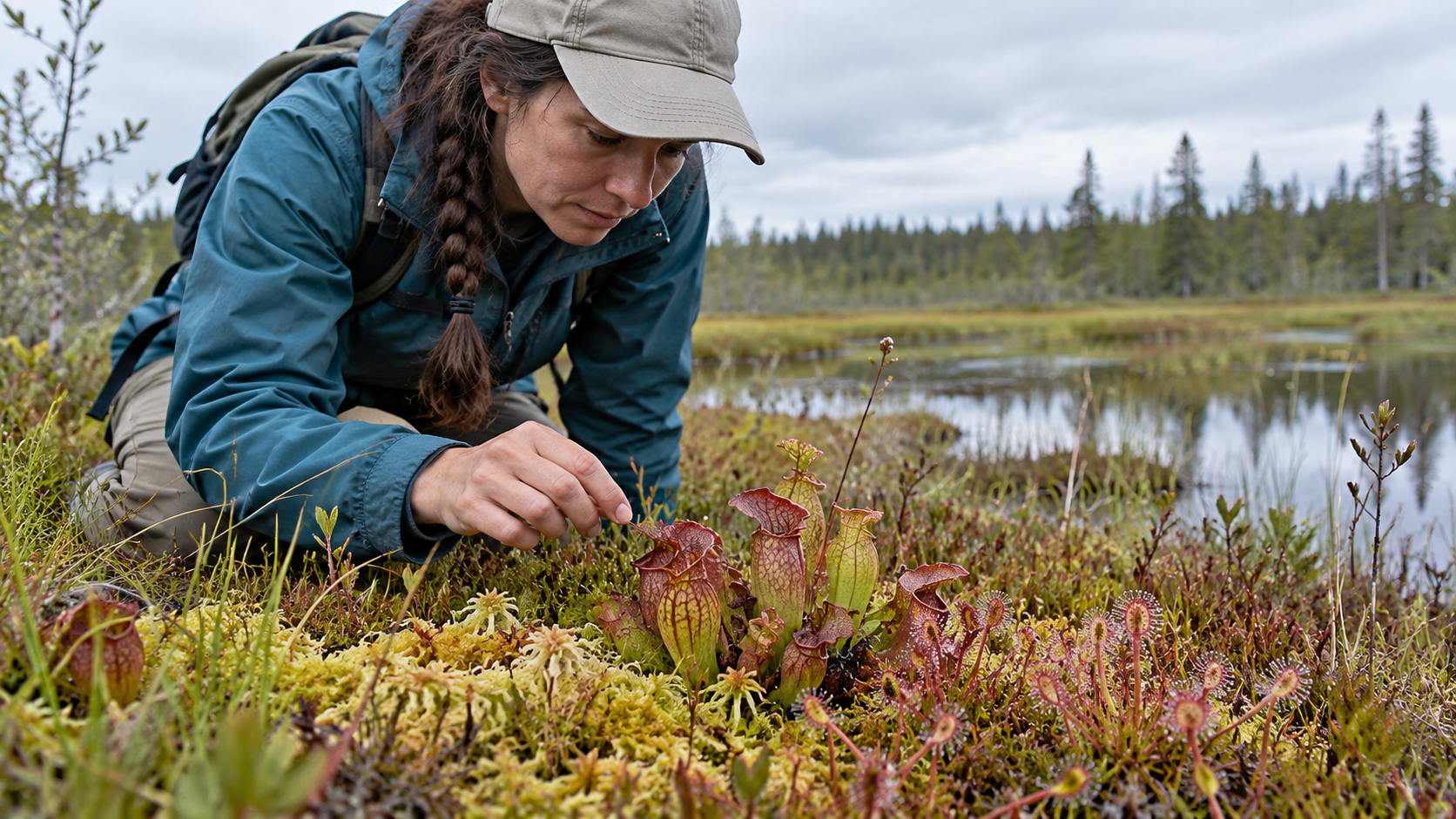
Carnivorous plants live especially well in wet, acidic habitats where sunlight and water are available but usable nitrogen or phosphorus is scarce. They still obtain energy through photosynthesis; captured prey mainly supplies mineral nutrients. Cells regulate this pathway in context, so the result depends on timing, location, and molecular partners. This prevents a regulated process from being mistaken for a single all-or-nothing event.
Different lineages evolved different traps. Pitcher leaves combine slippery surfaces, downward hairs, and digestive pools, while sundews use sticky glandular leaves and bladderworts create suction traps underwater. The components work as a coordinated system rather than as an isolated switch. Measurements of rate and location are as important as detecting a component.
Some traps move rapidly, but many are passive. Color, nectar-like secretions, scent, or position can attract small animals, and structural features make escape difficult after contact. Different organisms tune the same basic mechanism to their structure, metabolism, and environment. This prevents a regulated process from being mistaken for a single all-or-nothing event.
The plant or its microbial partners break prey material down, releasing soluble nutrients that specialized surfaces absorb. Carbon from the animal is less important than nitrogen, phosphorus, and other scarce elements. Researchers test the explanation with imaging, perturbations, biochemical measurements, and comparisons over time. Measurements of rate and location are as important as detecting a component.
Carnivory has costs because traps require tissue and maintenance. Flowers are often separated from traps in space, timing, or signals, which can reduce accidental capture of pollinators needed for reproduction. A visible association alone is not proof of function, so several independent measurements are needed.
Researchers compare nutrient uptake, trap performance, photosynthesis, and growth under controlled prey and soil conditions. Not every insect on a plant has been digested, and some organisms live harmlessly inside pitcher communities. The broad mechanism is established even though its rate and outcome vary among cells and conditions.
Nutrient-poor habitats favor supplemental nutrient capture.
Specialized leaves attract and restrain small prey.
Movement, slippery walls, glue, or suction provide capture.
Enzymes and microbes release soluble nutrients.
Absorbing surfaces transfer nutrients into the plant.
Flowers and traps often reduce conflict with pollinators.
Explore more "Explainers"
Discover additional explainers across politics, science, business, technology, and other fields. Each explainer breaks down a complex idea into clear, everyday language—helping you better understand how major concepts, systems, and debates shape the world around us.