

The Basketball Shot Clock Explainer
The basketball shot clock limits how long a team may control the ball before attempting a field goal. In the NBA and under FIBA rules, the standard possession clock is 24 seconds. To beat it, the ball must leave the shooter’s hand before the signal and then touch the basket ring or enter the basket. The shot clock is separate from the game clock, so both can be running during the same possession and can expire at different moments.
The clock normally begins when a team gains control after a live-ball situation and resets when the other team gains control. It can also reset after a legal shot touches the ring. Many frontcourt situations, including an offensive rebound after a rim touch, use a 14-second reset instead of a fresh 24. Fouls, violations, out-of-bounds decisions, and where the inbound occurs can change the amount restored. The exact reset therefore depends on the competition’s rules and the circumstances of the stoppage.
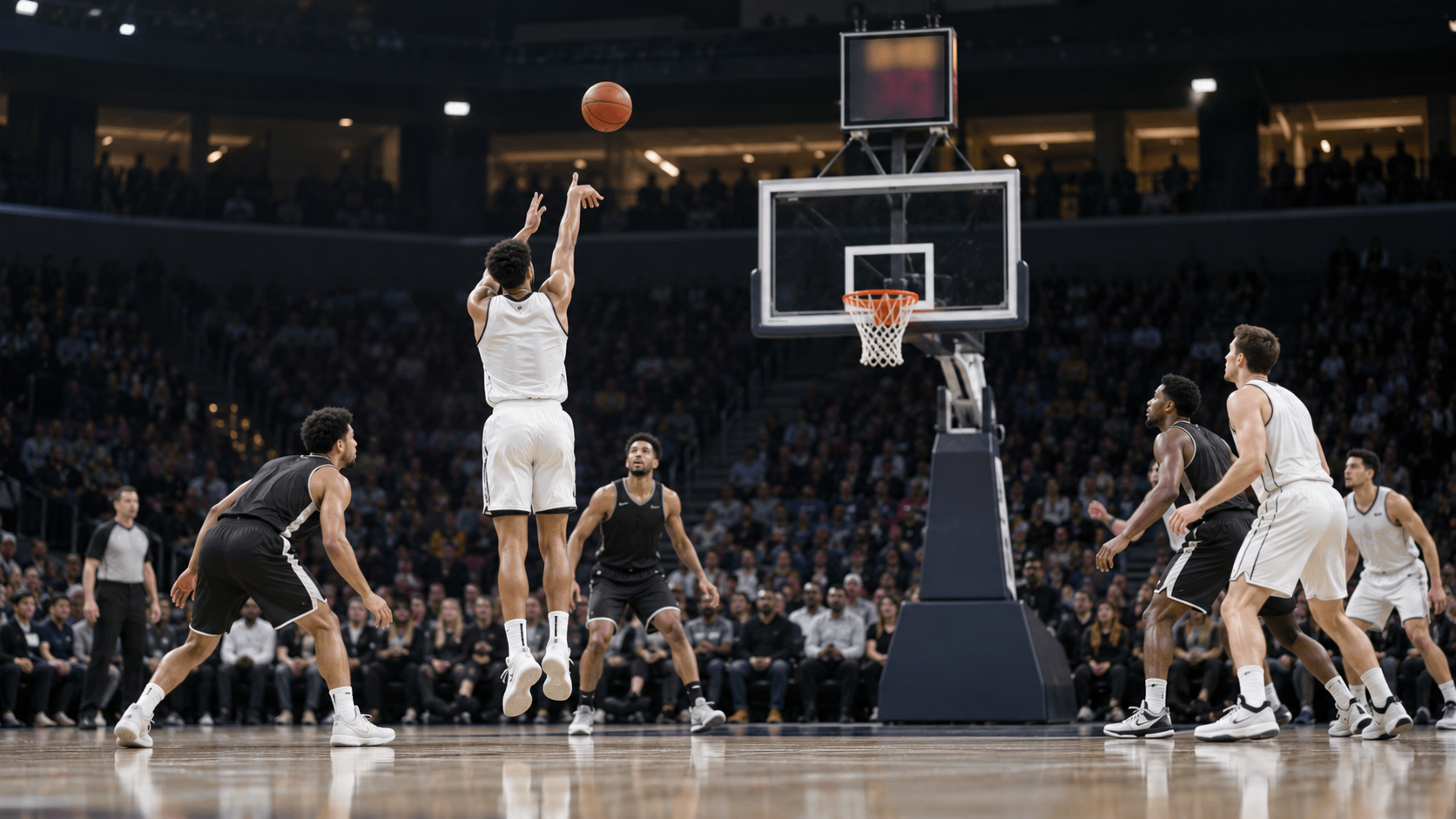
Suppose a player releases a long shot with two-tenths of a second showing. The horn sounds while the ball is in flight, and the shot then touches the ring. The attempt satisfied the timing requirement because it left the hand before zero and reached the ring. If it misses the ring, a shot-clock violation is ordinarily called, although officials may allow an opponent’s immediate, clear control to continue in rule sets that provide for that exception. Replay can help determine release time and rim contact.
The clock changes strategy as much as procedure. Teams often begin a final action with several seconds remaining so a ball handler has time to pass, drive, or recover from defensive pressure. Defenses may force a rushed late-clock shot without making a steal. A common misconception is that release before the horn alone is enough; rim contact or a made basket still matters. Because college, professional, and international competitions do not use every reset in exactly the same way, the applicable rule book controls.
The shot clock prevents a team from holding the ball indefinitely and keeps possessions moving toward a scoring attempt.
It operates alongside the game clock. A possession can have fewer shot-clock seconds than game-clock seconds, especially late in a quarter.
A change of team control generally produces a new possession clock. A legal shot that touches the ring can also trigger a reset.
Many frontcourt resets use 14 seconds rather than 24. Fouls and out-of-bounds rulings may preserve, restore, or reset time according to the situation.
A timely release is not the whole test: the ball must then touch the ring or enter the basket. Officials may review close expiration plays.
Leagues and levels use different clock lengths and reset provisions. The NBA, FIBA, WNBA, and college rule books should not be treated as interchangeable.
Explore more "Explainers"
Discover additional explainers across politics, science, business, technology, and other fields. Each explainer breaks down a complex idea into clear, everyday language—helping you better understand how major concepts, systems, and debates shape the world around us.