

How Soccer’s Added Time Is Calculated Explainer
Added time is the extra period played at the end of each half to compensate for time lost while the clock kept running. Soccer uses a continuous clock, so the referee records significant delays and announces a minimum number of extra minutes near the end of the half.
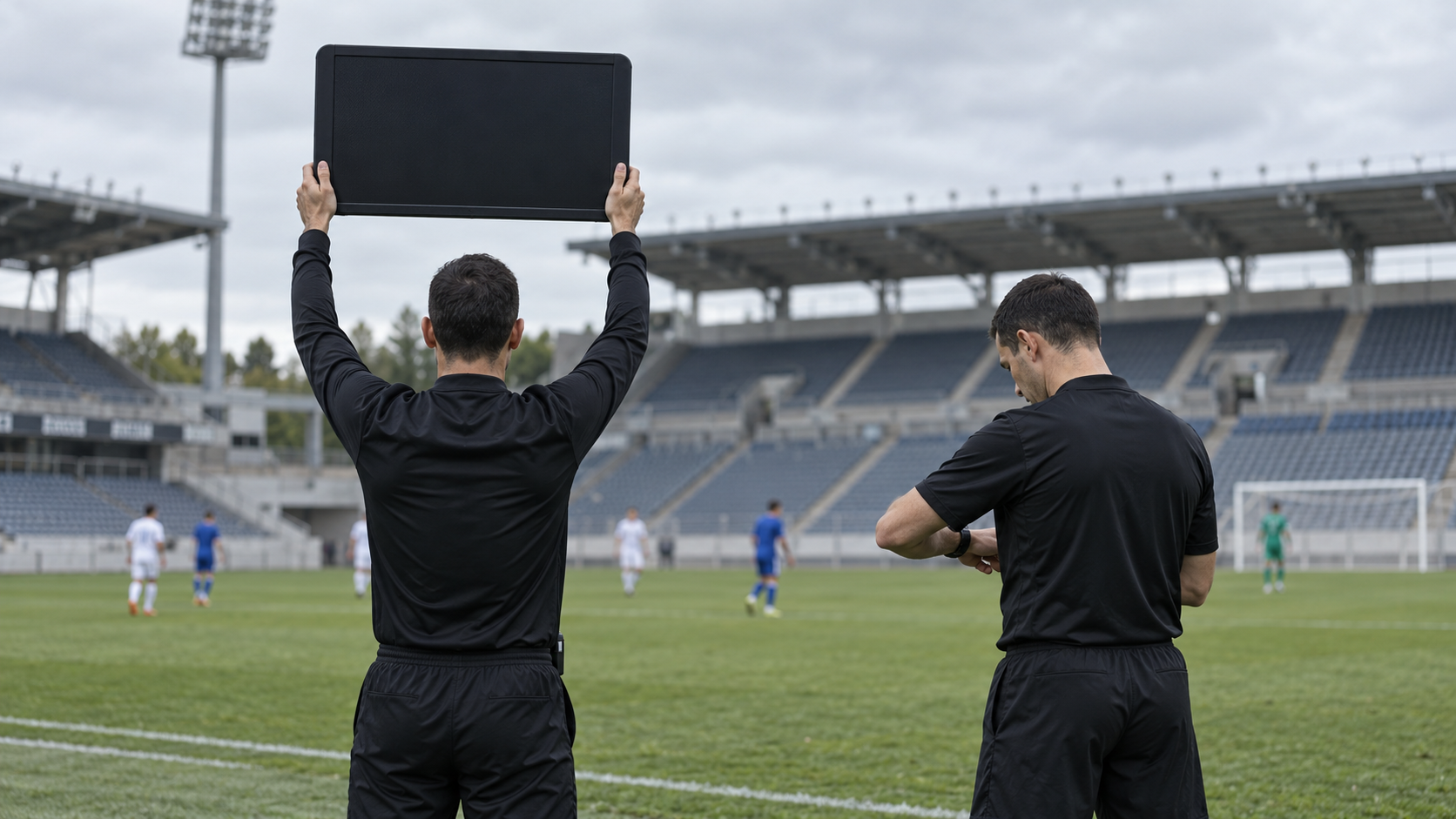
Time can be added for substitutions, injuries, disciplinary actions, goal celebrations, video reviews, deliberate delays, and other stoppages. The referee decides how much playing time was lost; the fourth official’s board communicates that decision but does not end the half.
The displayed number is a minimum. If another injury, substitution, review, or delay occurs during added time, the referee may extend the half again. Play normally continues until the referee decides the allowance has been completed, subject to finishing a penalty kick when the laws require it.
Added time is therefore an estimate managed by the referee, not a countdown controlled by the stadium board. Competition organizers may give guidance about common delays, but the match referee remains responsible for the allowance in each half.
The clock does not stop for ordinary delays, so the referee restores playing time lost to defined stoppages.
Substitutions, injuries, reviews, celebrations, and deliberate delay are common sources.
The number on the board is the least amount expected to be played.
New delays during that period can extend the half beyond the displayed figure.
The referee keeps the official allowance and decides when the half ends.
The fourth official displays the number but does not control the final whistle.
Explore more "Explainers"
Discover additional explainers across politics, science, business, technology, and other fields. Each explainer breaks down a complex idea into clear, everyday language—helping you better understand how major concepts, systems, and debates shape the world around us.