

How Curling Scoring Works Explainer
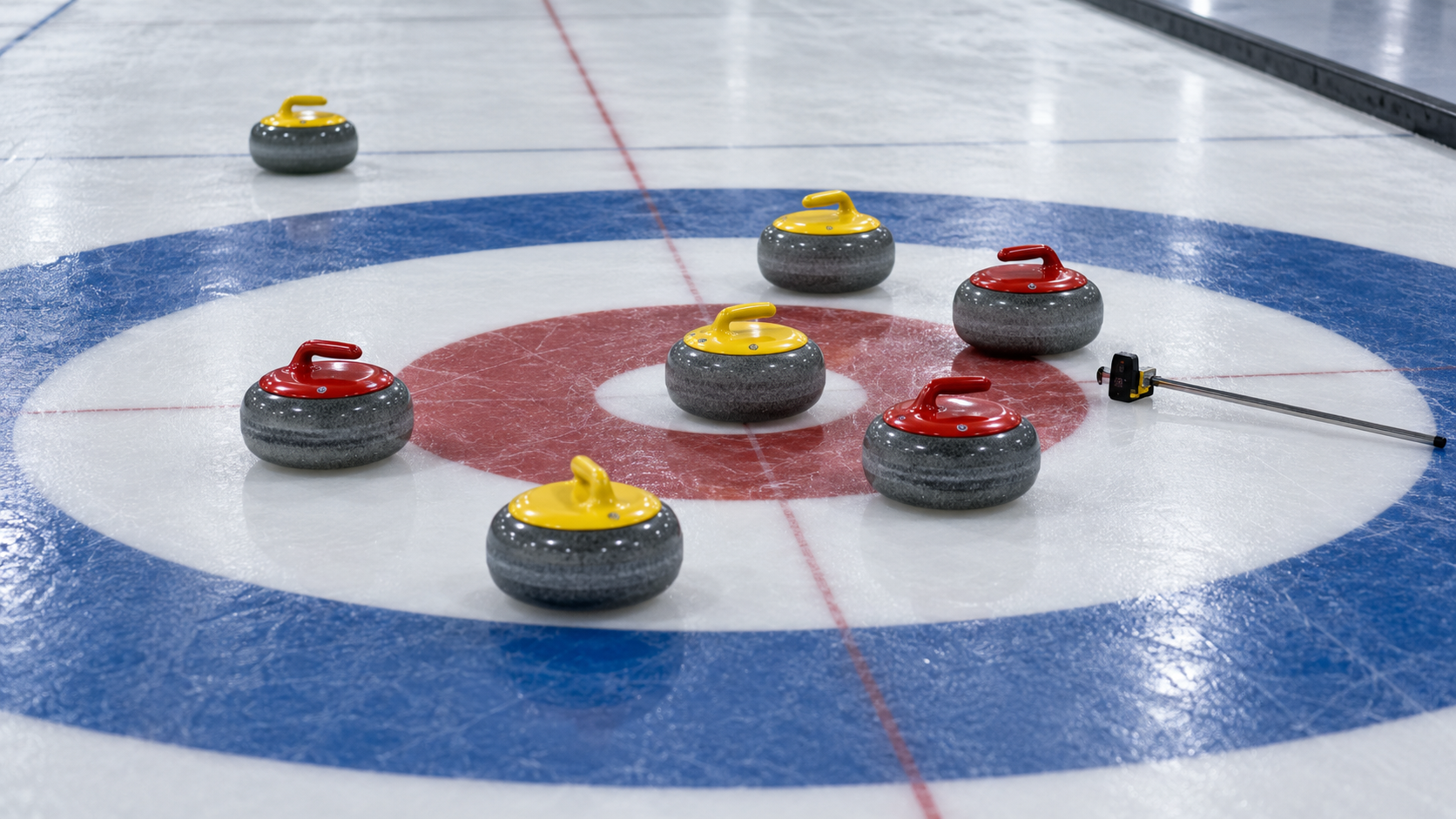
Curling is played in ends, with teams alternating deliveries toward the house. After every stone in an end has been thrown, only the team with the stone closest to the button can score. It receives one point for each of its stones closer to the button than the opponent’s nearest stone.
A stone must touch the house to be eligible. If the closest stones cannot be distinguished visually, officials may use a measuring device. The opponent scores nothing in that end, even if several of its stones also sit in the rings.
An end with no scoring stones is blank. The team with the hammer—the final stone of the end—usually keeps it after a blank under standard rules, but the hammer normally passes to the opponent after a team scores. That makes last-stone advantage a major strategic resource.
Teams may prefer one point, attempt a multiple-score end, force an opponent to one, or deliberately blank to retain the hammer. The match winner is the team with the higher total after the scheduled ends, with an extra end used when competition rules require a winner.
Only the team closest to the button scores in an end.
It counts every stone closer than the opponent’s nearest scoring stone.
If no eligible stones remain in the house, neither team scores.
Under standard play, the team with last-stone advantage usually retains the hammer.
The hammer is the final delivery of an end and offers control over the last scoring chance.
It normally changes teams after a score, shaping decisions throughout the match.
Explore more "Explainers"
Discover additional explainers across politics, science, business, technology, and other fields. Each explainer breaks down a complex idea into clear, everyday language—helping you better understand how major concepts, systems, and debates shape the world around us.