

How Rugby Lineouts Work Explainer
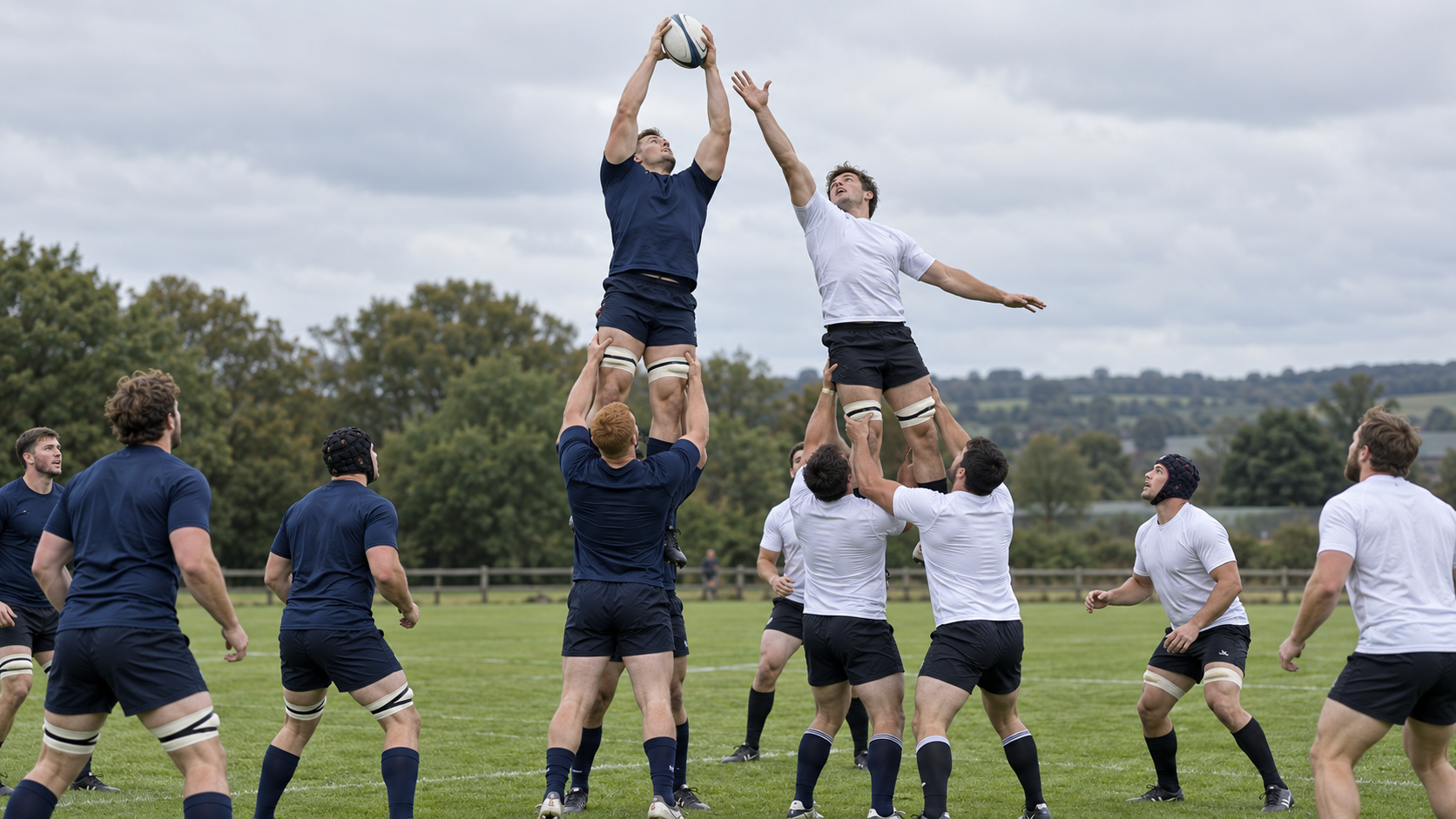
A lineout restarts rugby union after the ball or ball carrier enters touch. The teams form two lines perpendicular to the sideline, and a player throws the ball down the channel between them.
The team that did not put the ball into touch usually throws, with important exceptions. A penalty kicked directly to touch normally gives the kicking team the throw, and the mark depends on how and where the kick went out.
Players may jump and be lifted safely, but both sides must respect spacing and contest rights. The throw must travel straight, and teams use coded movements to target a particular jumper before passing, driving, or forming a maul.
Before a lineout forms, the entitled team may take a quick throw when the law’s conditions are met and the same ball is used. The option attacks an unset defense but gives up the structure of a rehearsed set piece.
A lineout normally restarts play when the ball or carrier crosses touch.
The mark depends on the kick or action that sent it out.
Forwards form two lines and compete for a straight throw.
Jumpers may be safely lifted and supported.
Before the lineout forms, the entitled team may use a legal quick throw.
It can exploit an unorganized defense.
Explore more "Explainers"
Discover additional explainers across politics, science, business, technology, and other fields. Each explainer breaks down a complex idea into clear, everyday language—helping you better understand how major concepts, systems, and debates shape the world around us.