

How Baseball Double Plays Work Explainer
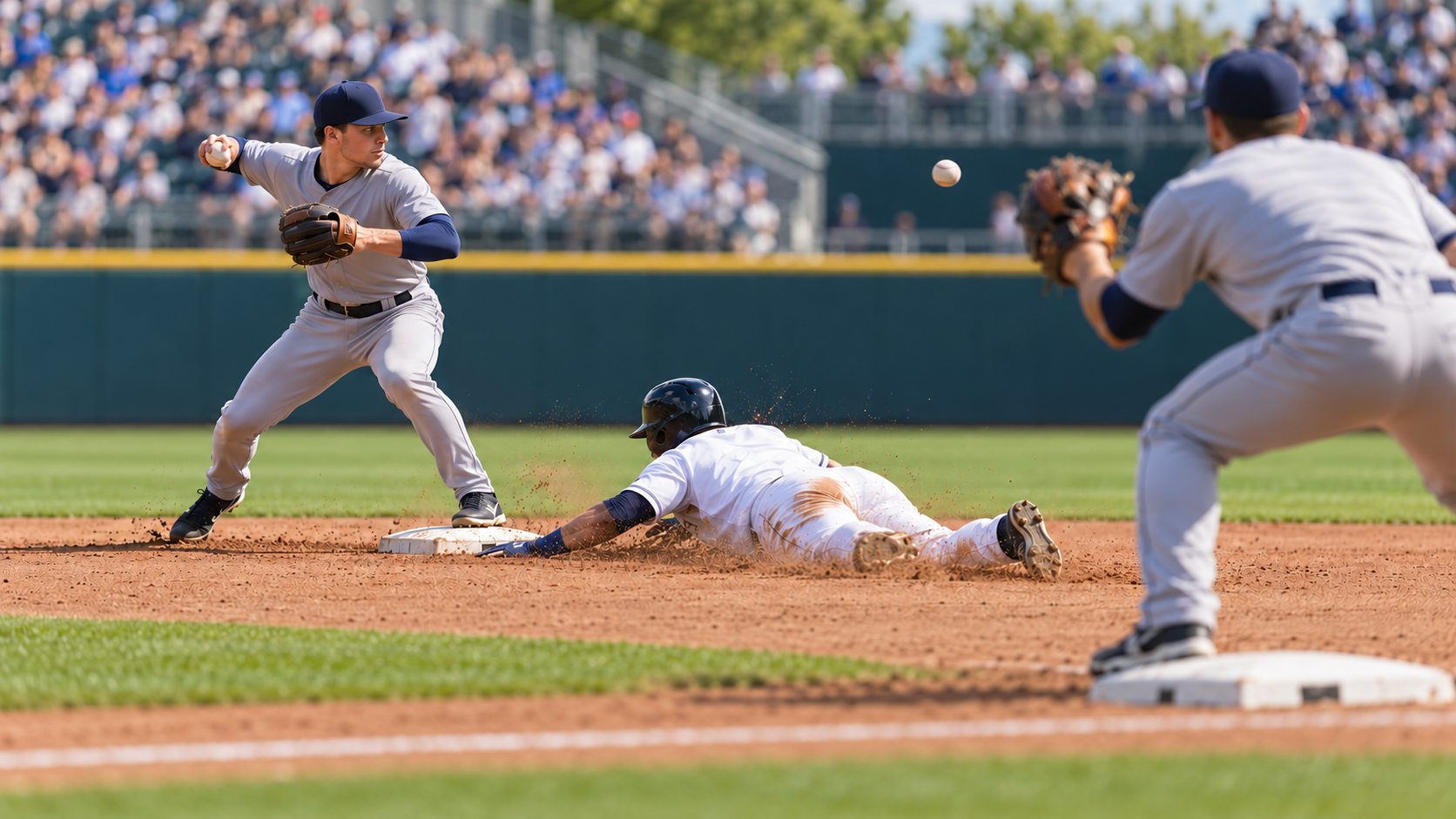
A double play occurs when the defense records two outs during one continuous sequence. The classic version begins with a ground ball and a runner on first: an infielder forces the runner at second, then relays the ball to first before the batter-runner arrives.
The first out changes the legal situation. If the force is removed before the second out, a runner may need to be tagged rather than simply beaten to the base. That is why the order of throws matters, especially on reverse-force plays or balls hit near first base.
Not every double play starts on the ground. A fielder can catch a line drive or fly ball, then double off a runner who left a base too soon. Tags, rundowns, interference rulings, and even strikeout-throwout combinations can also produce two outs in one play.
Middle infielders practice the pivot because every fraction counts: receive the ball, touch the bag, avoid the sliding runner, and make a strong throw. For viewers, identify the available force outs before the pitch. That reveals which bases can create the fastest path to two.
No. A double play can combine force outs, tag outs, catches, or other legal outs during one continuous action.
The shortstop fields the ball, throws to the second baseman for one out, and the second baseman throws to first for the second.
Yes. The defense can catch the ball, then retire a runner who failed to retouch the original base in time.
Explore more "Explainers"
Discover additional explainers across politics, science, business, technology, and other fields. Each explainer breaks down a complex idea into clear, everyday language—helping you better understand how major concepts, systems, and debates shape the world around us.