

How Cricket’s LBW Rule Works Explainer
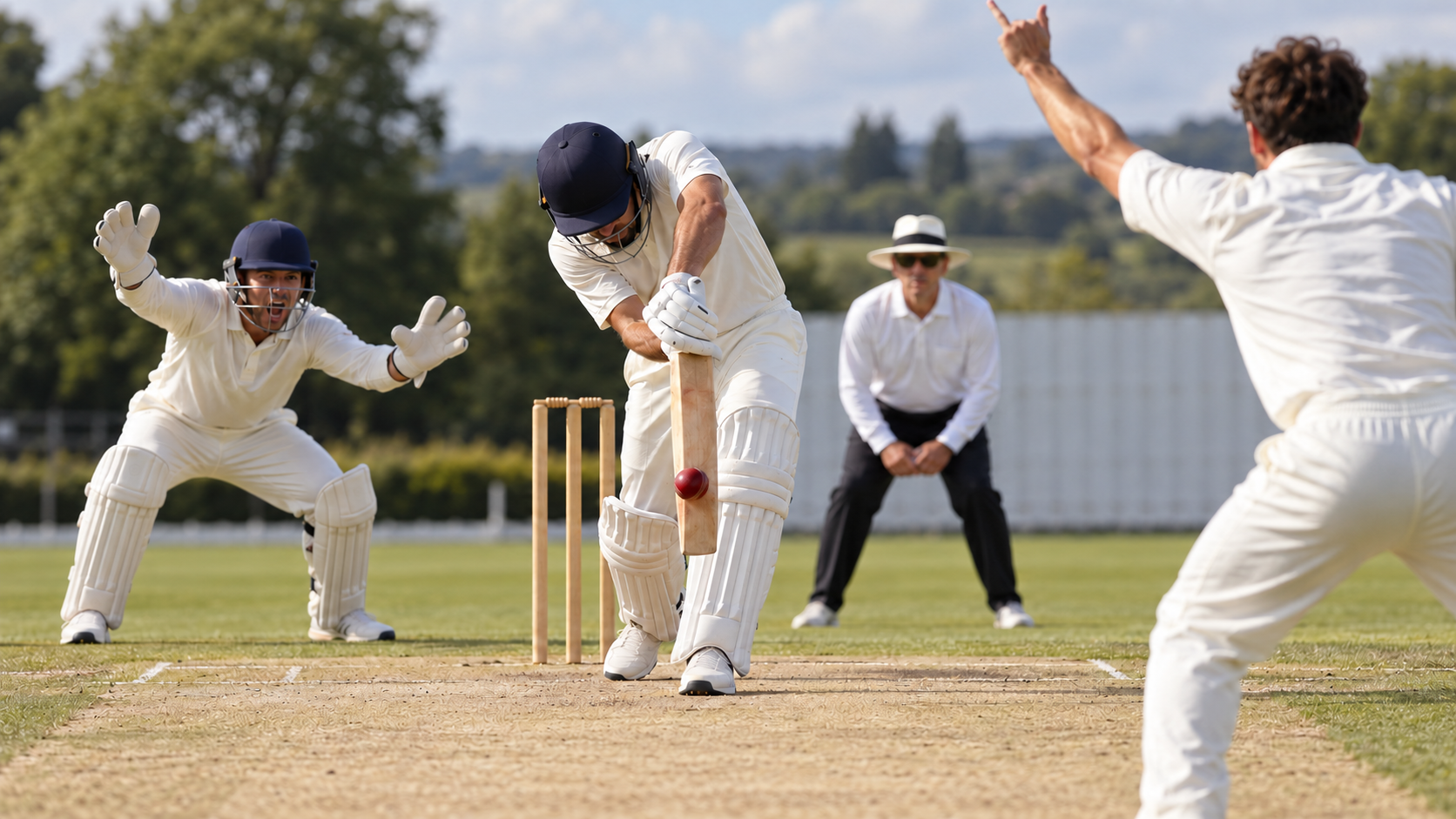
Leg before wicket, or LBW, prevents a batter from using the body as a shield for the stumps. An appeal can succeed when a legal delivery is intercepted by the batter’s person and, without that interception, the ball would have gone on to hit the wicket.
The umpire works through several questions. The ball must not pitch outside the leg-stump line. The point of impact usually must be between wicket and wicket, although impact outside off stump can still qualify when the batter made no genuine attempt to play the ball with the bat.
The ball also must be judged likely to hit the stumps after accounting for its path, bounce, and movement. A ball hitting a pad is not automatically out; it may be missing the wicket, pitching in a protected area, striking outside the required line, or touching the bat first.
Video review visualizes those steps with ball tracking, but the Law remains the foundation. Watch in order: pitch location, first contact, impact line, and projected path. That sequence turns a loud appeal into a structured decision rather than a guess based on how dramatic the pad contact looked.
Yes, if the batter made no genuine attempt to play the ball and the other LBW conditions are met.
No. If the delivery pitches outside the leg-stump line, the batter cannot be out LBW.
LBW does not apply when the ball first contacts the bat, though another form of dismissal may still be possible.
Explore more "Explainers"
Discover additional explainers across politics, science, business, technology, and other fields. Each explainer breaks down a complex idea into clear, everyday language—helping you better understand how major concepts, systems, and debates shape the world around us.