

How Rugby Mauls Work Explainer
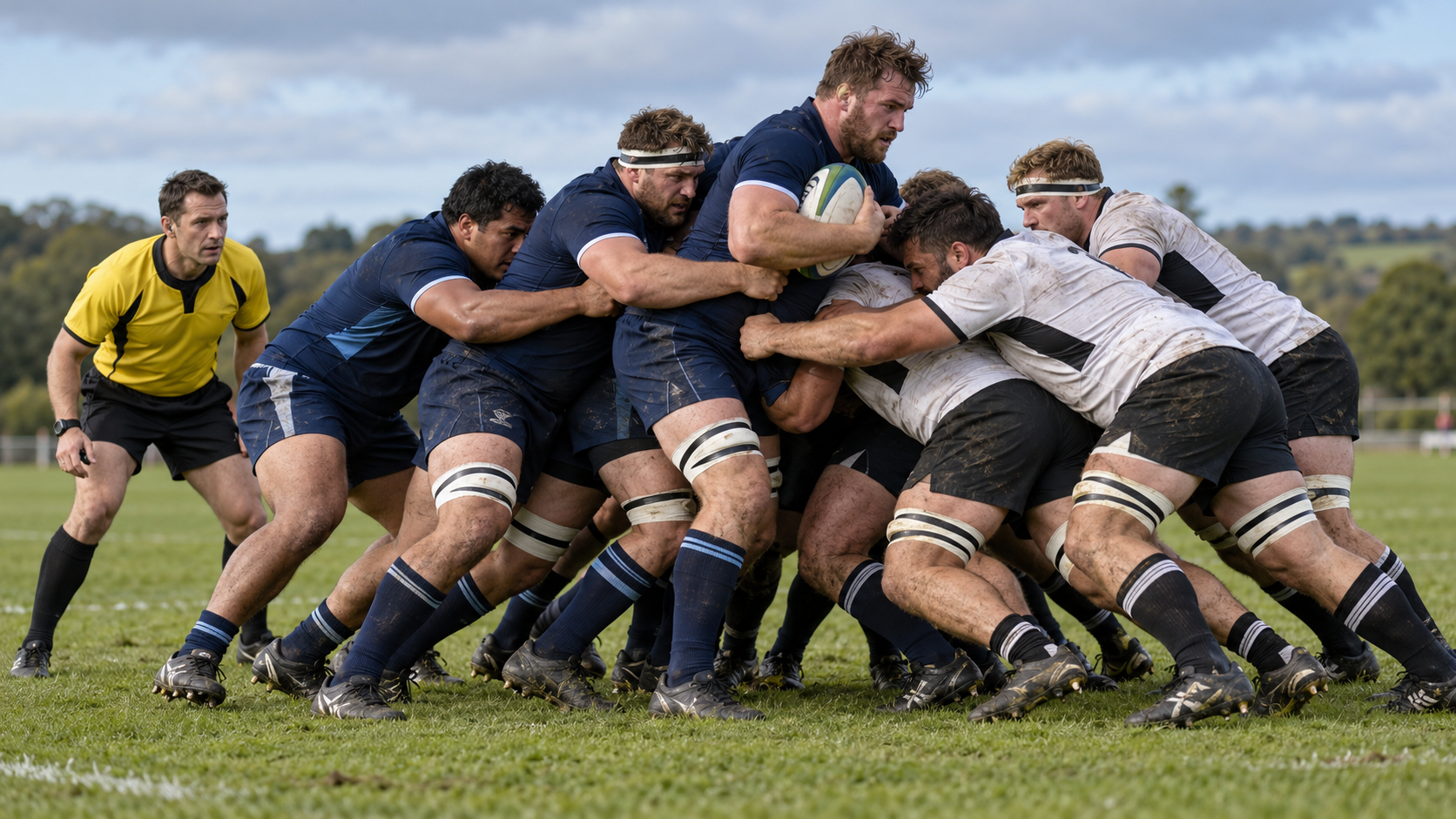
A maul forms when a ball carrier remains on the feet and is held by at least one opponent while at least one teammate binds on. Unlike a ruck, the ball is off the ground and moves inside a standing group of players.
Players joining must come from behind the hindmost foot on their side and bind legally. Entering from the side, pulling the maul down, or swimming around the edge can bring a penalty. The ball can be transferred backward through teammates as the group drives forward.
A maul may move, stop, and move again within the limits of the Laws. The referee calls for the ball to be used when the maul becomes stationary or when forward progress ends. If the ball does not emerge in time, play stops and the specified scrum restart follows.
Teams often create mauls from lineouts because the catcher can remain upright while support arrives immediately. Defenders decide whether to contest early, hold their ground, or avoid completing the maul. Watch the ball carrier’s height: once the player goes to ground, the phase changes and obligations shift.
In a maul, the ball carrier and the ball remain off the ground; a ruck forms over a ball on the ground.
No. Intentionally collapsing it is dangerous and illegal.
It ends when the ball or ball carrier leaves, the ball reaches the ground, the maul becomes unplayable, or another ending condition in the Laws occurs.
Explore more "Explainers"
Discover additional explainers across politics, science, business, technology, and other fields. Each explainer breaks down a complex idea into clear, everyday language—helping you better understand how major concepts, systems, and debates shape the world around us.