

How Hockey Empty-Net Strategy Works Explainer
Pulling the goalie trades the protection of the net for an extra skater. A team usually makes that choice late while trailing, when the chance of creating a tying goal matters more than the increased likelihood of conceding into an empty cage.
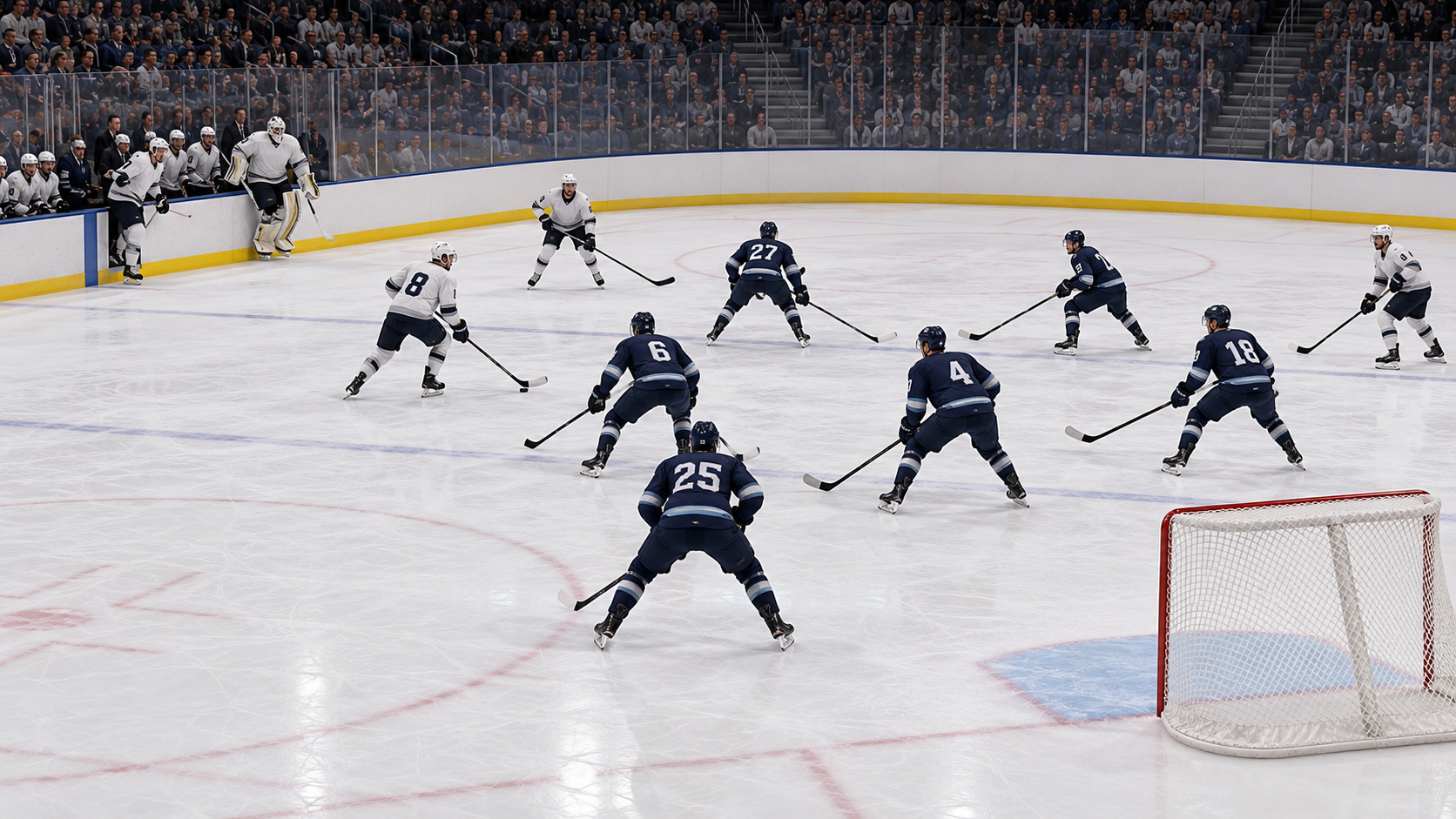
The change follows normal substitution principles: the goalie heads to the bench and another skater enters when the exchange is legal. The attacking team can then create a six-on-five advantage, overload a side of the offensive zone, and use one more passing option to recover loose pucks.
The risk is immediate. A blocked shot, lost faceoff, or failed pass can send the puck toward an undefended goal. Defenders may accept an icing stoppage or try a long shot, while the attacking team must keep a safety player high enough to recover clears.
Coaches increasingly base the timing on score, possession, faceoff location, and game clock rather than waiting for a traditional final minute. A successful pull is not judged only by whether the empty-net goal occurs; it is a probability choice that increases both scoring chances and danger.
It creates an extra skater and raises the chance of sustained offense when tying the game is worth the defensive risk.
The change must be made legally as the goalkeeper comes to the bench under the substitution rules.
Analytics can favor a longer six-on-five window because the expected benefit of more attack can outweigh the additional empty-net risk.
Explore more "Explainers"
Discover additional explainers across politics, science, business, technology, and other fields. Each explainer breaks down a complex idea into clear, everyday language—helping you better understand how major concepts, systems, and debates shape the world around us.