

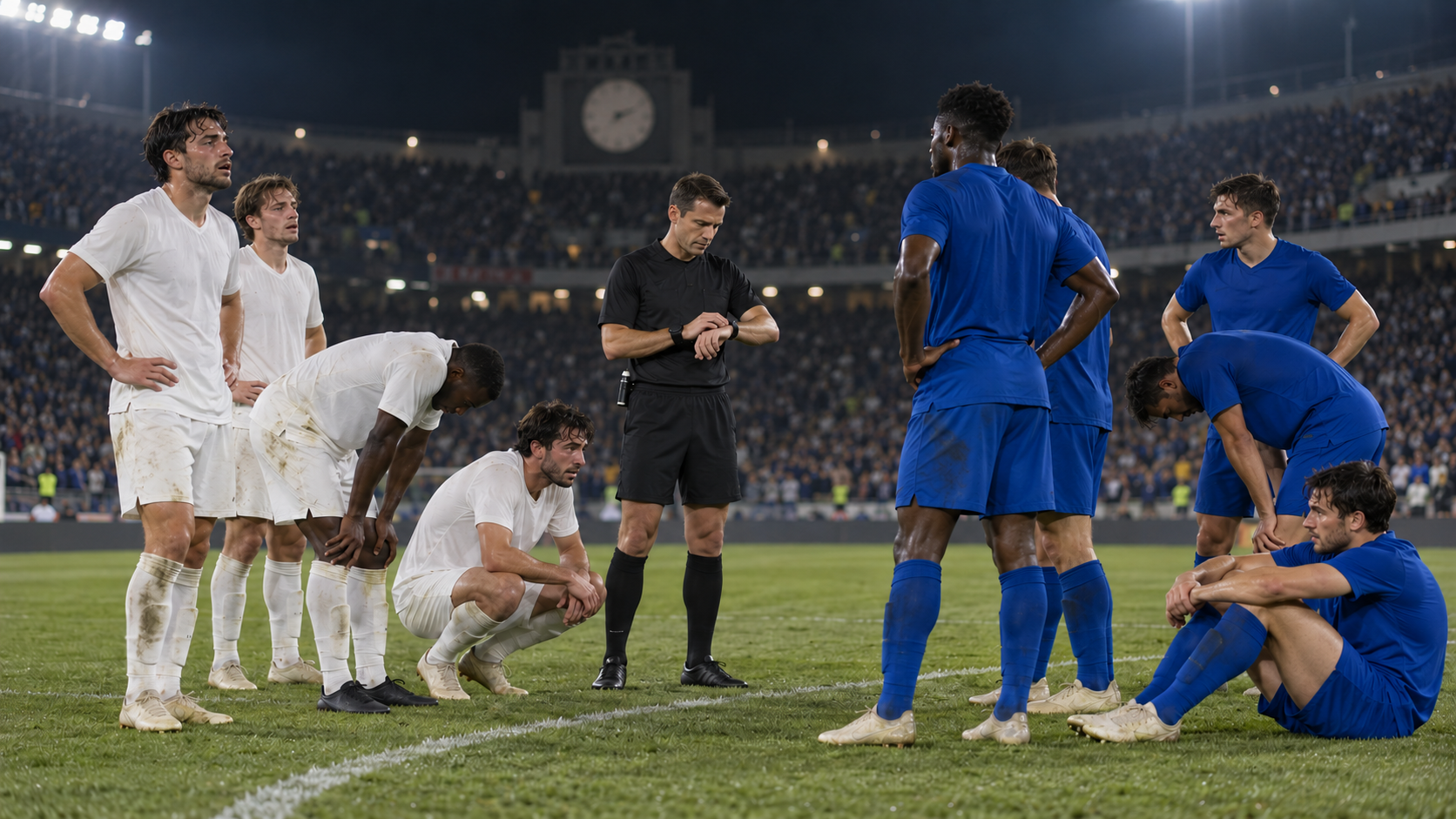
How Soccer Extra Time Works Explainer
Extra time is an added phase used in some knockout soccer matches when the score is level after normal time and the competition requires a winner. It is different from stoppage time, which the referee adds within each half to replace time lost during ordinary play.
The usual format is two equal periods of up to 15 minutes, separated by a short interval and a change of ends. The referee may add stoppage time to each extra-time period for substitutions, injuries, reviews, or other delays just as in regulation.
A goal in extra time does not automatically end the match under the modern Laws; the remaining time is played. If the teams are still level afterward, the competition rules may call for kicks from the penalty mark. Some competitions instead use replays, away-goal procedures no longer common, or other approved formats.
Substitution allowances can also change in extra time when the competition rules permit an additional substitute. Always check the tournament format because league matches often allow draws and never reach this phase. Extra time exists only when the rules for that tie or match activate it.
No. Stoppage time replaces delays within a half; extra time is a separate phase used to decide certain tied matches.
It is normally two periods of up to 15 minutes, with added time possible in each period.
No. Golden-goal rules are not the standard; the scheduled extra-time periods continue.
Explore more "Explainers"
Discover additional explainers across politics, science, business, technology, and other fields. Each explainer breaks down a complex idea into clear, everyday language—helping you better understand how major concepts, systems, and debates shape the world around us.