

How Hockey Delayed Offside Works Explainer
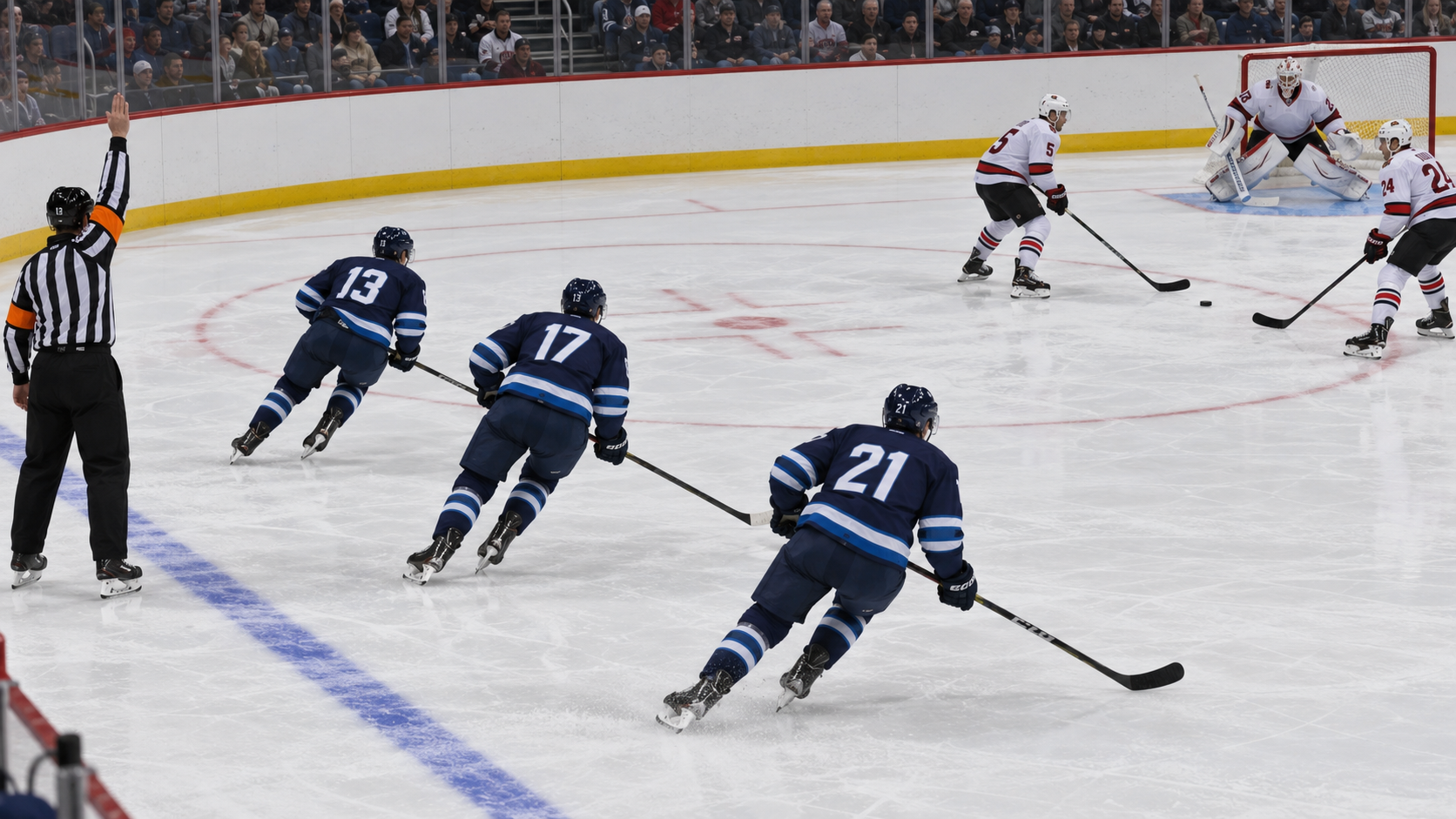
A delayed offside occurs when attacking players are inside the offensive zone before the puck crosses the blue line, but the defending team can still play the puck without immediate pressure. The linesperson raises an arm instead of stopping play at once.
The attackers can cancel the violation by clearing the zone so every attacking skate contacts or crosses back over the blue line. Once the zone is clear, the linesperson lowers the arm and the team may legally pursue the puck again.
During the delay, attackers must not touch the puck, pressure a defender, or create meaningful interference inside the zone. If they do, the whistle stops play for offside. A defender deliberately carrying or passing the puck does not automatically erase the delayed status.
The procedure reduces unnecessary stoppages while protecting the blue-line entry rule. Watch the linesperson's raised arm and the attackers turning toward neutral ice. A quick tag-up can restore a forecheck; a premature chase produces the whistle.
The attacking team can clear the zone and cancel the offside without stopping play.
Every attacking player in the zone must return to the blue line and make legal contact with or cross it.
No. Touching the puck or pressuring defenders before clearing the zone causes the offside whistle.
Explore more "Explainers"
Discover additional explainers across politics, science, business, technology, and other fields. Each explainer breaks down a complex idea into clear, everyday language—helping you better understand how major concepts, systems, and debates shape the world around us.