

How Hockey High-Sticking Penalties Work Explainer
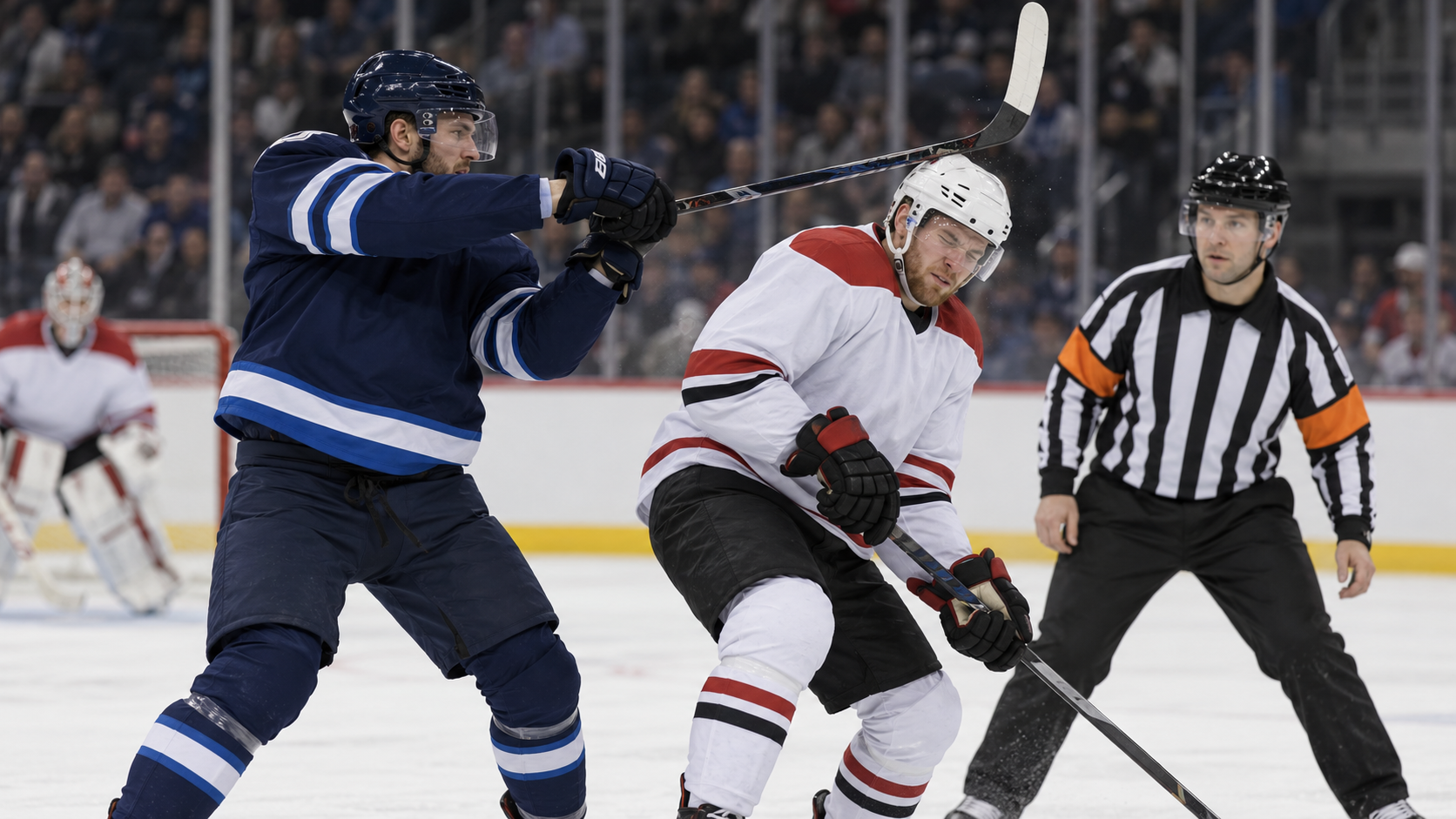
High-sticking is penalized when a player carries or swings the stick above the normal height of an opponent's shoulders and makes contact. Players are responsible for controlling their sticks even when the contact is accidental.
The usual penalty is a two-minute minor. If the contact causes an injury, often shown by bleeding, officials may assess a four-minute double minor. More violent or deliberate use can be punished under major, match, or other foul-play rules.
Important exceptions apply when the opponent's own action causes the contact, such as lifting the offender's stick, or when contact occurs during a normal follow-through of a shooting motion under the defined rule. The puck's location and the exact movement matter.
Officials can use video review in the limited situations allowed for a double-minor high-sticking call. Review may confirm the penalty, reduce it, or determine that the contact came from a teammate's stick. The replay must identify the responsible stick, not just the injury.
A two-minute minor for making illegal high-stick contact.
An injury caused by the high stick can produce a double-minor penalty.
Yes. Players are generally responsible for keeping their sticks under control.
Explore more "Explainers"
Discover additional explainers across politics, science, business, technology, and other fields. Each explainer breaks down a complex idea into clear, everyday language—helping you better understand how major concepts, systems, and debates shape the world around us.