

How Basketball's Offensive Three-Second Rule Works Explainer
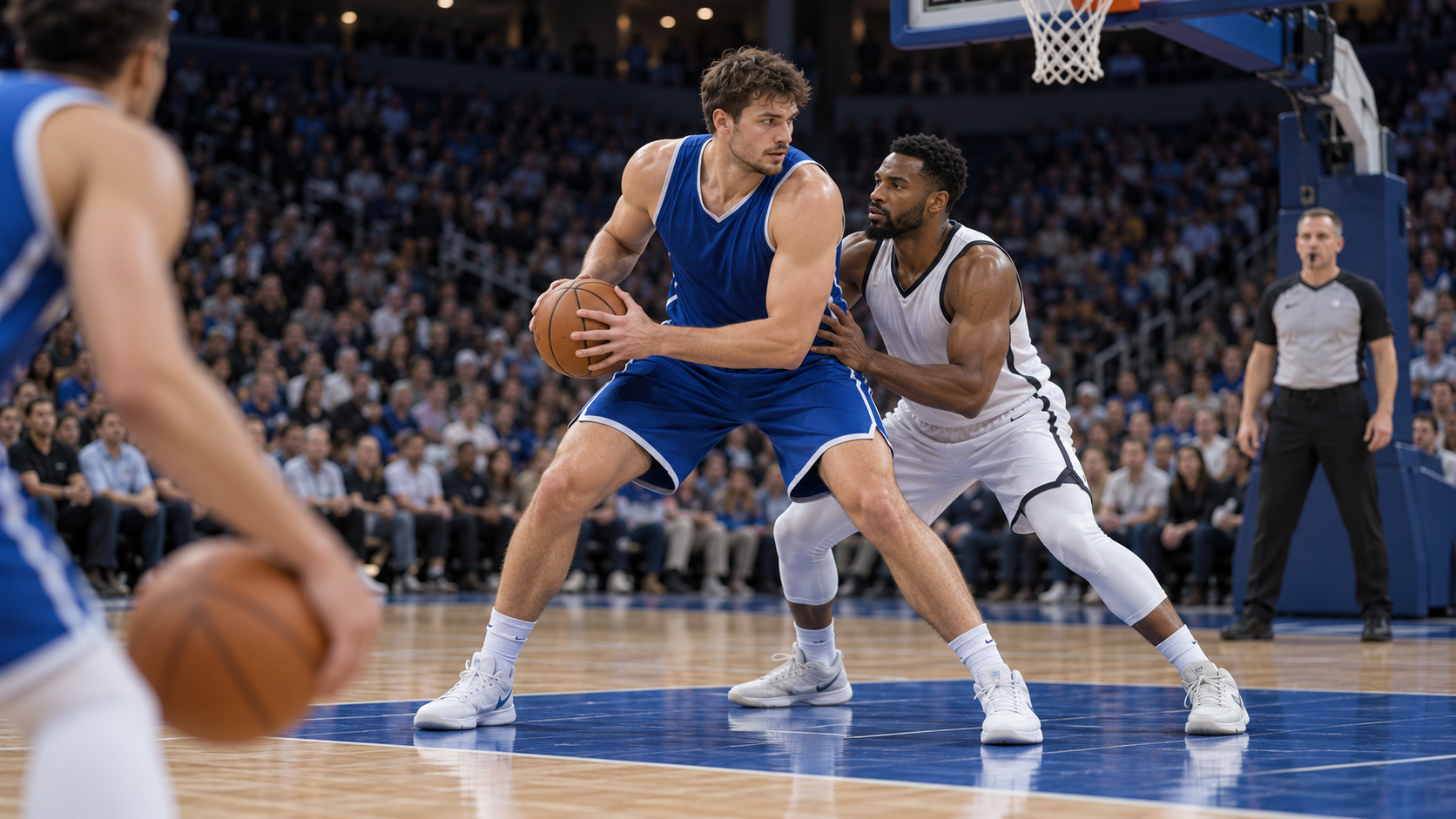
The NBA's offensive three-second rule prevents an attacking player from remaining in the lane for more than three seconds while that player's team controls the ball in the frontcourt. The restricted space is the painted free-throw lane extending from the baseline to the far edge of the free-throw line.
The count does not begin until the offense has frontcourt control, and it stops when team control ends. A player clears the count by getting both feet outside the lane. Simply lifting one foot or straddling a lane line does not establish a new legal position.
Officials allow a player who has been in the lane for less than three seconds to make an immediate continuous move toward the basket. The count is suspended during that move, but resumes if the player stops, pivots for a better post position, or passes without leaving.
The penalty is loss of possession, with the opponent receiving a throw-in near the free-throw-line extended. Viewers should watch off-ball post players as well as the ball. The whistle often reflects time spent occupying space before a pass arrives, not the final catch alone.
When the offensive team controls the ball in its frontcourt.
Both feet must establish a position outside the lane boundaries.
The offense loses the ball and the opponent receives a sideline throw-in near the free-throw-line extended.
Explore more "Explainers"
Discover additional explainers across politics, science, business, technology, and other fields. Each explainer breaks down a complex idea into clear, everyday language—helping you better understand how major concepts, systems, and debates shape the world around us.