

How Cycling Individual Time Trials Work Explainer
An individual time trial sends riders onto a road course one at a time at fixed intervals. Each cyclist races against the clock, and the classification is based on elapsed time from that rider's start to finish rather than the order riders cross the line.
Drafting another competitor is prohibited. When one rider catches another, passing rules require separation so neither gains sustained aerodynamic shelter. Officials may use motorcycles and course judges to monitor gaps, especially when riders of similar speed converge.
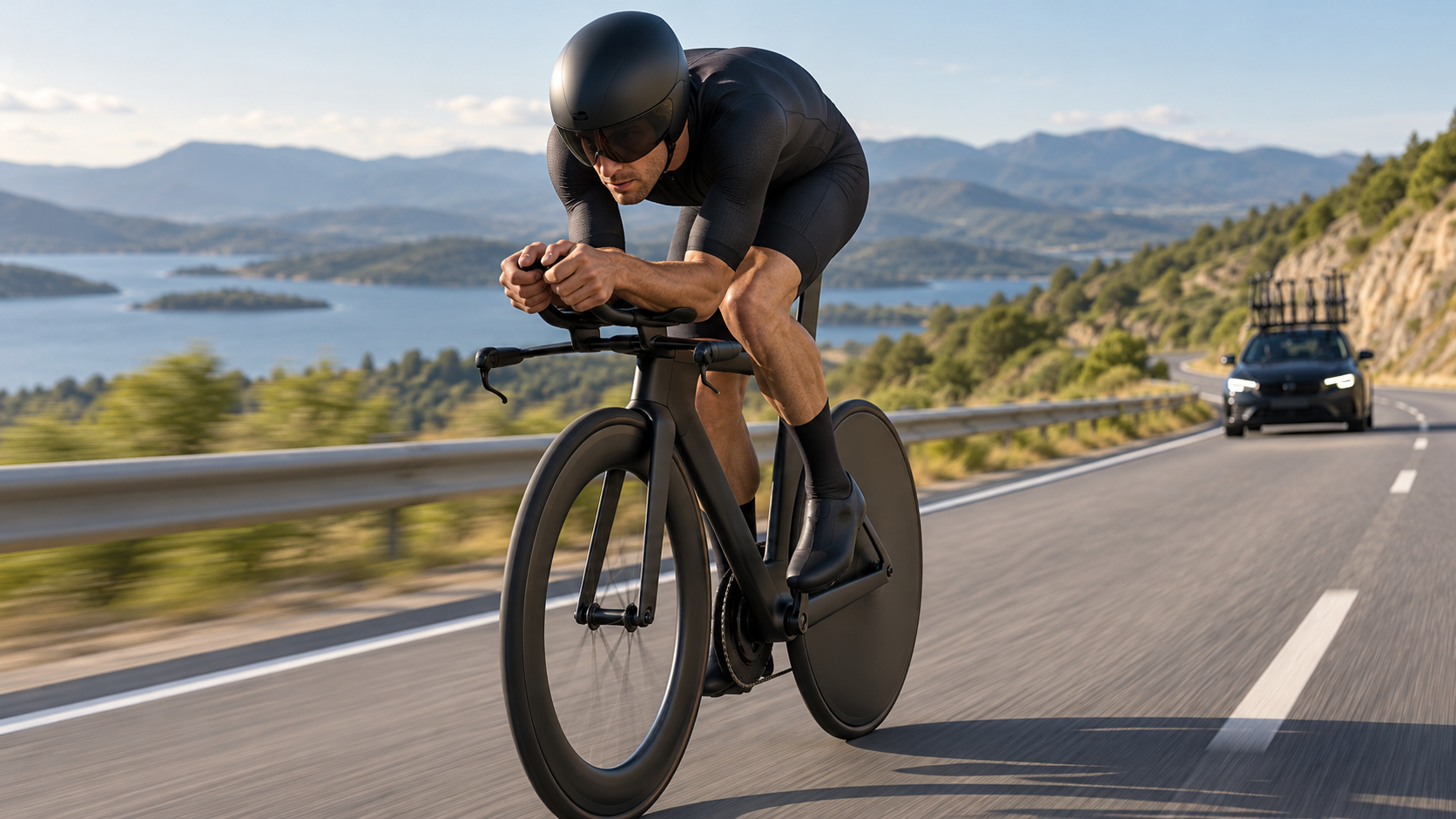
Aerodynamics shape the equipment and posture: riders often use time-trial bicycles, aero helmets, deep wheels, and narrow tuck positions within UCI technical limits. A following team vehicle must remain the prescribed distance behind so its airflow does not create an advantage.
Intermediate time checks show whether a rider is gaining or losing, but pacing remains crucial because wind, climbs, and turns distribute effort unevenly. The rider physically ahead may still trail overall if starting earlier. Always compare the running elapsed time and official split, not road position alone.
By the lowest elapsed time from the rider's individual start to the finish.
No. A caught rider and the passing rider must maintain the required separation.
Staggered starts isolate each performance and make the event a direct race against the clock.
Explore more "Explainers"
Discover additional explainers across politics, science, business, technology, and other fields. Each explainer breaks down a complex idea into clear, everyday language—helping you better understand how major concepts, systems, and debates shape the world around us.