

How Hockey Penalty Shots Work Explainer
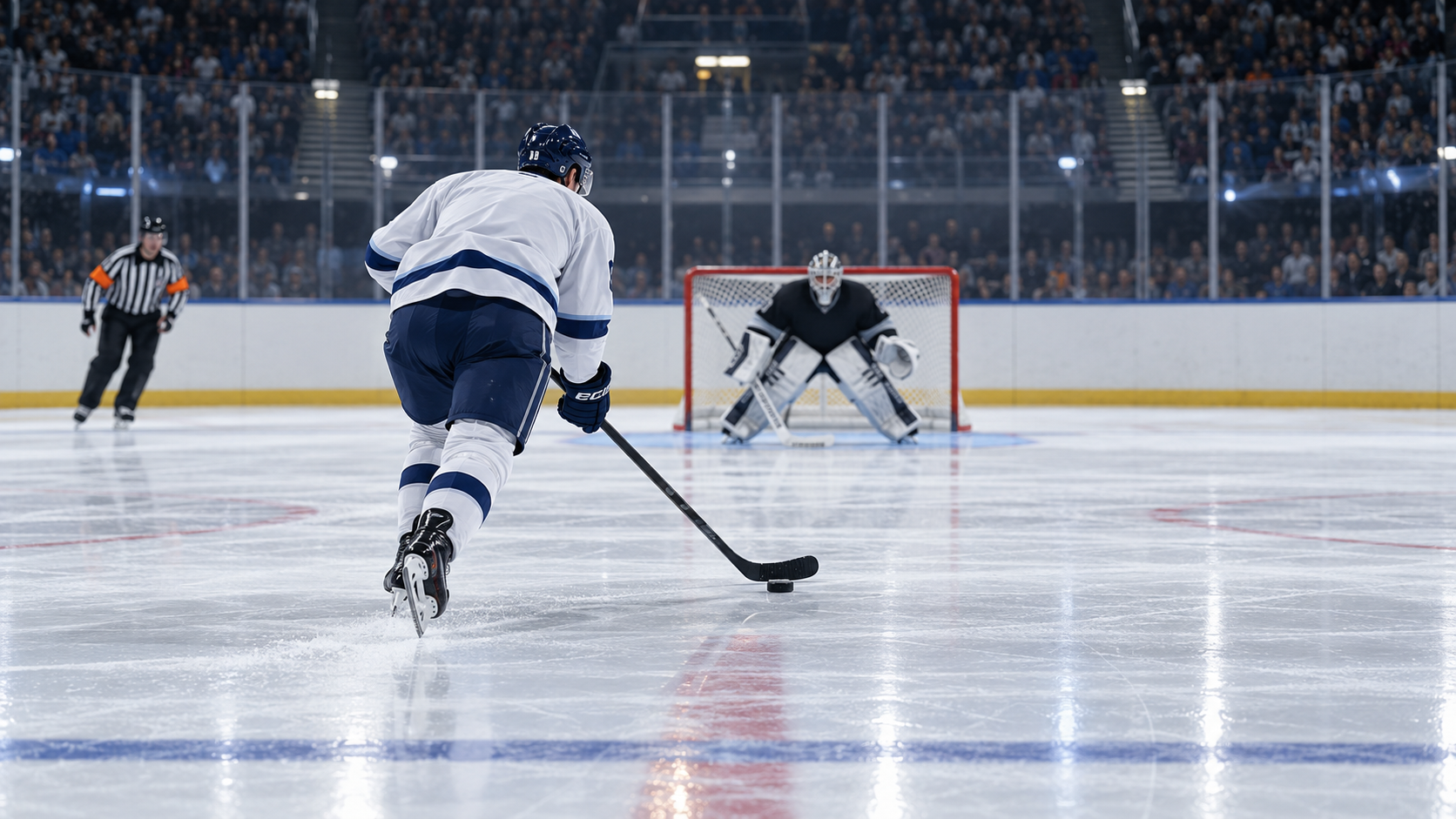
A penalty shot gives one skater an uncontested attempt against the opposing goaltender. It is commonly awarded when a defender illegally denies a clear scoring opportunity or when a specific foul is committed in a situation for which the rules prescribe the shot. The call depends on the exact play, not simply on a dangerous chance.
The designated shooter starts from center ice after the referee's signal and must keep the puck moving generally toward the opponent's goal line. Once the puck is shot, loses forward progress, or crosses the goal line, the attempt is complete. The shooter cannot take a normal rebound after the goaltender makes a save.
Other players wait away from the action, so the contest is reduced to shooter versus goalie. The goaltender must remain within the required position until the attempt begins and may defend normally once the skater touches the puck. A goal counts just like one scored during regular play.
If the attempt fails, play resumes with the faceoff specified by the rules; if it succeeds, the goal is recorded and play restarts at center ice. The underlying minor penalty is often not added when the penalty shot is awarded, though separate infractions on the same sequence can still be assessed.
No. The attempt ends after the shot or when forward progress is lost.
No. They remain away while the shooter faces the goaltender.
Yes. It is added to the score and play then restarts at center ice.
Explore more "Explainers"
Discover additional explainers across politics, science, business, technology, and other fields. Each explainer breaks down a complex idea into clear, everyday language—helping you better understand how major concepts, systems, and debates shape the world around us.