

How Volleyball Double-Contact Calls Work Explainer
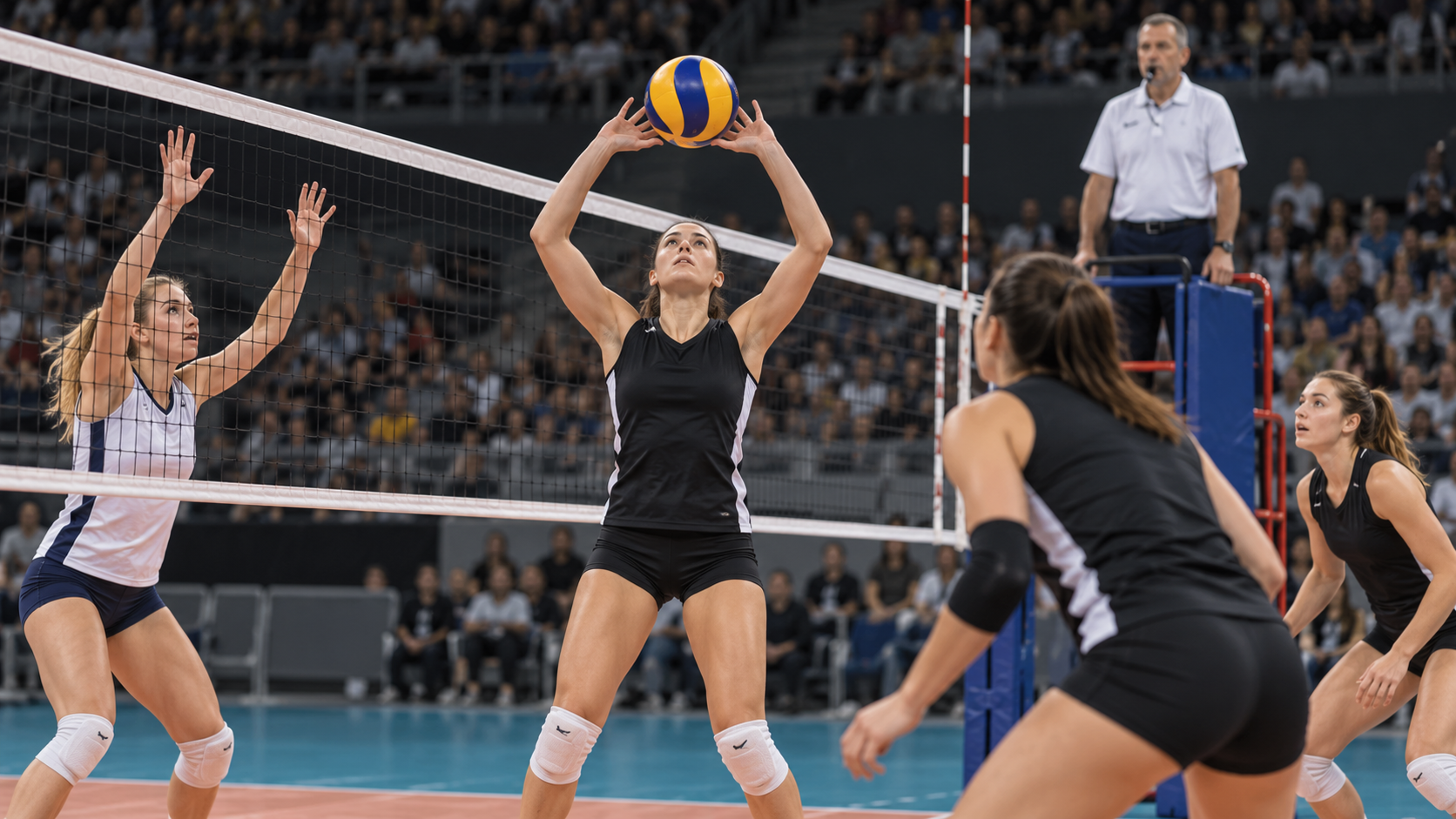
A double contact is called when one player contacts the ball twice in succession or the ball touches different parts of that player in separate actions. A clean set normally appears as one continuous contact. Officials judge the action in real time, focusing on distinct touches rather than the ball's spin alone.
On a team's first hit, consecutive contacts may be legal when they occur during one action. That allowance covers many difficult defensive receptions, including balls that rebound from the arms to another part of the body almost instantly. The team still uses one of its three permitted hits.
FIVB approved a 2026 test allowing multiple contacts during a setting action when the ball remains on the same side of the net. A set that crosses to the opponents after multiple contacts can still be faulted. Because a test may apply by competition, viewers should check the event rules in use.
The fault is different from a lift or catch, where the ball is held or thrown instead of rebounding cleanly. Both rules protect continuous play, but they address different contact problems. When a double contact is whistled, the rally ends and the opponent receives the point and next service.
No. Officials judge whether there were separate contacts, not spin by itself.
Yes, when they occur during one action.
Multiple contacts on a set may be allowed if the ball remains on the setter's side of the net.
Explore more "Explainers"
Discover additional explainers across politics, science, business, technology, and other fields. Each explainer breaks down a complex idea into clear, everyday language—helping you better understand how major concepts, systems, and debates shape the world around us.