

How Swimming Medley Relay Order Works Explainer
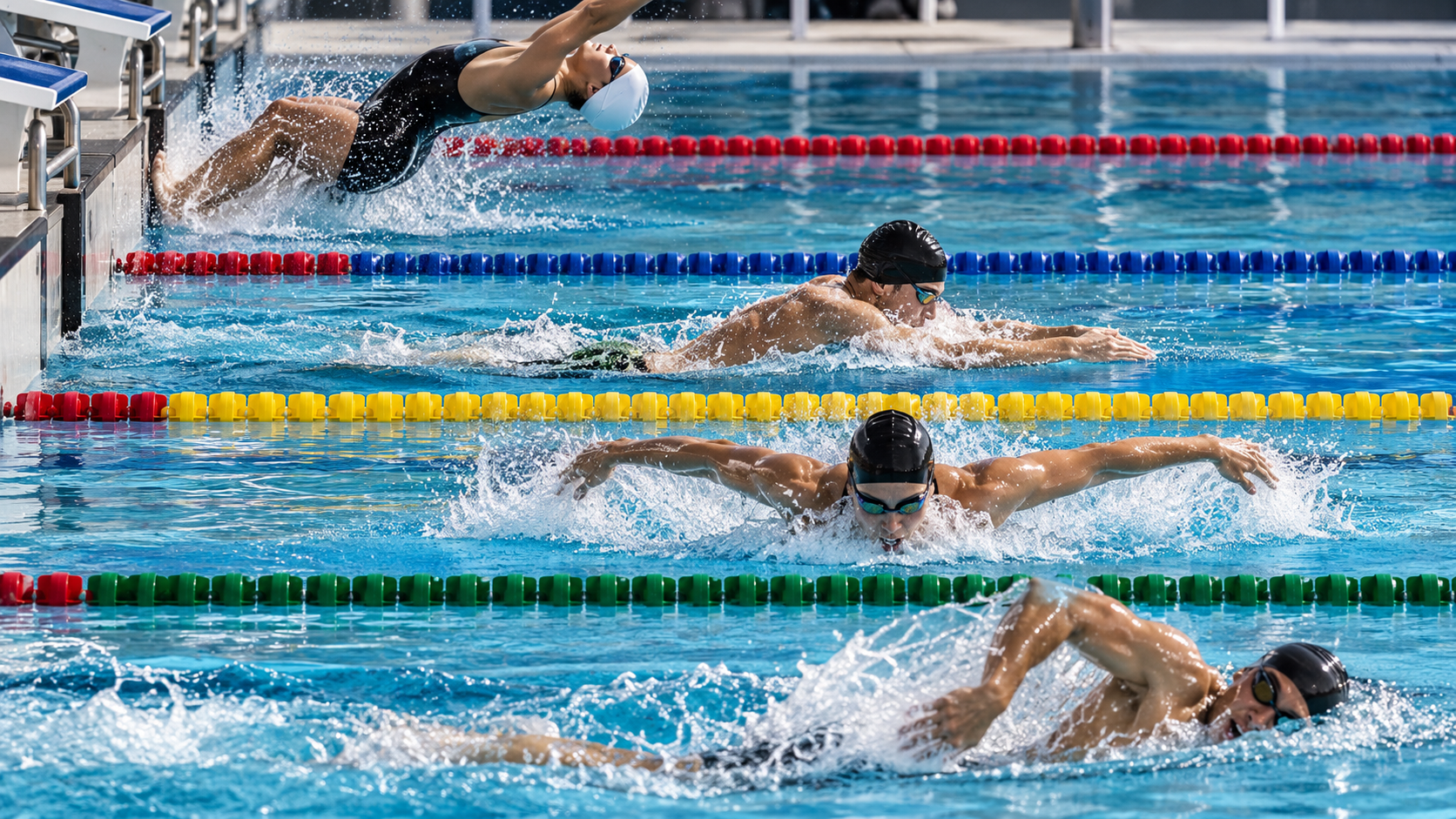
A swimming medley relay uses four swimmers and four different strokes in a fixed order: backstroke, breaststroke, butterfly, then freestyle. Each athlete completes one leg. The sequence is built around the backstroke start, which begins in the water, while the later swimmers can use relay takeoffs from the starting platform.
The order differs from an individual medley, which is butterfly, backstroke, breaststroke, freestyle. Remembering which event is being contested prevents a common viewing mistake. In both formats, the freestyle leg must use a stroke other than backstroke, breaststroke, or butterfly as those strokes are defined.
Each swimmer must satisfy the technical rules for that leg, including turns and the finish. The outgoing swimmer may start moving before the incoming swimmer touches, but the feet must not lose contact with the platform before the touch. Electronic timing and video can measure these exchanges extremely closely.
An early takeoff or a stroke-rule violation can disqualify the entire relay even when the team finishes first. Teams balance aggressive exchanges against that risk. The fixed order also shapes strategy because coaches decide which athlete best fits each stroke and how their split times combine.
Backstroke, breaststroke, butterfly, then freestyle.
No. The individual medley begins with butterfly, followed by backstroke, breaststroke, and freestyle.
Only after the incoming swimmer touches, although preparatory movement may begin earlier.
Explore more "Explainers"
Discover additional explainers across politics, science, business, technology, and other fields. Each explainer breaks down a complex idea into clear, everyday language—helping you better understand how major concepts, systems, and debates shape the world around us.